
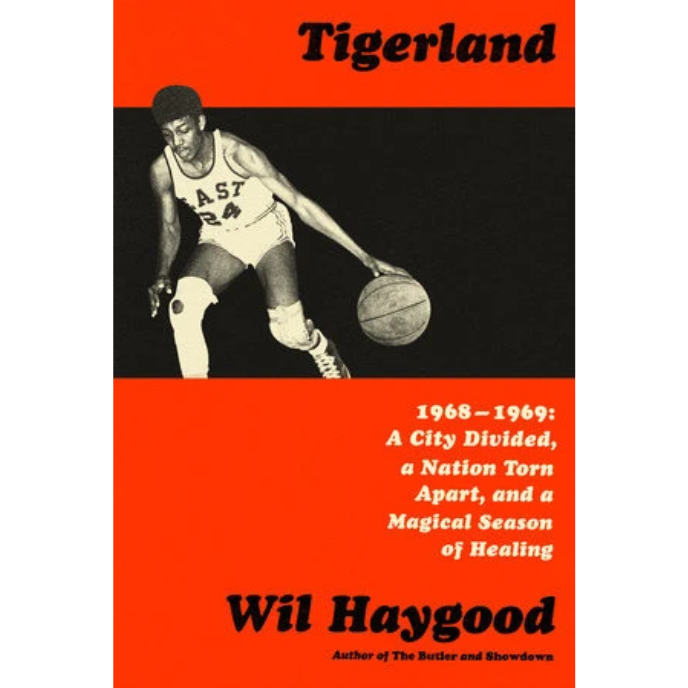
Tigerland isn’t just a sports story—it’s a vivid tapestry of race, community, and redemption set in Columbus, Ohio during one of the most turbulent years in American history. Haygood, an award-winning journalist whose previous work includes The Butler and other nonfiction explorations of American life, brings his masterful storytelling to this lesser-known chapter.
At the heart of the book are the two state-championship teams—basketball and baseball—from East High, an all-Black high school whose players overcame immense social and economic obstacles. They played under coaches Bob Hart and Paul Pennell and with players like Ed “Eddie Rat” Ratleff and Dwight “Bo-Pete” Lamar. But Haygood uses their success not as a feel-good sports tale alone; he uses it as a lens through which we examine 1968–1969: the assassinations of Martin Luther King Jr. and Robert Kennedy, the Vietnam War, racial segregation, and a city grappling with the Great Migration’s legacy.
The book excels in two core areas: historical context and the human story. On the one hand, Haygood layers in analysis of school desegregation, economic neglect of Black neighborhoods, and shifting political landscapes. On the other, he depicts the day-to-day lives of players, their families, coaches, and the community that rallied around them. A reviewer for Kirkus called it “an engrossing tale of one shining moment in dark times.”
Readers who might feel skeptical of a sports book becoming a piece of social commentary will be pleasantly surprised. Haygood never treats the athletic triumphs as mere trophies; he unfolds them as victories of will, community support, and strategy against a backdrop of adversity. One commentator observed: “Haygood triumphs through thoroughness… His research and careful descriptions of the athletes and community distinguish Tigerland and give it humanity.”
If there is a weakness, some readers point to a shortfall in balancing the sports narrative with the broader cultural story. Haygood occasionally digresses into broader themes such as the Plessy v. Ferguson decision or Jackie Robinson’s legacy—important but occasionally interruptive. Yet reviewers agreed these moments do not outweigh the book’s power.
For sports fans, historians, and anyone interested in race and American life, Tigerland offers something more: it asks questions about where we’ve been, where we are, and what still needs to be done. It reminds us that community, when mobilized around youth, sport, and hope, can spark extraordinary outcomes even when odds are stacked. One site described it as “a haunting, unforgettable book.”
In short, Wil Haygood has delivered a rich, multi-layered work that blends the grit of sport with the complexity of history. Whether you pick it up for the basketball court, the baseball diamond, or the broader social story, you’ll walk away with a deeper appreciation of how moments of championship can ripple far beyond the scoreboards. 432 pages. Available on Amazon.com