
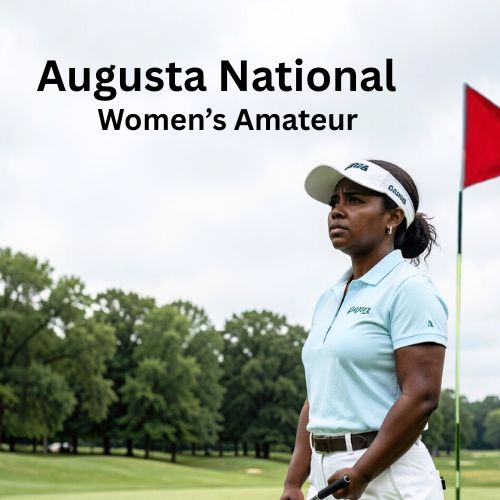
There is only one Black women listed in the field for the 2026 Augusta National Women’s Amateur (ANWA) so far? This certainly reflects broader, longstanding challenges in women’s golf participation and development, rather than any explicit rule barring them from entry. The official field for the 2026 ANWA includes top amateurs from around the world — generally the highest-ranked players in the World Amateur Golf Ranking and invitees — and currently features players from 23 countries, but only one Black woman has yet been confirmed.
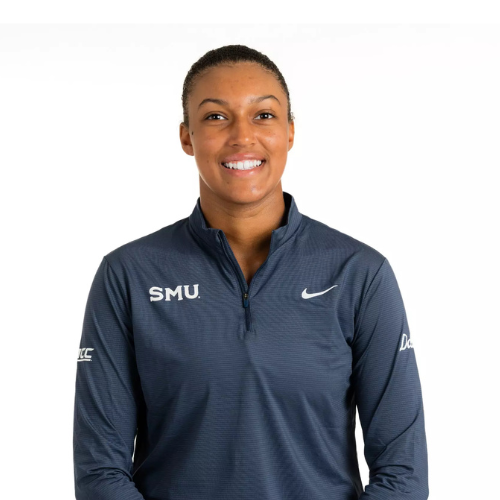
That one Black woman is Emily Odwin of Barbados, a Southern Methodist University/Senior. The trailblazing golfer has redefined what’s possible for athletes from her home island. Growing up in the parish of St. James, Odwin discovered golf around age eight, inspired by watching Tiger Woods and Jordan Spieth on TV with her dad.
“Due to her hard work and numerous golf accomplishments in other countries, Emily has been invited to play in the prestigious Augusta National Women’s Amateur, just days before the Master’s Tournament is held,” said junior golf advocate Jenny Bethune, a respected voice in the golf community. “Emily played in the 2024 Southwest Airlines Showcase at Cedar Crest Golf Course, Dallas, Texas, and placed 2nd, but everyone could see that she has tremendous potential to become a professional golfer and play on the LPGA Tour,” said Bethune.
Experts and advocates say several structural barriers contribute to the reality of the lack of Black women golfers playing in the August National Women’s Amateur:
• Limited access to elite junior golf pathways – Many top amateurs develop through well-funded programs and competitive schedules that are often harder to reach for Black girls and young women because of financial and logistical constraints.
• Lack of high-level training and sponsorship support – Access to coaching, travel funds, and tournament experience is critical for rising players; without it, even talented athletes can struggle to climb rankings or qualify for major amateur events.
• Historical and cultural barriers – Although golf clubs and associations have become more inclusive in recent decades, the sport’s legacy of exclusion has meant fewer role models and visible pathways for Black girls to pursue elite competition.
Advocates note that there are many promising Black junior players — and programs like the Sapphire Golf Tour, Sisters Across America, the Midnight Golf Program, Women in Golf Foundation, A Perfect Swing Inc., and the National Golf Players Development Foundation are helping build student athletes and fill the pipeline — but that more sustained investment in junior development, competitive exposure, and support beyond early stages is needed for more Black women to reach events like the ANWA.
Sapphire Golf Tour Commissioner Ty DeLavallade believes, “The absence of a Black amateur golfers in the Augusta National Women’s Amateur isn’t about talent — it’s about the pipeline. Women’s golf programs at HBCUs have doubled in the last two years, proving the interest and athletes are there. But without stronger investment in player development, coaching, and competitive opportunities at the college level, we’ll keep seeing gaps at the top. These young women have the grit and potential; what they need is an ecosystem that elevates them. That’s why the Sapphire Golf Tour exists — to strengthen the bridge between collegiate talent and the professional stage.”
This perspective is justified because without consistent opportunities to compete against top-ranked fields, gain national visibility, and receive advanced performance support, talented Black golfers are less likely to reach invitation-only events like the Augusta National Women’s Amateur. In the 75-year history of the LPGA, only eight Black women have earned full membership and competed on the tour.
According to Women in Golf Foundation Owner LaJean Gould, “The absence of Black women in the Augusta National Women’s Amateur is not a question of talent—it is a reflection of gaps in player development. In many countries where women consistently compete at the highest levels of golf, athletes benefit from substantial government funding, centralized training systems, and early access to elite competition.” Gould continues, “In the United States, that level of structured support is far less accessible. Where development programs do exist, financial barriers and restrictive qualification criteria often exclude young Black female golfers. Without sustained funding, sponsorship, and access to high-level coaching and competition, advancing through the world rankings becomes significantly more difficult.”
Gould believes that, “Ultimately, increasing investment in player development—through funding, sponsorship, and intentional pathways to elite training—is essential to breaking down these barriers. Creating a more inclusive future in golf will require a collective effort from governing bodies, sponsors, communities, and advocates committed to expanding opportunity and access.”
LPGA Class A Member Ashaunta Epps says, “There has been meaningful progress over the past few years in moving the needle forward, and it’s exciting to see opportunities continuing to open up. I’m thrilled that Emily Odwin from Barbados was invited to participate. There are many talented Blck American players with tremendous potential who deserve greater visibility. As we continue to peel back the layers and more openly identify the pathways to opportunities like these, I believe we’ll begin to see greater access, as well as meaningful and lasting change. Epps is also CEO/Founder, A Perfect Swing, Inc. and is among the LPGA’s Top 50 Best Teachers. “Ultimately, the current absence is not because of a specific ban, but due to systemic challenges in participation, access, and opportunity that continue to impact representation at the highest levels of women’s amateur golf.”
Rounds for the Augusta Women’s National will be broadcast on Golf Channel and the final round, which will be held on Augusta National Golf Course will be televised on NBC Sports stations.