
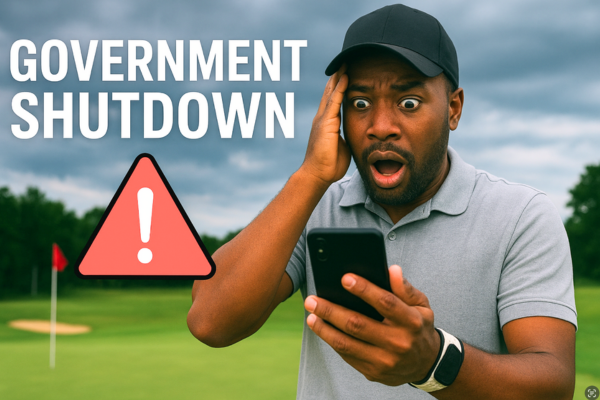
A U.S. government shutdown could ripple across the golf travel sector, disrupting everything from flights and national park access to course maintenance and traveler confidence. Here’s how the effects might play out, with insight from government officials and travel industry leaders.
Air Travel & Airport Operations
Airlines may continue operating, but essential federal services that support flight infrastructure are at risk. The FAA has warned that over 11,000 of its employees could face furloughs. While air traffic controllers and TSA staff are deemed “essential” and required to work without pay, those conditions often lead to fatigue, staffing gaps, or increased absenteeism. Airlines for America cautioned that “when federal employees who manage air traffic, inspect aircraft and secure our nation’s aviation system are furloughed or working without pay, the entire industry and millions of Americans feel the strain.”
Delays, longer security lines, and possible flight cancellations could become more common, especially as shutdowns drag on and personnel pressures mount. The longer a shutdown persists, the more noticeable the strain on those systems.
National Parks, Tours & Course Access
Many world-class golf destinations are near or on lands managed by federal agencies — national parks, historical sites, or land overseen by the National Park Service. During shutdowns, visitor centers, maintenance crews, restrooms, and ranger services are often scaled back or closed entirely. Trails, roads, or access points may become unsafe or unmonitored.
If a golf resort relies on federal support for its surroundings (e.g., signage, waste management, shared infrastructure), shutdowns can impair those services. Guests might find amenities less reliable or portions of the surrounding environment off-limits.
Travel Economics & Consumer Confidence
A shutdown doesn’t just slow infrastructure — it saps demand. The U.S. Travel Association estimates that prolonged federal closures cost the travel industry $1 billion per week. “A shutdown is a wholly preventable blow to America’s travel economy—costing $1 billion every week—and affecting millions of travelers and businesses,” said Geoff Freeman, president and CEO of U.S. Travel Association.
When travelers fear disruption, they postpone bookings, cancel plans, or choose domestic trips instead. Luxury golf resorts and international packages are especially vulnerable to cancellation risk, eroding margins for operators.
Voices from Government & Travel Leaders
Transportation Secretary (or another high-ranking DOT official) might remark publicly that operational continuity is essential, warning that “our aviation system may need to slow down, reducing efficiency” if oversight and support functions are hampered. (Paraphrasing common statements from federal agencies in shutdown warnings)
Meanwhile, a prominent travel agent such as ALTOUR was quoted in industry coverage pointing out that “if there is a government shutdown, it could impact security both domestically and internationally, including passport renewals and TSA checkpoints.”
What Golf Travelers & Operators Should Do
- Book flexible: Choose refundable flights, lodging, and tee times.
- Allow extra time: Plan for longer airport waits and possible delays.
- Confirm course services: Ensure pro shops, shuttles, and amenities will operate.
- Have backup plans: Local courses or resorts may offer alternatives if federal lands are partly closed.
- Monitor communications: Watch official statements from DOT, FAA, TSA, and resort operators for updates.
A government shutdown doesn’t immediately cancel a golf trip, but the strain it places on flight operations, public lands, and traveler confidence can significantly erode the quality and reliability of the experience. For golf travelers, that means entering with patience and contingency plans. For golf destinations and operators, resilience and adaptability will be key to surviving uncertain times.