
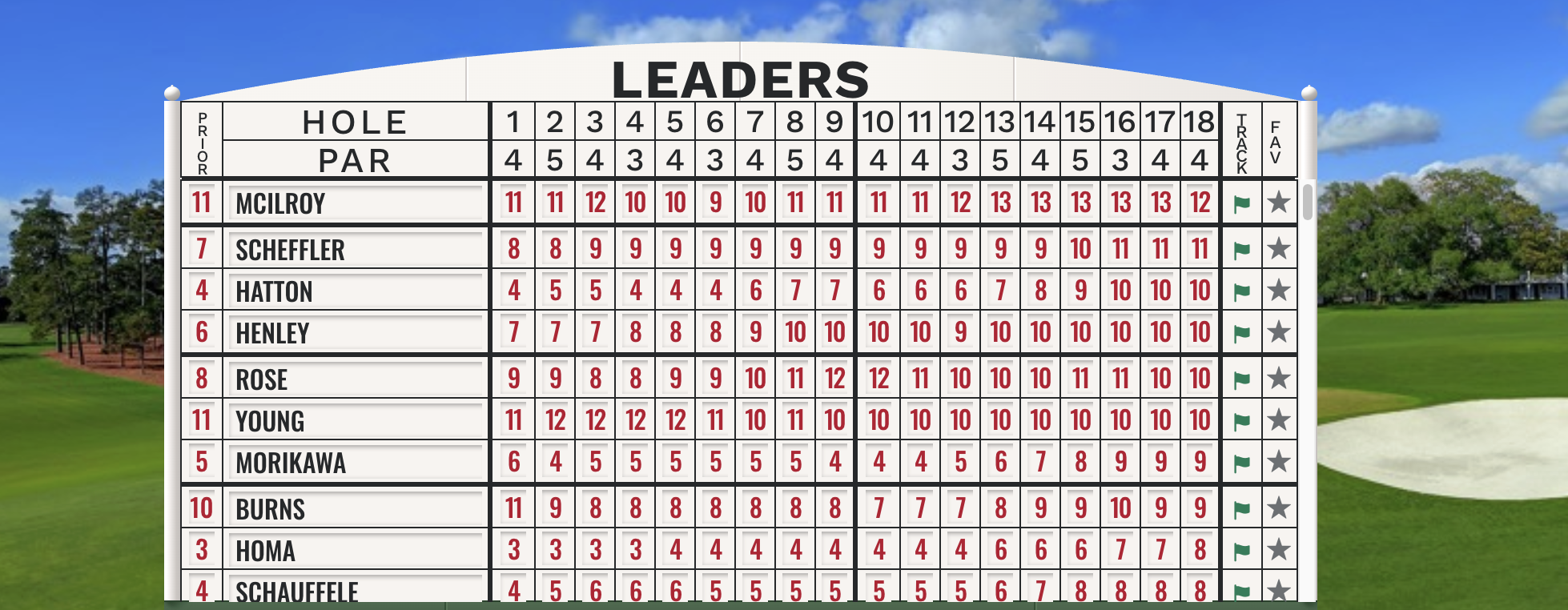
The 2026 edition of The Masters Tournament delivered exactly what fans have come to expect from Augusta—drama, shifting momentum, and a leaderboard that remained fluid until the final holes on Sunday. Played at the historic Augusta National Golf Club in Augusta, the tournament once again proved why its leaderboard is one of the most closely watched in all of sports.
A Leaderboard in Motion
Throughout the week, the 2026 Masters leaderboard was anything but static. Early rounds saw a tightly packed field, with several players hovering within striking distance of the lead. By the weekend, the competition intensified, and the top of the leaderboard became a revolving door.
Rory McIlroy, Justin Rose, and Cameron Young each held the lead at various points during the final round. Meanwhile, contenders like Tyrrell Hatton and Russell Henley surged into contention, adding to the tension. Even Scottie Scheffler—a proven Masters champion—made a late push, reminding everyone how quickly fortunes can change at Augusta.
The back nine on Sunday, often referred to as the most dramatic stretch in golf, lived up to its reputation. Shot by shot, the leaderboard updated as players navigated Amen Corner and the closing holes. Ultimately, McIlroy’s composure under pressure secured the victory at 12-under par, but not before the leaderboard kept fans guessing until the final putts dropped.
The Iconic Masters Leaderboard
Part of what makes the Masters leaderboard so special is not just the competition—but how it’s presented. Unlike most modern tournaments dominated by digital screens, Augusta National maintains its tradition with manually operated leaderboards placed strategically around the course.
These large, white scoreboards—often referred to simply as “the boards”—are updated by hand using a system of numbers and panels. Workers inside the structures physically change scores as they come in, creating a sense of anticipation that technology cannot replicate. Patrons gather around these boards throughout the day, watching the tournament unfold in real time, often learning about shifts in momentum before seeing them on the course.
A Tradition Rooted in History
The history of the Masters leaderboard dates back to the tournament’s earliest years in the 1930s. From the beginning, founders like Bobby Jones emphasized simplicity, elegance, and tradition—principles that still define Augusta National today.
Over the decades, while other tournaments embraced digital displays, the Masters preserved its manual leaderboard as a symbol of its heritage. It has become an iconic part of the fan experience, reinforcing the tournament’s commitment to tradition while enhancing the drama of the competition.
The leaderboard has also been the stage for some of golf’s most unforgettable moments—historic charges, heartbreaking collapses, and legendary victories. Names like Jack Nicklaus, Tiger Woods, and Arnold Palmer have all climbed those boards on their way to Masters glory, each adding to the tournament’s rich legacy.
2026 Adds Another Chapter
The 2026 Masters leaderboard will be remembered as one of constant movement and high drama. It reflected the depth of talent in today’s game and the unique challenges posed by Augusta National. More importantly, it reinforced why the Masters remains a tradition unlike any other—where history, pressure, and performance meet, and where every number on the board tells a story.
As fans left Augusta on Sunday, the final leaderboard stood as a snapshot of a remarkable week—one where the game’s best battled not just the course, but each other, in pursuit of one of golf’s most coveted titles.