
LIV Golf’s financial troubles have moved from speculation to the courtroom, with the breakaway golf league filing for Chapter 11 bankruptcy protection and revealing that several of its biggest stars are among the creditors waiting to be paid.
The filing in U.S. Bankruptcy Court in New Jersey provides an unusual look inside the finances of the Saudi-backed league, which launched in 2022 with the goal of challenging the established professional golf structure. LIV reported assets between $100 million and $500 million and liabilities estimated between $500 million and $1 billion.
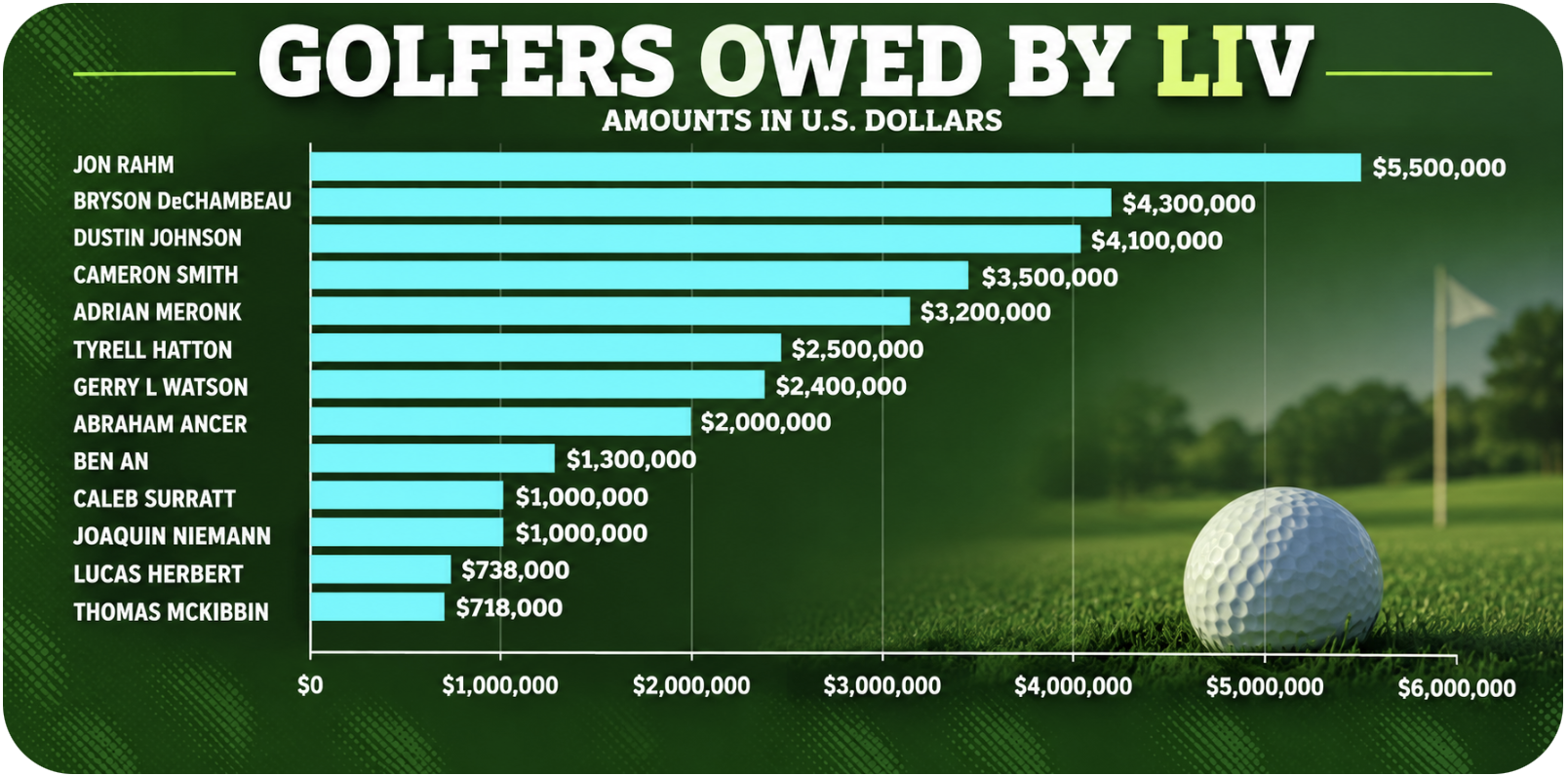
Among the most notable names on the list of unsecured creditors is Jon Rahm. The two-time major champion is listed as being owed approximately $7.5 million, making him the largest individual player claim identified in the filing.
Bryson DeChambeau is next at approximately $5.7 million, followed by Dustin Johnson at about $5.5 million. Cameron Smith is listed at roughly $4.8 million, while Adrian Meronk is owed approximately $4.4 million. Tyrrell Hatton is also among the players with a multimillion-dollar claim.
The numbers, however, require some context. The amounts listed in the bankruptcy documents generally represent unpaid obligations rather than the total value of the players’ LIV contracts. In other words, the figures do not necessarily indicate how much each golfer earned—or was originally promised—over the life of a contract.
Brooks Koepka, who left LIV and returned to the PGA Tour earlier in 2026, is also listed as being owed approximately $1.7 million. His situation illustrates the complicated choices facing players as LIV attempts to reorganize.
LIV’s financial problems follow the decision by Saudi Arabia’s Public Investment Fund (PIF) to end its funding of the league after the 2026 season. PIF had provided the financial backing that enabled LIV to offer large contracts and guaranteed payments to attract some of professional golf’s leading players.
Despite the bankruptcy filing, LIV is not simply disappearing. The organization has proposed restructuring the business and creating a new version of the league, sometimes referred to as “LIV 2.0.” BC Partners has emerged as a potential investor, while LIV has said it is working toward a structure in which players could have significant ownership. PIF has also agreed to provide $49.6 million in financing during the bankruptcy process, subject to court approval.
What happens next could have consequences throughout professional golf. Players must weigh outstanding financial claims, existing contracts, potential changes to LIV’s schedule and ownership structure, and their ability to compete on other tours.
Meanwhile, PGA Tour Commissioner Brian Rolapp has said the Tour is not currently planning another special program for LIV players seeking to return. Players who want to regain PGA Tour status may therefore face established qualification requirements rather than another broad re-entry opportunity.
For LIV Golf’s marquee players, the next chapter is no longer simply about where they will compete. It is also about contracts, unpaid obligations, ownership and the future structure of professional golf.