On June 10, 2026, the American Golf Industry Coalition (AGIC) distributed a press release announcing the Make Golf Your Thing Grassroots Grants Program will award 69 organizations a total of $500,000. $3.5 million has been awarded since the grants program 2021 inception, with 200 unique organizations receiving funding support.
In addition to the press release, the AGIC published a dashboard, with compelling data illustrating golf participation growth in recent years (Golf_Industry_Dashboard_s_through_March_2026.pdf). Within the report, and according to the National Golf Foundation, golf participation has increased by 55% over the past decade. More recent, participation from people of color has increased by 61% since 2019, 58% from juniors, and 46% among women. That is great news!
No doubt about it, golf participation is booming. This boom, in my opinion, can largely be attributed to diverse participation during and since the COVID pandemic, coupled with golf industries INTENTIONAL investments in underrepresented groups through Make Golf Your Thing following the George Floyd murder in May 2020. Some might disagree with my opinions on the matter, but as the old saying goes: “Numbers don’t lie.”
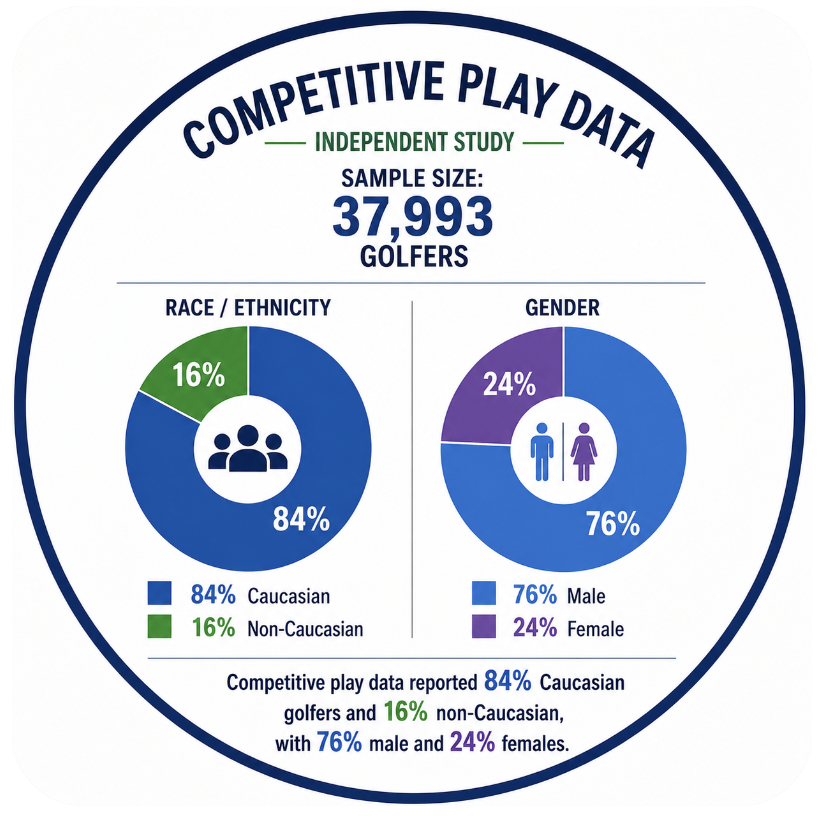
But I offer a few words of caution. Despite the recent progress, golf participation from people of color and from women is less than 28% of overall play, woefully behind American demographic comparisons. Furthermore, while I applaud the recent growth from underrepresented groups, we cannot lose focus of the other three pillars helping to shape golf’s diversity, equity, and inclusion movement over the past two decades. In addition to growth in recreational play, the other three pillars to the DEI movement are growth in competitive play, workforce, and supplier diversity. The data presented on Golf Industry Dashboard is insufficient in those three categories.
For example, when addressing workforce diversity, the dashboard offers:
“Since launching in early 2023, Make Golf Your Career has received more than 1.2 million job views, over 44,000 job postings, 2,080 job seeker sign-ups, and 267 employer sign-ups.”
That doesn’t tell you anything specific about workforce diversity! We will never be able to quantify diverse growth in golf’s workforce from vague and elusive data like that. Furthermore, my experiences suggests that top golf industry organizations consistently track demographical markers and trends in a variety of important categories, including all four of the aforementioned groups.
Golf is a $102 billion industry. So, just like tracking and quantifying recreational participation, they are smart enough, and sophisticated enough to track competitive play, workforce, and supplier diversity. I know this because I was the point person for comprehensive demographic studies in 2015 and 2018.
Through the leadership of Steve Mona, the CEO for World Golf Foundation from 2008 to 2019, we administered a survey in 2015 to leading golf industry organizations, collecting data in recreational and competitive play, plus workforce and supplier diversity. The data were updated in 2018. Too much data can be boring and overwhelming, so below is a snapshot summarizing the 2018 findings:
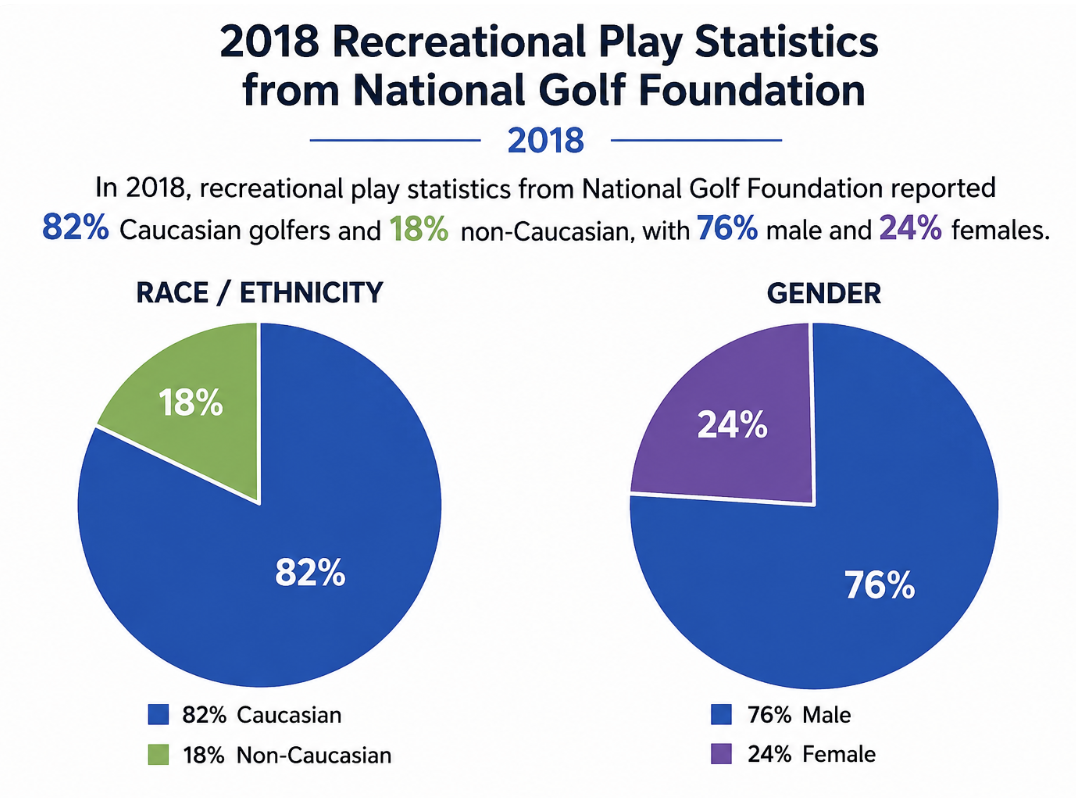
- Competitive play data reported 84% Caucasian golfers and 16% non-Caucasian, with 76% male and 24% females. This was an independent study with a sample size of 37,993 golfers.
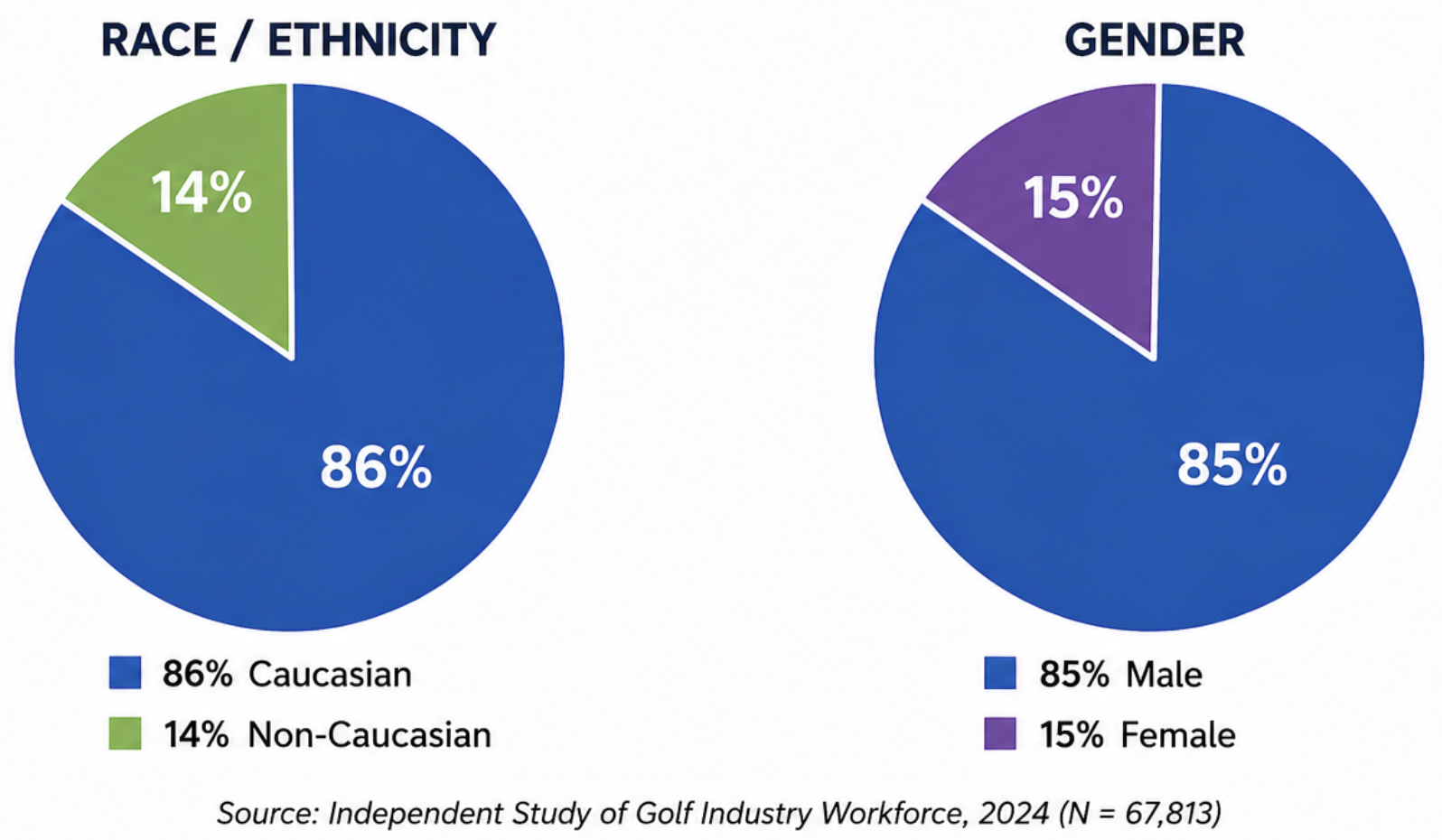
- Workforce diversity data reported 86% Caucasian and 14% non-Caucasian, with 85% male and 15% females. This was an independent study with 67,813 golf industry workers.
Supplier diversity was impossible to quantify because golf industry leaders failed to track or report demographical information.
Other than the supplier’s category, that is real data! Not how many people or individuals viewed a webpage or registered in a database. I have not seen a comprehensive report since 2018, and I know from my work experiences that the data could be easily gathered and reported if, and only if, golf industry leaders were brave enough to establish a starting point in these important categories, establish accountable benchmarks for incremental growth, and track improvement with quantitative data.
One of my main reasons for authoring this article is because I feel the diversity, equity, and inclusion movement is losing momentum. But change requires bold and courageous leaders. I worry that the voices of advocates committed to the struggle are being compromised due to the delicate political environment. Worse, I fear that complacency among some golf leaders (not all) has become the order for today, and the only things that count is participation growth, thus upping the financial bottom line.
That mentality flies in the face of fallen champions for the cause like Bill Dickey, Barbara Douglass, Lew Horne, John Merchant, and Charlie Sifford, just to name a few. They, along with many others, fought long and hard to help increase diverse representation in golf participation, its workforce, economic opportunities, leadership and board positions. Complacency did not sit well with them then, and it shouldn’t set well with others right now.
My message to golf industry leaders is to collect and report real, quantifiable data so we can measure growth is all four DEI pillars. Especially since that data is readily available to you. And to my fellow advocates, use your voices to demand fairness, equity, and justice, because representation matters!
Michael W, Cooper, Ph.D. is the former Director of Diversity for the World Golf Foundation, Senior Advisor for the USGA HBCU Initiative, and chairman of golf’s Diversity Task Force. He can be reached at: [email protected].