
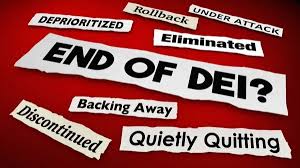
The recent rollback of diversity, equity, and inclusion (DEI) programs under the Trump administration could have significant implications for the golf industry—an arena that has historically struggled with inclusivity. As efforts to dismantle DEI initiatives gain momentum, the progress made toward creating a more welcoming and diverse golf environment may face serious setbacks.
In early 2025, the Trump administration issued a series of executive orders that significantly rolled back diversity, equity, and inclusion (DEI) programs across the federal government and its contracting landscape. How will contractors, grantors, grantees, after-school programs, independent operators, and others who service the golf industry be impacted?
One executive order mandated the elimination of all DEI offices and roles within federal agencies. Agencies were given 60 days to shut down these programs, lay off staff associated with DEI efforts, and remove DEI-related content from official websites. Training programs, grants, and partnerships tied to diversity initiatives were also canceled. Employees who managed or supported DEI programs were placed on administrative leave ahead of formal terminations.
Another executive order revoked a long-standing affirmative action directive, ending the requirement for federal contractors to maintain affirmative action programs or demonstrate efforts to diversify their workforces. Contractors were instructed to certify that they had no policies or practices that could be interpreted as providing preferential treatment based on race, sex, or similar characteristics. These certifications were tied to legal accountability, heightening the risk of penalties for noncompliance.
Federal agencies were also directed to purge DEI-related language from their procurement, grant-making, and hiring practices. Terms like “equity” and “diversity goals” were stripped from official documents, with a new emphasis placed on a color-blind and so-called merit-based system. Oversight bodies were tasked with identifying and investigating private-sector DEI efforts that could be considered discriminatory under this new approach.
D&I Advocate, Michael Cooper Ph.D. says “It’s disheartening to witness the needless dismantling of programs and policies impacting diversity and inclusion across our country. It’s staggering to consider how many jobs have been lost, budgets decimated, and the overall economic impact these changes have on education, healthcare, social justice, and the entire American ecosystem. It’s shameful!“
“Specific to golf, I applaud our leaders who have stayed the course regarding diversity and inclusion, refusing to cow down to political pressures. “They recognize and appreciate how golf participation has exploded since 2019, in large part due to the pandemic and social justice efforts following the George Floyd murder in 2020. Since then, total golf participation is up 38%, with two of the largest categories from minorities (up 44%), and young participants ages 18-34 (up 11%). My hope is that golf leaders do not retreat or back down from D&I efforts. Instead, I encourage them to double-down with intentionality, and increase their collective investments,” stated Dr. Cooper.
Inside the agencies themselves, DEI offices were dismantled. Agencies such as the Environmental Protection Agency, Internal Revenue Service, and major health organizations removed language related to environmental justice, diversity in research, and inclusive outreach from their guidelines. Any emphasis on demographic representation or culturally sensitive practices was systematically withdrawn.
The sweeping changes signaled a shift away from policies intended to increase inclusion and representation for historically marginalized groups. These rollbacks marked a decisive departure from decades of civil rights-based frameworks and significantly altered how the federal government approaches equity, hiring, contracting, and public service.
Ken Bentley, Co-Founder and Board Chairman, Advocates Pro Golf Tour declares, “We have never gotten support from the USGA and the support from the PGA of America has been limited to paying half a salary for a Fellow (they are eliminating that for 2026). We get a discount for our tournament at PGA golf club. PGA Tour has been a big sponsor and supporter for the past 12 years. We just signed a new three deal with the PGA Tour.”
“As far as the future for diversity in golf, we can’t depend solely on golf organizations and corporations. We have to be the change we want. If half the Black folks who play golf donated $100 to the APGA or another group that’s involved in diversifying the game, we could make tremendous change.”
When we asked Dr. Mark Wagner, author, Native Links, about this DEI issue he said, “In researching my books, Native Links, the Surprising History of Our First People in Golf (Back Nine Press) we found many programs by the USGA and the PGA had welcomed Native youth as a way to expand the game of golf. The PGA’s Pathways to Progression and the USGA’s Pathways Internship Programs had supported golfers like Taylor Harvey, Faylyn Beyale, Madison Long and Zachary Blue Eyes. These are programs focused on leadership and academic readiness, in addition to encouraging excellence in golf. The days of the game we love being exclusive and elitist is long behind us, and it would be a dreadful result if President Trump’s policies were to reverse the progress being made in the game. As many have noted, if you are against diversity, equity and inclusion, does that mean you are for homogeneity, inequality, and exclusion? As the game of golf teaches us integrity and honesty and resilience, we expect better from our leadership.”
Many major sports organizations, although not government agencies, may have contracts that will be impacted. Many of these organization have implemented diversity, equity, and inclusion (DEI) initiatives in place to promote representation and opportunity across all levels of their industries:
Golf organizations like the USGA and PGA of America have expanded DEI efforts through strategic plans and partnerships with groups like the APGA Tour and First Tee.
- The NFL enforces the Rooney Rule and supports social justice causes through its Inspire Change program.
- The NBA funds Black youth employment programs through the NBA Foundation and delivers inclusive community programs via NBA Cares.
- MLB runs the Diversity Pipeline Program and Reviving Baseball in Inner Cities (RBI) to increase access for underserved youth.
- The NHL promotes its “Hockey is for Everyone” campaign and has established a Player Inclusion Committee to foster a more welcoming environment.
- The WNBA is a leading voice in racial and gender justice and supports inclusive activism on and off the court.
- The U.S. Olympic & Paralympic Committee also champions diversity through a dedicated DEI office and programming. Collectively, these organizations aim to break down barriers, foster inclusive cultures, and create opportunities for historically underrepresented athletes, professionals, and communities.
The economic and social fallout from the Trump administration’s rollback of DEI policies has been projected to carry enormous costs across multiple dimensions. One estimate, according to Black Enterprise magazine, puts the annual economic losses—from reduced federal contracting opportunities, diminished support for minority-owned businesses, and shrinking access to capital—between $1.6 trillion and $2.6 trillion, vastly outweighing any short-term savings from cutting DEI programs.
Craig Kirby, Founder, Golf. My Future. My Game. in Washington, D.C. says, “When I think about the Trump administration rollbacks on diversity, equity, and inclusion (DE& I), I am reminded of something I’ve often heard while working on the Hill or sitting in a Black church on a Sunday morning. “A setback is nothing but a setup for a comeback.” As Black and brown people who have been marginalized for centuries, we are well acquainted with setback grief and we know intimately the stages of coming back. Unfortunately, what we are experiencing today is nothing new. It is racism in a most pernicious form. Yet still we rise.
“So let’s talk about comebacks,” remarked. “We have Golf Industry Grassroots Grants recipients strengthening golf by opening doors and inviting historically underrepresented groups to experience the sport. That’s a lasting comeback. The success of our community-based golf organizations strikes a balance between preservation and change with the hope of opportunity. Honestly, we have been here before. The dismantling of DE& I simply demonstrates the lack of an historical understanding of the real architects of this landscape. So, how do we combat this moment? We work harder, better and with a more focused goal on what comes next. Democracy is being threatened and destroyed, but we can build bridges to the future, and equalizing golf is an integral part of that process.”
For African Americans in golf—whether professionals, youth players, business owners, or fans—these changes could mean fewer opportunities for access, development, and advancement. DEI programs have played a vital role in breaking down long-standing barriers, providing scholarships, mentorship, and resources that open doors for underrepresented communities. Without intentional support, the pipeline that brings new Black talent into the sport—from junior golf programs to college teams and pro tours—may weaken.
Earnie Ellison Jr., Managing Partner, Ellison Consulting Group LLC in Huntsville, Alabama states “As we reflect back on where the golf industry is today relative to the journey toward inclusion, largely driven by the removal of Caucasian Only Clause, civil rights leaders’ protests supported by corporate sponsors for hosting championships at private golf clubs that would not allow Black Members, both requiring constitution and bylaws changes; the creation of the LPGA because women were not allowed to be PGA members; being intentional about diversifying the leadership and changing its image to be a positive and inclusive corporate citizen; knowing how difficult and challenging it was to make these systemic changes, I can’t believe the industry want to go back to those days. Through intentional inclusion offers the industry has made significant progress resulting in improved image and financial benefits. However, it will require the same type of strong committed leadership that got us here, leaders who will not yield to political pressures who are intentional and motivated to be even more aggressive on the journey to equity and representation in all aspects within the game and business of golf.”
Organizations that have committed to diversifying their boards, expanding community outreach, or partnering with minority-owned businesses could feel pressure to scale back or abandon those efforts. The absence of targeted initiatives makes it easier for golf to slip back into exclusionary patterns that kept the sport inaccessible to many for generations.
Yes, representation matters. Without structured support for inclusion, fewer African Americans will see themselves reflected in the game, limiting both inspiration and participation. The golf industry risks losing out on fresh perspectives, market growth, and cultural relevance if it fails to prioritize diversity.
In the long run, removing DEI programs not only affects African Americans and the sports industry—it weakens the industry’s ability to evolve, grow, and reflect the diverse society in which it exists.