A promotional campaign designed to generate excitement around a new Callaway golf driver has instead triggered widespread criticism after an advertisement featuring physical aggression toward a female golfer was removed from social media.
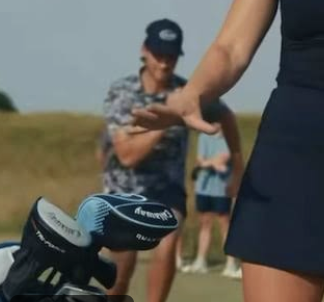
The 15-second video, created as part of a collaboration between golf equipment manufacturer Callaway and digital golf brand Good Good, featured Good Good co-founder Garrett Clark and fellow creator Alexis Miestowski. In the advertisement, Miestowski reaches toward a golf bag containing the new driver before Clark rushes over and pushes her to the ground. He then stands over her and warns her not to touch the club.
The commercial was quickly criticized across social media, with viewers arguing that the attempt at humor crossed a serious line by depicting a man physically confronting a woman in an advertisement for a golf product. Critics also questioned how the concept made it through the production, review and approval process.
Both Good Good and Callaway removed the advertisement following the backlash. Good Good subsequently apologized, acknowledging that the content did not represent the brand’s stated commitment to making golf more inclusive.
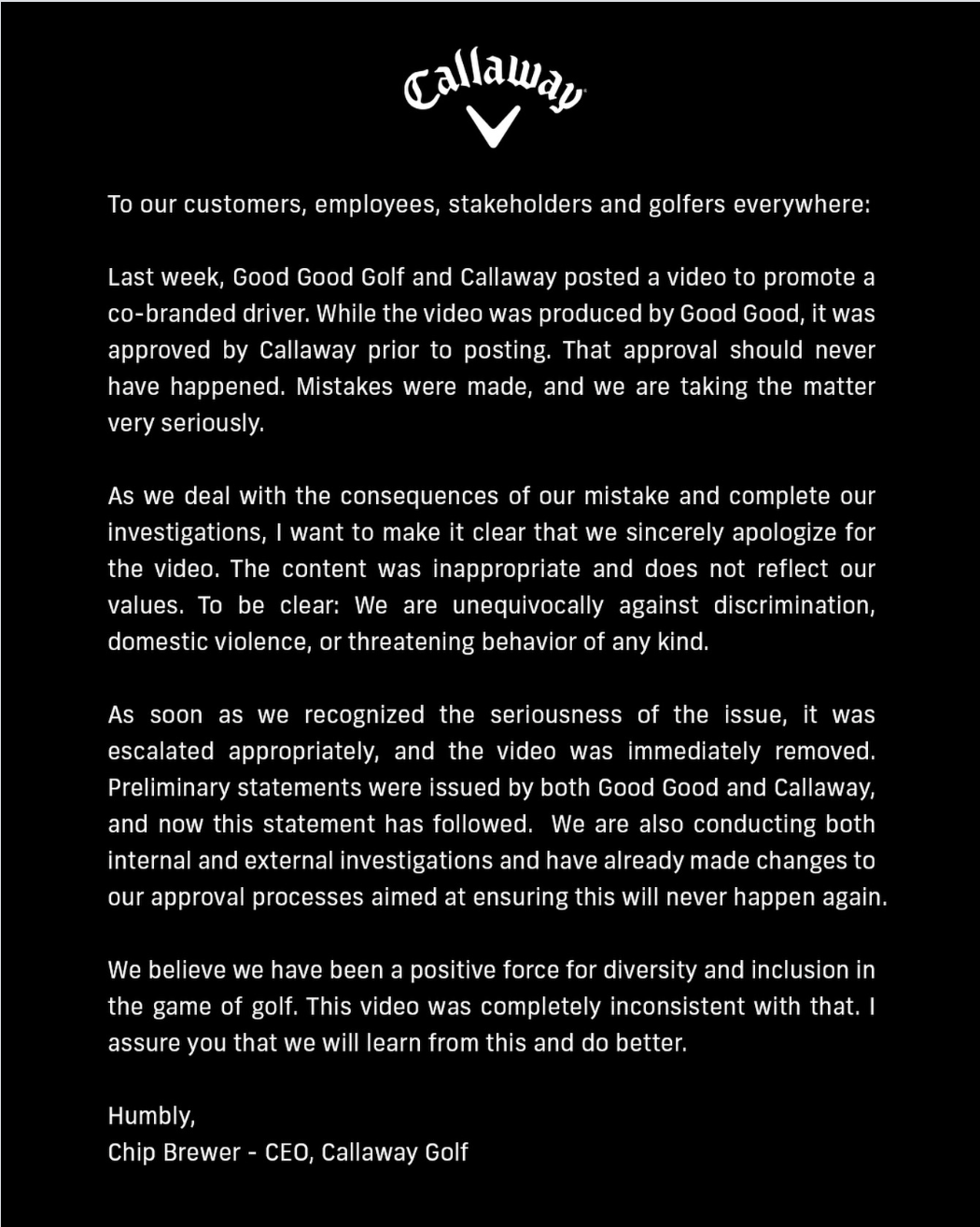
Callaway initially responded by expressing disappointment with the content. The company later issued a more extensive statement through CEO Chip Brewer, acknowledging that although Good Good produced the video, Callaway had approved it before publication. Brewer said that approval should not have occurred and described the situation as a serious mistake.
Callaway said it had launched internal and external investigations and had already begun making changes to its content-approval procedures. The company also emphasized its opposition to discrimination, domestic violence and threatening behavior.
The controversy is particularly significant because both companies operate in a golf industry increasingly focused on expanding the game’s audience. Good Good has built a substantial following among younger golfers through YouTube-based entertainment, golf challenges, merchandise and other media ventures. The company has more than 2 million YouTube subscribers and is scheduled to serve as title sponsor of an upcoming PGA Tour event, giving the brand an increasingly visible position within professional golf.
For Callaway, the episode also raises questions about brand oversight. The company has invested heavily in marketing, athlete partnerships and efforts to broaden golf’s appeal. A campaign that can be interpreted as normalizing aggression toward women runs counter to those objectives and illustrates the risks established golf brands face when working with rapidly growing digital-content companies.
Several women working in golf media publicly criticized the advertisement. Their concerns centered not simply on whether the scene was intended as comedy, but on the message conveyed by showing a woman being knocked to the ground as part of a product promotion. Critics argued that imagery involving violence toward women can be particularly troubling in a sport seeking to attract and retain more female players.
The PGA Tour also responded to the controversy, reaffirming its commitment to a welcoming and respectful environment and stating that it does not condone violence.
The incident offers a broader lesson for golf’s expanding media ecosystem. Digital creators increasingly have the reach and influence once associated primarily with traditional sports broadcasters and major golf publications. With that influence comes greater responsibility for the messages communicated through sponsored content.
Removing the advertisement and apologizing were immediate steps, but the more important test for both companies will be what happens next. Stronger creative review, greater diversity in decision-making and a clearer understanding of how audiences interpret potentially sensitive imagery could help prevent similar situations.
Golf has made considerable progress in becoming more accessible to women, young people and traditionally underrepresented communities. Marketing campaigns connected to that growth carry an obligation to reinforce those efforts rather than undermine them.
For Callaway and Good Good, the controversial advertisement may ultimately become less a story about one ill-conceived commercial and more a reminder that in today’s golf marketplace, what a brand intends to say and what its audience actually sees can be two very different things.