

The Tent is the official podcast of the African American Golfer’s Digest. Co-sponsored by Jim Beatty Golf Ventures. Hosted by award-winning broadcaster Michael Williams, The Tent will provide news, information and features connected to golf and beyond. From travel to test equipment, from health to Hollywood, The Tent podcast is essential listening for golfers and non-golfers alike. This week’s special guest is Jimmie James, author of the acclaimed new book, “Playing From The Rough”. James chronicles his journey to play America’s top 100 courses in one year while also describing his rise from humble beginnings to corporate success.

IN CASE YOU MISSED IT: SNAKE SLITHERS ACROSS THE GREEN AT PGA CHAMPIONSHIP
He forgot his inside-the-ropes credential. š #PGAChamp pic.twitter.com/wtn1lKeZ2d
— PGA of America (@PGA) May 18, 2024
Tiger Woods Hints at More Play After Missing PGA Championship Cut
Tiger Woods shot a second-round 77, missing the cut at the PGA Championship by eight strokes. Despite this setback, the 15-time major champion is committed to improving his game for next month’s US Open and suggested he will play more regularly.
Woods, who made two triple bogeys, has now failed to break par in 11 consecutive rounds in majors. In only his third event of the season, the world No. 807 finished 19 shots behind leader Xander Schauffele after 36 holes.
Looking ahead to the US Open on June 13, Woods said: “My game will get better. In time. I need to play more. Unfortunately, I just haven’t played a whole lot of tournaments, and not a whole lot of tournaments on my schedule either. Hopefully, everything will come together in my practice sessions at home and be ready for Pinehurst.”
Woods acknowledged the need to clean up his rounds, emphasizing that he is physically better than he was a month ago but still has room for improvement. “Physically, yes, I am better than I was a month ago. I still have more ways to go, lots of improvement to go physically, and hopefully my team and I can get that done pre-Pinehurst and going into it.”
Woods’ performance deteriorated after a solid start, finishing with a 72 after three-putting on the final two greens of his first round. The challenging weather in Louisville, with persistent heavy rain, added to his difficulties.
His impressive streak without a triple bogey at the US PGA ended on the second hole, where he found himself bouncing from one bunker to another and then three-putting for a seven. Just two holes later, he suffered another triple bogey, losing seven shots over three holes. Despite this, he managed birdies on the seventh and eighth holes, narrowly missing a hole-in-one on the latter with a stunning 190-yard drive. However, more setbacks occurred with dropped shots on the 11th and 12th holes.
An 80-minute delay due to a tragic morning traffic accident disrupted the tournament schedule, but Woods wrapped up his game with a birdie on the final hole, playing the last 14 holes one-under par to finish seven-over par.
Reflecting on his performance, Woods said: “I got off to a bad start and the rough grabbed me at 2. No sand in the bunker as well. Just made a mistake there. I compounded the problem at 4. Just kept making mistakes and things you can’t do, not just in tournaments but in majors especially. I hung around for most of the day but unfortunately, the damage was done early.”
Darius Laws: Driving Toward Success in Golf and Entrepreneurship
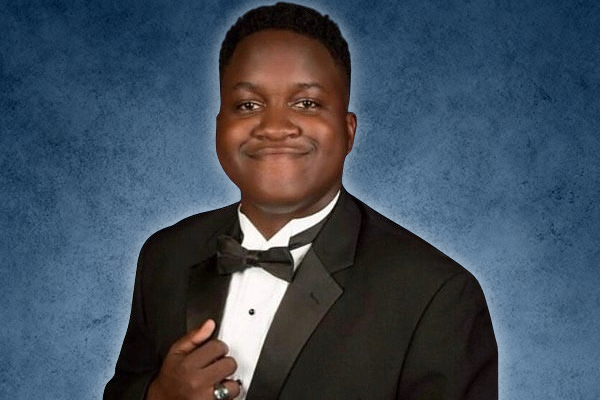
Darius Laws, a 19-year-old student at the University of Maryland Eastern Shore (UMES), has just completed his first year in the PGA Management program. His journey through golf and academics has been both challenging and rewarding, culminating in his selection for the prestigious Future Entrepreneurs Program by Wells Fargo. This opportunity has set the stage for his future endeavors and provided him with invaluable experiences and connections.
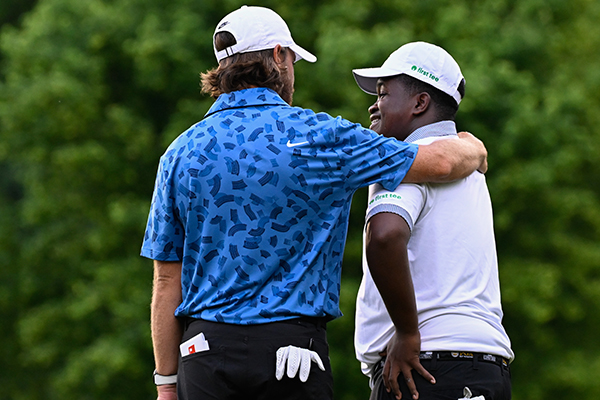
Being selected for the Future Entrepreneurs Program by Wells Fargo is a significant milestone for Darius. He expressed immense gratitude for the opportunity to learn from his mentor and gain a clear game plan for his future. Reflecting on the experience, he said, “It means a lot to me that I got selected for the Future Entrepreneurs Program. I learned a lot from my mentor and have a game plan for the future.” The highlight of the event was playing in the pro-am with professional golfers Tommy Fleetwood and Seamus Power, an experience he described as incredible. Darius thanked First Tee and Wells Fargo for the fantastic trip and the opportunities it presented.

Impact on Future Endeavors
Darius believes that this experience will have a profound impact on his pursuit of a professional golf career. The insights and strategies he gained from his mentor and the networking opportunities have given him a clearer path to achieving his goals. “It also gives me a game plan for how I can make it to the next level during and after college golf,” he stated. The program has not only enhanced his golf skills but also provided him with a strategic framework for his future in professional golf.
Dariusās journey in golf has significantly influenced his academic and professional development. His passion for the sport led him to major in PGA Management at UMES, where he is honing his skills and knowledge of the golf industry. Professionally, golf has opened doors to valuable internships and scholarships. He has interned at Aronimink Golf Club and received the Caves Valley scholarship, with plans to intern at Caves Valley next summer. These opportunities have provided him with hands-on experience and industry insights that are crucial for his career.

The mentorship and networking opportunities provided through the Wells Fargo Pro-Am event have been pivotal for Darius. He plans to leverage these connections to further his career in golf and entrepreneurship. Maintaining relationships with his mentors and the professionals he met during the event will be key to his ongoing development and success.
Balancing his academic commitments at an HBCU with his passion for golf and entrepreneurial pursuits has been a challenge for Darius. To overcome this, he plans to create a daily schedule that prioritizes his time commitments and disciplines himself to stick to this rigorous schedule. “I plan to make a daily schedule of my time commitments and be disciplined to accomplish my rigorous schedule,” he explained.
Darius is also committed to giving back to his community, particularly to young individuals from underrepresented backgrounds. He plans to volunteer with the Delaware First Tee Chapter during the summer sessions and work with the summer golf camps at Aronimink Golf Club. By sharing his knowledge and passion for golf, he hopes to inspire and support the next generation of golfers.
Darius Laws exemplifies dedication, discipline, and a commitment to both personal and professional growth. His journey through golf and academia, coupled with the opportunities provided by the Future Entrepreneurs Program, has positioned him for a promising future. As he continues to navigate his path at UMES and beyond, Dariusās story serves as an inspiration to other young individuals striving to balance multiple pursuits and make a positive impact in their communities.
Golf’s Millennial Migration: How Golf Communities Are Winning Over a New Generation
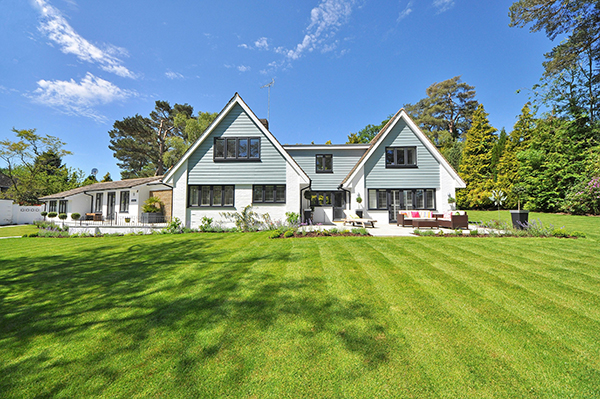
It seems like just yesterday Baby Boomers and Gen Xers were criticizing millennials for their social media habits and music tastes. However, as every generation ages, their preferences shift. This likely explains why many millennials are now trading city life for homes in golf course communities across the country. While this move might initially appear surprising, it aligns with a common pattern: people in their 40s, including millennials, often seek a more relaxed lifestyle. Golf course communities offer an ideal environment for this transition, providing a peaceful and leisurely pace of life.
A recent Wall Street Journal feature highlighted several couples who moved to golf course communities, citing the family-friendly and safe atmosphere as key reasons. Historically, homes in these communities have been among the priciest residential options, a trend that persists today.
Notably, the rising property values in major metropolitan areas have driven city housing costs to levels comparable to those in suburban golf communities. Additionally, many millennials were exposed to golf during their upbringing, thanks to its popularity among their Baby Boomer and Gen X parents.
Initially, golf might have seemed dull to younger millennials, who swore off such country club activities. Yet, the National Golf Foundation reported that Americans played over 530 million rounds of golf in 2023, a record high indicating the sport’s growing appeal among younger players. The same report found that golf club memberships nationwide increased by 400,000 since 2019. While 60% of new members are over 50, the remaining 160,000 are under 40, many of whom are millennials joining the clubs associated with their new suburban homes.
Some of this trend can be traced back to the COVID-19 pandemic. Golf, with its spacious outdoor setting, became an ideal sport for social distancing, unlike indoor activities like poker or basketball, which carried higher infection risks. Moreover, the influence of Tiger Woods, who made golf appear cool to many millennials, cannot be understated. The allure of hitting a perfect golf shot keeps many players coming back for more.
These factors make it clear why millennials are drawn to golf course real estate. However, their arrival isn’t always welcomed by older residents of these communities. The presence of younger families and their more lively social activities can clash with the quieter lifestyle preferred by retirees. Despite these tensions, the influx of millennials benefits the golf clubs financially, ensuring their sustainability.
In conclusion, millennials’ move to golf communities is reshaping these neighborhoods, bringing both challenges and advantages. Their participation helps maintain club operations, vital for the continued enjoyment of the sport and the upkeep of these serene communities.
Tiger Woods Embarrassed By Sun Day Clothing Malfunction at Valhalla, Sparking Brutal Taunts From Fans
Tiger Woodsā new clothing brand, Sun Day Red, faced criticism following issues during the PGA Championship. After ending his long-term partnership with Nike, Woods launched Sun Day Red earlier this year, featuring golfwear he’s been sporting on the course.
On Thursday at Valhalla, Woods teed off wearing a salmon pink polo shirt, grey trousers, and a white cap with the brandās logoāa leaping tiger with 15 stripes symbolizing his major victories. However, the humidity in Kentucky revealed problems with the shirt’s wicking material, as Woods’ perspiration became evident early in his round.
Golf writer Gabby Herzig from The Athletic remarked on X, āI feel like the one thing Sun Day Red should have prioritized is making golf shirts that even Tiger Woods canāt sweat through.ā One fan was quick to point out to Essentially Sports,Ā āI donāt mind the Sun Day Red brand, but gotta make sure they are better sweatproof? Thatās why I love Rhoback, Nike, etc.; I can sweat all I want and show nothing like this. Yikes.ā
Dan Rapaport from Barstool Sports added, āThereās not a material on Planet Earth that has a chance against Tigerās sweating on a humid day at a major championship. Absolutely lapping the field in perspiration.ā
Woods had initially warmed up in a sleeveless jumper but removed it before starting his round at the tenth hole. He finished the first round with a score of 72, tying for 85th place at one-over par.
A replica of the polo shirt worn by Woods is priced at $120 (Ā£95), though the salmon pink version is currently sold out.
PGA Championship 2024: Scottie Scheffler Handcuffed and Detained by Louisville Police
LOUISVILLE ā Scottie Scheffler was handcuffed and detained by Louisville Metro Police at Valhalla Golf Club on early Friday morning, according to a Golf Digest report.
According to ESPN’s Jeff Darlington, Scheffler attempted to drive past a police officer, presumably to enter the golf course and prepare for the second round of the 2024 PGA Championship. A traffic issue had arisen due to an accident outside the club, where a shuttle bus hit and killed a pedestrian early Friday morning. Scheffler’s arrest is not related to the early morning shuttle bus accident.
Here is video that I took of Scheffler being arrested: https://t.co/8UPZKvPCCf pic.twitter.com/9Tbp2tyrJh
— Jeff Darlington (@JeffDarlington) May 17, 2024
The officer, apparently trying to prevent Scheffler from proceeding, attached himself to Schefflerās car and told Scheffler to get out of the vehicle. When Scheffler complied, the officer shoved him, placed him in handcuffs, and put him in the back of a police cruiser. ESPN video confirmed Darlington’s report. Scheffler allegedly pleaded for help from an ESPN crew nearby; when Darlington attempted to intervene, the police officer responded, “There’s nothing you can do, he’s going to jail.”
Darlington added that the officers did not recognize Scheffler.
The PGA of America has not responded to Golf Digest’s request for comment at this time.
Scheffler, the World No. 1, has won four of his past five tournaments, highlighted by his second Masters title and becoming the first player to successfully defend the Players Championship. Scheffler shot a first-round four-under 67 at Valhalla on Thursday. He was scheduled to tee off at 8:48 a.m. Friday before the shuttle-bus accident delayed the round.
Fatal Bus Accident Delays PGA Championship at Valhalla as Pedestrian Dies
The second round of the PGA Championship at Valhalla has been delayed after a man was fatally struck by a shuttle bus while crossing a road near the course early Friday morning.
Play, originally scheduled to resume in Kentucky at 12:15 PM BST, has been postponed by at least an hour due to the incident.
“At about 5 AM ET this morning, the Louisville Metro Police Department responded to a call about a vehicle collision involving a pedestrian and a bus. Our preliminary investigation found that an adult male pedestrian was crossing Shelbyville Road from south to north when he was struck by a shuttle bus traveling eastbound in the designated bus lane,” a police spokesman reported.
“The pedestrian sustained fatal injuries and was pronounced dead at the scene. The LMPD Traffic Unit is investigating the incident.”
This tragic news coincides with a dismal weather forecast for the area on Friday, with rain expected throughout the day and thunderstorms predicted in the afternoon and evening. Although all players completed their opening round on Thursday, the pace of play was slow, making it doubtful that a full day’s play will be possible on Friday. The investigation remains ongoing.
In partnership with KJLH Radio and hosted by the legendary Norm Nixon and Debbie Allen, this celebration underscores the APGA Foundation‘s commitment to diversity and inclusion in golf. All proceeds from the event will directly support the Foundation’s efforts to provide resources for underrepresented golfers and youth, paving the way for their success both on and off the course.
Participation in this event is essential to this worthy cause. Those interested are encouraged to register their threesome today at https://givebutter.com/APGAJunetenth.
Shady Rest Golf and Country Club, A Historic Haven for African American Golfers
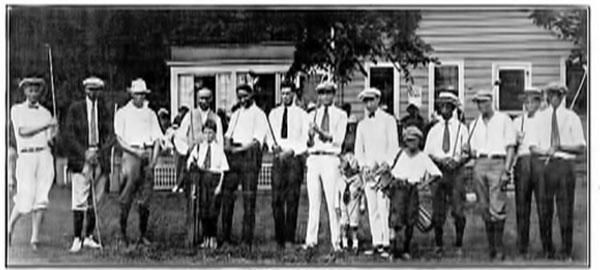
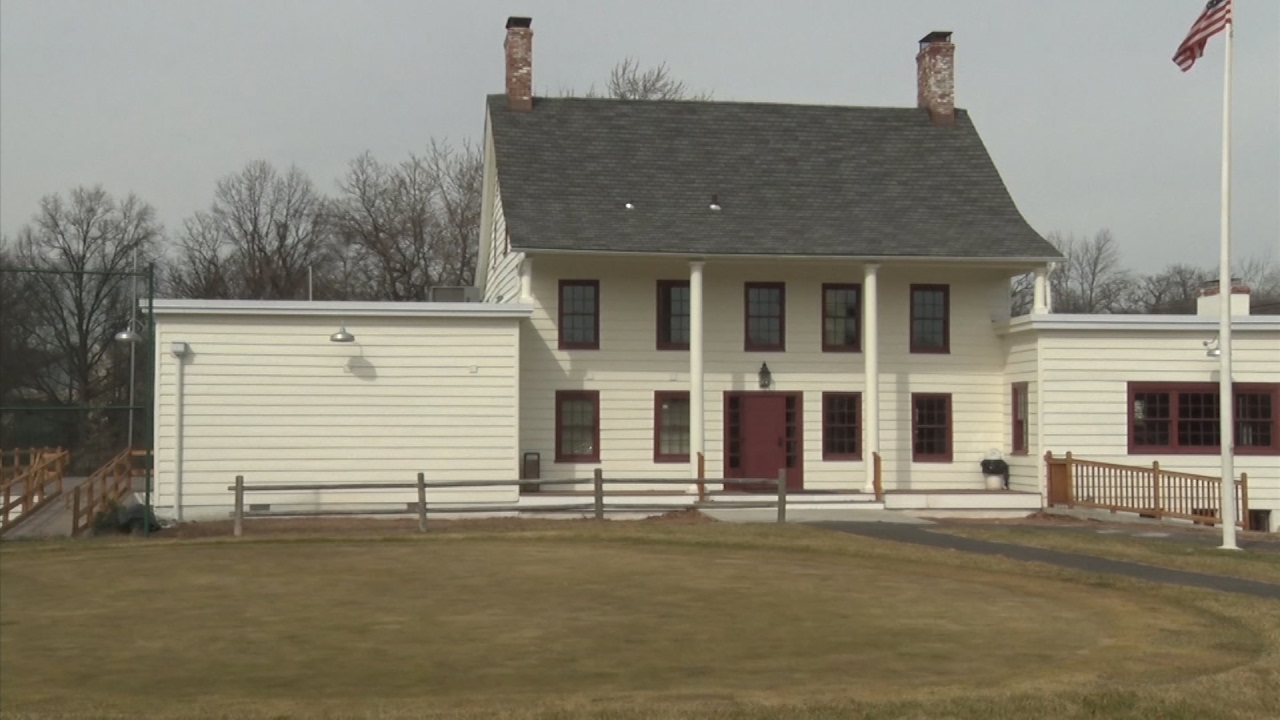
Nestled in Scotch Plains, New Jersey, the Shady Rest Golf & Country Club holds the distinguished title of being the oldest African American golf club in the United States. From the 1920s through the 1960s, it served as a vibrant hub for the black middle-class society in New Jersey, drawing members from as far south as the Carolinas to partake in its numerous amenities.
The origins of Shady Rest trace back to the Ephraim Tucker Farm, a 31-acre plot that was sold to the Westfield Golf Club. The club members transformed the land into a nine-hole golf course and repurposed the farmhouse into a clubhouse. On September 21, 1921, the Progressive Realty Company, Inc., a group of black investors that included Scotch Plains resident Henry Willis Sr., purchased the club and renamed it the Shady Rest Golf and Country Club.
During a period marked by intense racial segregation, Shady Rest emerged as a sanctuary for African Americans seeking recreational and social activities. The club offered golfing, croquet, skeet shooting, horseback riding, and tennis to African American residents from surrounding New Jersey communities. Its motto, “A Place For Us,” underscored its commitment to providing a welcoming space for black society. Esteemed black activists such as W.E.B. DuBois often lectured at the club, enhancing its status as a cultural and intellectual hub.

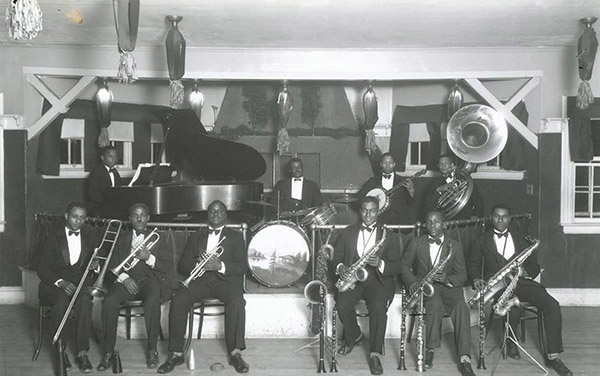
Located just thirty miles west of New York City, Shady Rest’s inclusion in The Negro Motorist Green Book further elevated its prominence. The clubhouse became a favored destination for many notable black entertainers, including Cab Calloway, Ella Fitzgerald, Louis Armstrong, Duke Ellington, Billy Eckstein, Count Basie, Sarah Vaughn, Chick Webb, and Billie Holiday. These luminaries not only performed at Shady Rest but also enjoyed the exclusivity and respite it offered. Additionally, the club’s tennis pavilion played a crucial role in the development of Ora Washington and Althea Gibson, the first African Americans to win a grand slam title.
Shady Rest also holds a significant place in golf history. In 1925, it hosted the first National Colored Golf Championship, sponsored by the United States Colored Golfers Association. The association, founded earlier that year, was led by B.C. Gordon, who also served as Shady Rest’s president. John Shippen, the club’s head professional golfer and groundskeeper, brought further prestige to the club. Shippen, an African American of Jamaican descent, made history in 1896 as the first black professional golfer to compete in the U.S. Open. He played in five U.S. Opens before settling in Scotch Plains in 1931, where he managed Shady Rest until his retirement in 1960.
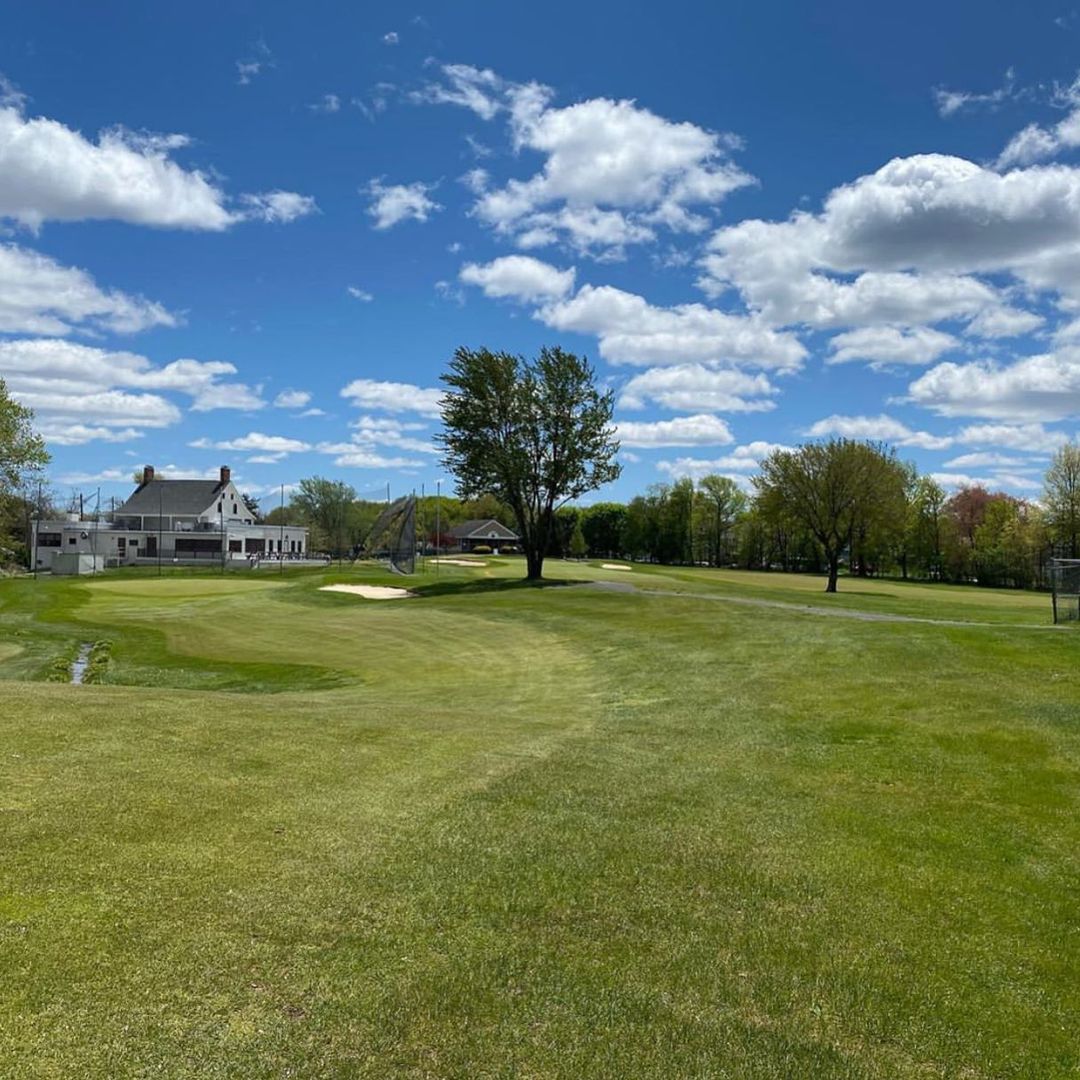
In 1964, following a legal battle, the township of Scotch Plains acquired ownership of the club, making the grounds public and racially integrated. The club was renamed the Scotch Hills Golf and Country Club. Despite threats of demolition in 2013, the clubhouse still stands today, thanks to the efforts of local residents who formed The Preserve Shady Rest Committee. Their fundraising efforts led to the renovation and restoration of the clubhouse, which now houses a small museum dedicated to John Shippen and his contributions to golf history. Shady Rest remains on New Jersey’s list of endangered landmarks, with hopes of being declared a historical landmark.
The Shady Rest Golf & Country Club’s rich history and enduring legacy stand as a testament to the resilience and achievements of African Americans in the face of adversity.

PGA of America REACH Foundation to donate $250,000 to aid in renovations and additions to Kentucky facility
LOUISVILLE, Kentucky (May 15, 2024) – PGA of America CEO Seth Waugh announced today during a 2024 PGA Championship press conference that the PGA of America REACH Foundation, the charitable foundation of the Association, will donate $250,000 to Seneca Golf Course through the PGA Places To Play program.
In its mission to impact lives through the game of golf, the PGA of America REACH Foundation is committed to ensuring golf becomes more accessible. PGA Places To Play creates new opportunities to support facilities and sustain affordable access to the game for people of all backgrounds and abilities.
Significantly, the Valhalla Ownership Group (Jimmy Kirchdorfer, David Novak, Junior Bridgeman, Ches Musselman) and Valhalla Golf Club membership will match the donation to aid in the renovations of Seneca Golf Course, ensuring its facilities will meet the needs of the community for years to come.
The donations will be used toward the Seneca Golf Course Improvement Project, which will cost $1.5 million in total for the following:
- Renovation of the par 3 course to optimize playability and access
- The building of a new indoor practice facility, allowing year-round youth programming and education
- Upgrading and modernizing the driving range facilities to accommodate increased use
- The creation of a new putting course to engage all types of golfer
Seneca Golf Course was submitted for consideration by the Kentucky PGA Section and Louisville Parks and Recreation, as the course has been a fixture in Louisville since 1934. Located in central Louisville, the course is a community hub for families, local businesses and golfers of all ages.
āPGA Places To Play is a pillar within the PGA of America REACH Foundation because we consider it our responsibility to help improve and solidify community facilities that invite individuals of all backgrounds and abilities to this great game,ā said PGA of America CEO Seth Waugh. āThe City of Louisville has been an avid supporter of the PGA of America over the years and now we are proud to play a small part in ensuring that a historic place such as Seneca Golf Course has the ability to serve the local community for many more generations to come.ā
“The Seneca Golf Course par 3 course and driving range are vital community assets, serving as accessible venues for golf enthusiasts of all ages and skill levels in our community,” said Kentucky PGA Section Executive Director Sally Morgan, PGA. “We couldn’t be more appreciative of the PGA Places To Play program as we aim to enhance the overall golfing experience for residents and visitors alike.”
Seneca Golf Course houses PGA of America Programming such as PGA Jr. League; Drive, Chip and Putt; and a newly organized PGA HOPE (Helping Our Patriots Everywhere) program. In addition, Seneca serves the golf community through the First Tee of Louisville and Youth on Course.
āSeneca Golf Course has a storied history in the Louisville community and we are exceptionally proud to join the PGA of America REACH Foundation and match the PGA Places To Play donation,ā said Valhalla Golf Club Co-Owner Jimmy Kirchdorfer. āOn behalf of Valhalla Golf Club, thank you to the PGA of America for the charitable efforts made in Louisville. We look forward to seeing the positive impact this will have on our community for years to come.ā
PGA Places To Play is supported by a $14 million endowment fund of charitable contributions to the Foundationās DRIVE IT FURTHER Capital Campaign, annually providing three grants of $250,000 to selected facilities.
Three facility categories are available for consideration:
- PGA of America Spectator Championship legacy Project Model: A facility within the market of a PGA of America spectator championship such as the PGA Championship, KPMG Womenās PGA Championship and domestic Ryder Cup
Ā - Community-Based Innovation Model: Innovative facilities and concepts that open doors to underserved communities in the game through elements aligned with PGA of America REACH Foundationās charitable mission
- Failing 9 or 18+ Hole Public Facility: Facilities that are operated by a local charitable organization or a municipality in danger of being replaced by a ābetter alternative use.ā
About Places To Play PGA Places To Play creates opportunities to support golf facilities and sustain affordable access to the game for people of all backgrounds and abilities throughseed grants from the PGA of America REACH Foundation. Funding for PGA Places To Play comes from donors across America who believe wealth shouldnāt be a barrier to the game of golf. The program creates access through community-based initiatives and PGA of America championship markets while supplementing the local expertise provided by PGA of America Golf Professionals and national programs like PGA Jr. League, PGA HOPE and PGA WORKS. For more information, visit PGAREACH.org/access.
At first glance, horse racing and golf might not have much in common, but if you start to peel the layers, youāll find that they are very similar in different aspects.
Golf is considered a leisure and relaxing activity, which is quite the opposite of horse racing. Horse racing is a full adrenaline blast, where horses race down the finish line in a close action and you cheer for the horse youāve placed money on.
Even people who donāt know much about horse racing want to occasionally engage on betting race horses just for the adrenaline rush.
After all, you wouldnāt like to leave it all to chance or luck.
So, they look and feel quite different. But why then many popular horse racing tracks also have golf terrains? Whatās the connection between these two activities?
Maybe they attract the same people? Letās dive deeper and find out how is golf related to horse racing and what are their similarities.
Historical Parallels
Both golf and horse racing have rich history roots that trace back centuries. Of course, horse racing is much older than golf, and probably any other sport or activity on the planet.
We can trace the origins of golf to Scotland during the 15th century, when the sport was initially played by nobles and royalty.
Letās stop here for a moment and try to think of why are golf and horse racing related.
Well, if we look at the historic transition of horse racing, we can find the same thing. Horse racing was also a sport reserved for the elite, higher-class individuals or royalty. In other words, both sports emerged as fun activities for rich people, and that is their main connection.
Horse racing started in ancient Greek and Roman civilizations, but the modern-day horse racing that we all know and love today is a totally different sport.
Nowadays, many high-class individuals go to the races, there is high-end fashion, and people usually go to horse races just for networking. We have a similar scenario on golf courses.
Over time, both sports evolved into organized events with dedicated enthusiasts and professional competitions.
Courses and Tracks
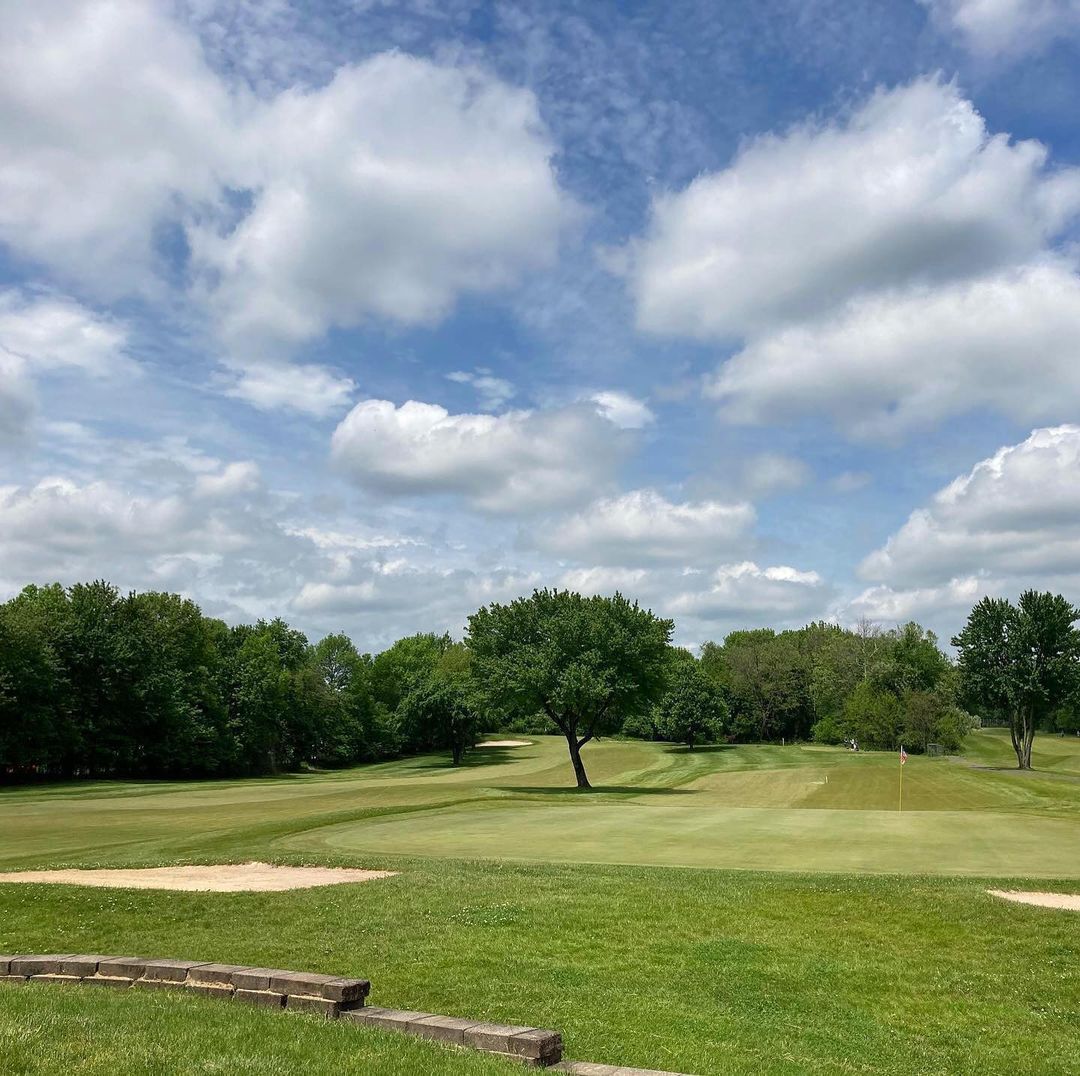
Another similarity between horse racing and golf is the places where these two sports are held. Golf courses are green fields with uneven terrain, lakes, and sand poles, surrounded by vegetation. On the other hand, there are many different terrains in horse racing, including turf (grass) terrain, that require the same if not more maintenance than golf courses.
The design and layout are much simpler on horse racing tracks, whereas on the other hand, golf courses are carefully crafted landscapes, with each hole presenting unique challenges.
But another similarity that we can see between these two is the attention to detail when it comes to designing the track or course. Both golf courses and horse racing tracks look like theyāve come out of a fairytale. Every pair of pants is in the right place, they are maintained all the time and they both look beautiful.
Method and Ability
There are fundamental strategic components that link golf and horse racing, despite the fact that the talents needed for each sport may appear to be very differentāprecision and technique for golf, against speed and agility for horse racing.
Golfers carefully consider the wind direction, course design, and club choice while planning each stroke. Similar to this, in order to offer their horses, the best opportunity of winning, riders and trainers plan ahead before races, taking into account variables like the track, the competitors, and race strategy.
Same Demographic
Horse racing and golf attract the same individuals or individuals of higher-class society. Both sports are associated with money, and both of them have prestigious tournaments with millions of dollars as a prize pool.
Since people who play golf will most likely be interested in horse racing and the other way around, we can see many horse racing tracks that also have golf courses.
Tools and Provisions
Specialized clothing and equipment utilized in both horse racing and golf is another commonality between the two sports. Golfers use a variety of clubs designed for various shot types and distances, in addition to add-ons like rangefinders and golf carts.
Custom-made racing shoes, bridles, and saddles are used by thoroughbred horses in horse racing to ensure peak performance on the track. These sports demonstrate how crucial high-quality equipment is to performing at your best.
Spectator Experience
Beyond the sports themselves, both golf and horse racing offer unique and vibrant spectator experiences. Golf tournaments attract crowds of enthusiasts who follow their favorite players across scenic courses, enjoying the camaraderie and excitement of each round.
Similarly, horse racing events like the Kentucky Derby or Royal Ascot draw spectators dressed in elegant attire, sipping mint juleps or champagne while cheering for their chosen horses. The social aspect and sense of occasion are integral parts of both sports’ appeal.
Economic Impact
From an economic perspective, both golf and horse racing contribute significantly to various industries and local economies. Golf resorts and clubs generate revenue through memberships, green fees, and event hosting, supporting jobs in hospitality, course maintenance, and professional coaching.
Likewise, horse racing fuels a multi-billion-dollar industry encompassing breeding, training, betting, and event management, with major races attracting global audiences and substantial investments.