April 9, 2021


April 9, 2021
April 9, 2021 | BY AAGD STAFF
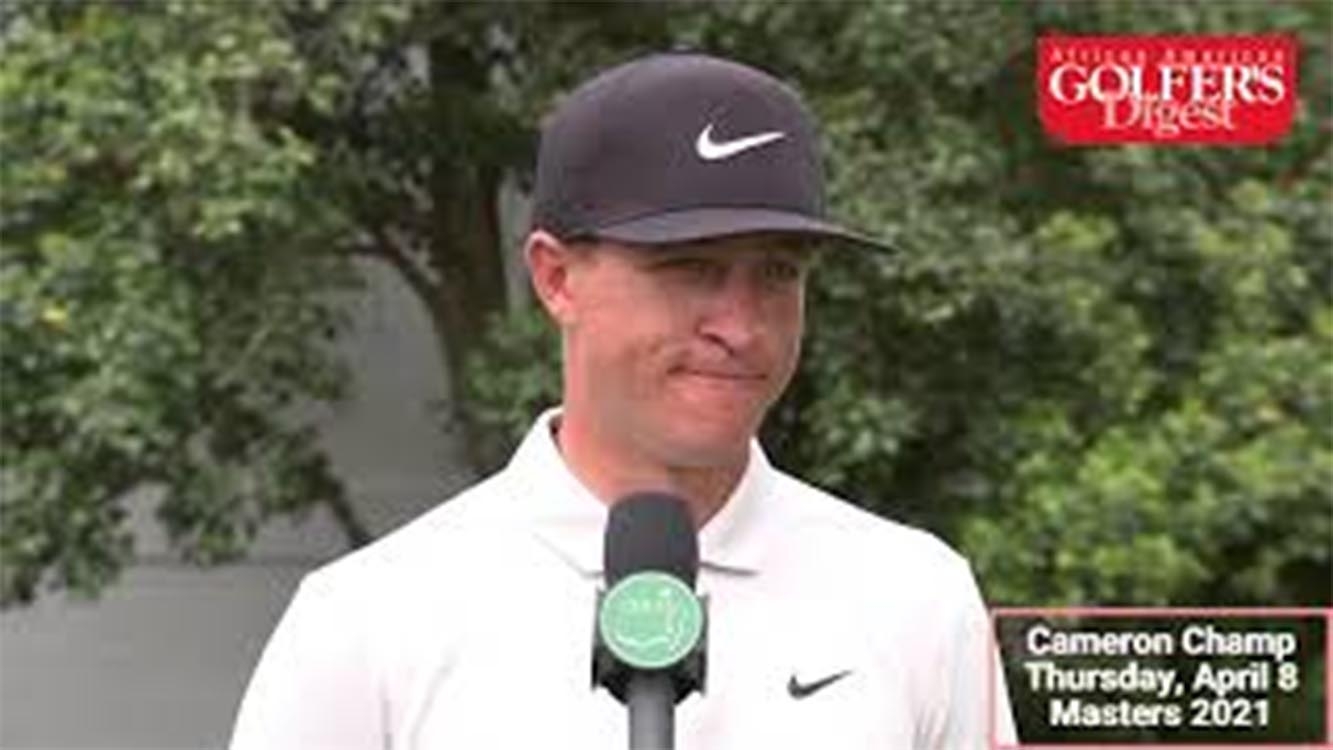
Pro golfer Cameron Champ gives insight into some of the difficulties that he faced on the course during his opening round at the 84th Masters tournament in Augusta, Ga. Champ, age 25, speaks candidly about how the day went for him.


Glennon Bazzle is a member of the New Orleans Regional Black Chamber of Commerce and the Founder of the Global Golf Institute. Bazzle is excited to share his more than four decades of golf instruction and experience with all who wish to learn or have a better golf game.

Glennon Bazzle is the author of “Anatomy of the Perfect Golf Swing,” a unique work that explains the mechanics of the swing, hand action, shoulder turn, hip turn, foot action, and other maneuvers. His system is designed as a quicker method for getting beginners to swing better and is available in English, Spanish, Japanese and Chinese translations. Softcover, ISBN: 0-9667079-0-7. Contact him at [email protected] or call (504) 583-6842.

Founded in 1950 under the umbrella of the United Golfers Association (UGA), the Midwest District Golf Association is committed to upholding the integrity of Amateur Golf and promoting Junior Golf as set forth by golf’s governing bodies: The United States Golf Association (USGA), Professional Golf Association (PGA), Ladies Professional Golf Association (LPGA) and the American Junior Golf Association (AJGA).
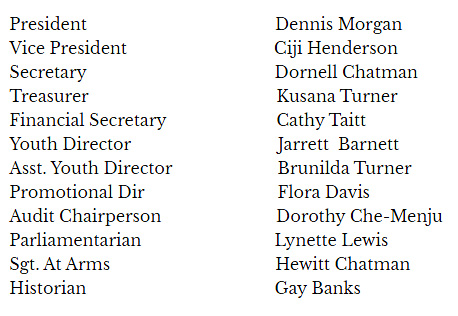
2021-2022 OFFICERS
The association’s commitment is achieved by member clubs hosting sanctioned tournaments and inter-club play and through club volunteers serving as role models and mentors for youth golfers; providing quality golf instruction, fostering academic achievement and fair play, and facilitating national competition for youth golfers regardless of race, creed, color, or national origin.
To learn more about the Midwest Golf Association visit https://www.midwestgolfassoc.org
April 9, 2021 | BY AAGD STAFF
Cameron Champ accesses his play on Day 1 of the 2021 Masters. Champ is 86th in PGA Tour World Ranking and one of just four Black members on the PGA Tour. The 25-year-old, Texas A&M graduate resides in Houston, TX.
Champ tees off on Friday, for Round 2 at 12:48 PM ET paired with Jason Day, Matthew Wolff.
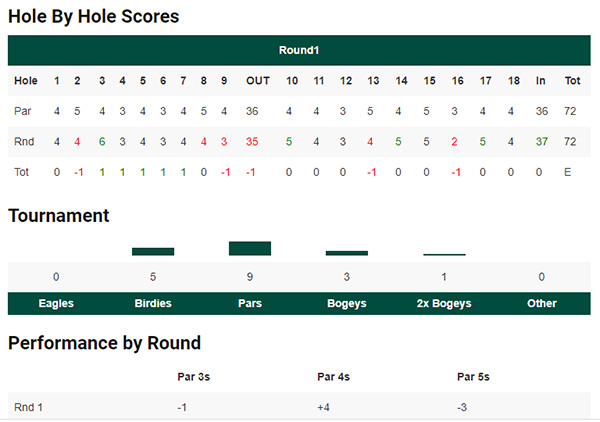
CAMERON CHAMP SCORES
Read and view more great articles, events, and subscribe at AfricanAmericanGolfersDigest.com
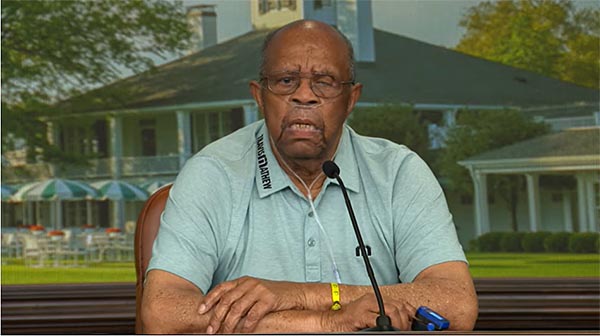
Thursday, April 8 – Press Conference
THE MODERATOR: Good morning, everyone. The 2021 Masters Tournament is officially under way as Lee Elder joined Jack Nicklaus and Gary Player in a historic, emotional and joyous Honorary Starters Ceremony just a few minutes ago.
Back in November, if you will remember, Chairman Fred Ridley announced a momentous new initiative in creating two scholarships to student-athletes, one for the men’s golf team and one for the women’s golf team at Paine College here in Georgia, a nationally renowned Black institute of higher learning. These scholarships will forever be in the honor of Lee Elder.
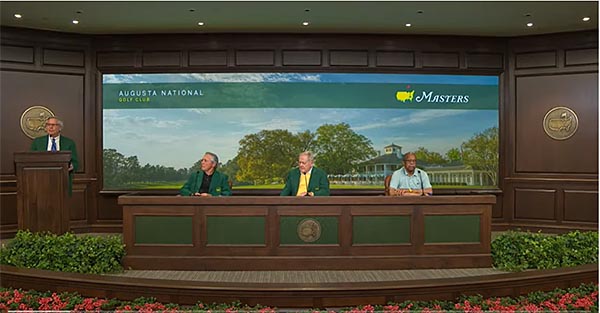
The chairman also extended at this time last November a special invitation to Mr. Elder to join Gary Player and Jack Nicklaus ceremoniously to start the 2021 Masters Tournament.
In 1975, Lee Elder was the first Black man to compete in the Masters and appeared another five times in the Masters.
Mr. Elder, it is our great honor and privilege to welcome you to the media center today. It is also with the greatest of pleasure and honor to welcome back our two legendary winners of the green jacket and indeed legendary icons in sport, six-time Masters champion Jack Nicklaus and three-time Masters champion Gary Player.
Gentlemen, before we open it up to questions, I would like each of you to discuss that significant moment and emotion experienced by each of you just a few minutes ago at the first tee.
If I may, Mr. Elder, we would like to start with you. If you would share with us your emotions and that ceremony and what it means to you today.
LEE ELDER: Well, I certainly want to say thank you so very much for this great opportunity. For me and my family, I think it was one of the most emotional experiences that I have ever witnessed or been involved in.
It is certainly something that I will cherish for the rest of my life because I have loved coming to Augusta National and playing here the times that I have played here with many of my friends that are members here, and at the request and invitation of Buzzy Johnson, who has also had me.
But to me, my heart is very soft this morning, not heavy soft, soft because of the wonderful things that I have encountered since arriving here on Monday and being able to see some of the great friends that I have made over the past years, especially like these two gentlemen that are here.
We have competed against each other, and we have certainly enjoyed a lot of pleasant moments. I just want to say thank you so very much to have me here. It’s a great honor, and I cherish it very much, and I will always cherish it, and I want to thank the chairman for extending me this great privilege.
Thank you.
THE MODERATOR: Mr. Nicklaus, would you please share with us your sentiments and emotions about this morning?
JACK NICKLAUS: Well, I think that having Lee there was the right thing to do, a nice thing to do.
LEE ELDER: Thank you.
JACK NICKLAUS: And I think that — I told Lee, if he could hit it, hit the tee, there’s no way in the world he wouldn’t outdrive me, and he said, No, and I said, Well, then I get you by three yards because you didn’t hit.
It’s always a nice experience to open up the Masters, and Gary and I have had the privilege of doing that for a few years. It’s fun. I walked on the tee, and Phil Mickelson and Bubba Watson were there, and I said — they said, How you doing? I said, I’m doing fine. I said, Let me know if you can see the golf ball because if you can see the golf ball it means I’ve gone beyond the bottom of the hill when I hit it, it means I hit a really long one, maybe 130 yards. I could see the ball. It was good.
But Gary hit a nice tee shot, and I slopped it out there somewhere.
But anyway, it’s always a nice experience, and it was great to share that first tee with Lee and Gary.
THE MODERATOR: Mr. Player, may we have your comments about this historic moment?
GARY PLAYER: Yes, a very historic moment for me. I’ve had the privilege of having a great friend and a man that I admire so much in Jack Nicklaus, the greatest gentleman that ever played golf, without a question.
With Lee Elder, who experienced a lot of things that I experienced in my life, not to delve into them to any extent, but in 1969 I think it was — as we get older, we don’t remember all the intricacies and details, it was in that year that I invited Lee Elder to come to South Africa, and it’s quite sad to think that in those days, with the segregation policy that South Africa had, that I had to go to my President and get permission for Lee Elder to come and play in our PGA. Quite sad.
But things have progressed since we had that wonderful man Nelson Mandela, one of the greatest leaders the world has ever had.
Lee Elder came down, and he was put under an enormous amount of pressure by people in this country, mainly Black people, understandably, and I was called a traitor. Lee Elder on his way to South Africa won the Nigerian Open, came to South Africa, played in our PGA, got standing ovations.
We then went on to other venues and he and his wife Rose at that time visited universities and really contributed to the country a great deal. You can imagine at that time in history how encouraging it was for a young Black boy to see this champion playing, and then of course with Tiger Woods coming on, it was just absolutely fantastic for the people of any color around the world.
It always amazed me that presidents of the United States would be giving these different awards to athletes for their athletic prowess, and here was a man that changed the lives and changed and put a spoke in the wheel of segregation in South Africa and was never given the awards that he actually duly deserved.
He got the Bobby Jones Award, which Jack and I were there, and to be bestowed upon and be given this award here today, which he deserves so richly.
But when you do something for the human being and for freedom, which unfortunately is dying in the world at a rapid pace right now, it is a very historic moment for me. And also to see Phil Mickelson and Bubba Watson on that tee brought back memories because I used to go and watch Jock Hutchison tee off before I played.
That just goes and endorses the fact that they have such respect for this game that has unified people around the world to such an extent, it’s quite unbelievable.
THE MODERATOR: Thank you, gentlemen, so much. Let’s open it up for questions.
Q. Mr. Elder, going back to 1975, what was your strongest memory of that year, and what do you think will be the strongest memory you take away from today?
LEE ELDER: Well, in 1975, the strongest memory as I recall was how nervous I was going to the first tee. But I was fortunate enough to play with a gentleman that I had known for quite some time, Gene Littler. We had sat in the shop for just a few minutes to talk, and we was walking out to the first tee, and he said to me, “Lee, I know this is going to be a hard day for you, but I just want you to know that if I get in your way, just shout at me because I have a tendency to do those things.”
I had a wonderful round that day, according to my way of thinking about the golf course because to me it was not a golf course that I was familiar with, and I was very happy to shoot the 74 I did that particular day.
But what I remember so much about my first visit here was the fact that every tee and every green that I walked on, I got tremendous ovations. I think when you receive something like that, it helps to settle down, because I’ll tell you, I was so nervous as we began play that it took me a few holes to kind of calm down.
Getting those wonderful ovations and seeing a lot of the great friends that I had here with me at that particular time, it gave me a chance to concentrate a little bit more on the game because I was not just up looking around to see whom I could see. I was able to stick with business.
But I think really it was a situation of kind of looking around because it was such a beautiful day, and all the cherry blossoms had bloomed and everything was so beautiful.
But I still had to concentrate on the game of golf, which was hard for me to do. I think that on several occasions, as I thought about where I was at and where I had came from, was certainly something that was a reminder, a reminder of, hey, you’ve worked for this, you have now achieved it. Just relax and enjoy and enjoy the moment. Your life is not going to depend on how well you play. You don’t have to be worrying about carrying anyone on your shoulder. You’re there just on your own. This was a goal that you had set for yourself. You have achieved it, so now relax and play some golf and just enjoy the moment.
Those are great memories that I will always have of coming here and playing at Augusta for the first time.
Q. A question for Mr. Player. I heard when you came down Magnolia Lane this morning with your grandsons that you turned the radio down just to take in the moment. What was going through your mind when you sat there in silence and took it all in?
GARY PLAYER: Well, what applies every year, having played in it 52 times, which is an incredible experience and an honor, most times I’ve walked up the avenue. Today I didn’t because we had to be here at a specific time. Most times I’ve walked up that in a sign of gratitude, just to realize how lucky I am to be in this great country. I’ve traveled more miles than any human being that’s ever lived now, and what these eyes have seen, not one American and 350 billion people have seen around the world, and to be playing at this great golf course, this wonderfully organized tournament, which changes one’s life when you win it.
So it is just a sign of gratitude and a sign of thank you to the man above for letting me have that privilege bestowed upon me.
Q. This is a meaningful day for lots of people, including a lot of the older Black caddies who used to work the tournament, many of whom are still alive and living in Augusta. I wonder if each of you could recount some memories maybe of a pre-1982 and some of these caddies and their ability to read greens, et cetera, what they meant to you.
LEE ELDER: Well, it certainly has meant a lot to me because I’m so happy to see them come about and be able to compete and achieve the things that they have been able to achieve.
I certainly have enjoyed competing against a lot of them that have come from the caddie ranks like I did to perhaps pursue a career in the professional game. It just has taken a little bit longer because of the circumstances of not being able to really accumulate and get the type of money that it takes to play on the TOUR.
But for me personally, I am just so thrilled to know that they did continue to work at it and tried to pursue a career in the professional ranks. I know that I have been able to compete against a lot of them and have made good friendships with them, and I certainly will continue to do my best to continue and do whatever I can do to further enhance Black golf into the professional ranks.
JACK NICKLAUS: My experience here is I came here the first time in 1959, and I had a fellow that actually came from — I don’t know how much he caddied here, but he caddied here — from Atlanta named Pon. And Pon, that’s all I knew him by, caddied for me the first year, and I played decently but didn’t make the cut.
The next year I came back, and I remember Freddie, the caddie master, said, “Pon, Mr. Nicklaus is here. He’s ready to get out and go play.”
He said, “Well, I don’t want to caddie for Mr. Nicklaus.”
“Why don’t you want to caddie for Mr. Nicklaus?”
“He worked too hard.” He says, “He comes too early and he leaves too late. I don’t want to do that.”
And so Freddie looked in the room and he said, “Is there anybody here who would like to caddie for” — and Willie Peterson raised his hand, and he said, “I’m not afraid of working.”
So Willie came with me, and Willie was with me for five of my Masters wins. Willie caddied for me — I’m sure Pon has passed by now, and of course Willie passed away 15 years ago maybe. Willie was — he was a great personality.
The trouble that Willie got into was only — I don’t know who it was matched by, but it was hard to match. But Willie was a wonderful guy. I loved Willie, and I miss him.
That was the experience when you came to Augusta, that you had an Augusta caddie and you had somebody who knew what was going on. Willie never read a green for me. Willie never picked a club out of the bag, but Willie sure was enthusiastic.
The putt I made in ’75 on the 16th hole, Willie started waving his towel, and when he started waving it, he waves it right down as the ball went in the hole and he missed the ball by about that far. (Laughter.) He was wonderful.
GARY PLAYER: I love that. Having been the first time in 1957, I arrived here and there’s a caddie whose name was Ernest Nipper, and today, in spite of my son sitting here who’s caddied for me and some of my grandchildren, he was the best caddie I ever had. He was a very good golfer. He lived here. He knew his greens inside out.
I vividly remember getting on to the 4th hole, and I had a putt of about six foot for a par from the left-hand side of the putt and the flag was back left, and I said, “Nipper,” I said, “this is left lip.”
He says, “Black Knight, this is on the right lip.”
I said, “It’s not, it’s on the left lip.”
He says, “If it’s not on the right lip, you don’t have to pay me.”
I said, “Now I’m convinced.”
It went right in the middle. And then I came back here in 1978, and Eddie McCoy is my caddie. As I arrive, he says, “Sit down, laddie.”
I said, “What’s the problem?”
He says, “Man, I need a roof on my house. I’ve got a lot of children, and I need a roof, and I don’t have the cash, man.” He says, “let’s dash for the cash this weekend.” I said, “We will get you a roof on your house.” And I’m seven behind Tom Watson, and I shoot a 30 on the back nine and come back in 64 and win, and when I holed that putt on the last hole, which is the most significant putt of my career, man, he would have won the Olympic high jump, the champion, without a question of a doubt.
We all have wonderful memories, and Arnold had great memories, everybody had great memories of these caddies that played a vital role in this tournament.
Q. Mr. Elder, I wanted to know just how you chose golf, a sport that at the time wouldn’t have appeared all that welcoming to people of color. Why golf? And Jack, if you could just — what do you remember of his 1975 appearance? Obviously you have great memories of that year, but I’d love to know if there’s anything specific about his appearance.
LEE ELDER: Me first? Well, coming up out of the rural area out of Dallas, Texas, as a caddie, where I first started and was fortunate enough to move to Los Angeles, where I had a chance to compete in the game, I had no idea where I would land as far as my professional career was concerned because I did not have the great idea about becoming a professional golfer at the time.
At the time I was just primarily trying to be a good golfer because if you played around a lot of the places that I played, you had better be a good golfer, especially if you were trying to hustle a buck or two because there were so many bandits that were out there. And when I talk about bandits, I’m talking about guys that were real good players that always sat around and waited for somebody to come along. And when they found out that I was a pretty good player, all of them wanted to kind of be partners with me.
But that was the only way that we as Black players had a chance to go — and it was all public courses that we were playing, so these were the type of courses that we had to kind of tune our game to.
I think that the one thing that really helped me was the fact that I ran into a player that had played the TOUR by the name of Ted Rhodes, who kind of took me under his wing and kind of was a mentor and tutored me and worked hard right with me. When I was hitting balls, he was hitting balls because he was there playing.
But I think that as far as the Black players was concerned, coming along at that particular time was certainly a hard time. It was a hard time even today, but I think it was much harder in that sense because it was harder to get a good sponsor that would be willing to put up the type of money that it was going to take for you to play on the TOUR.
You either had to have a family member with money, play on the UGA Tour, which I did to make enough money to come and play on the PGA TOUR, and I kind of just played along on the UGA Tour, winning tournaments every now and then, and competing with a lot of the Black professionals that are here today and becoming good friends with them, even though I was dominating it pretty well.
Just proud to be qualified to go on the PGA TOUR, I won 21 of 23 events in 1966 before I made the application to come on the PGA TOUR. I accumulated enough money. At the time when I came on the TOUR, he had to show a bank statement of $6,500 in order to make application to get your card.
So I did that in the fall of ’67, and then a few years later after coming on the TOUR, about a year and a half after that, I had a chance to play this great man right here at Firestone in Akron, Ohio.
I think that really prompted my career. I know after that I began to blossom pretty well, and I think that what happened is that it really changed my game because I knew that if I could play five extra holes with the great Jack Nicklaus, I knew that I had arrived and that I could play on the TOUR.
JACK NICKLAUS: What year was that?
LEE ELDER: 1969.
JACK NICKLAUS: I robbed you, didn’t I.
LEE ELDER: You did. He got lucky. The first hole I made about a 30-footer — you know, it was three of us playing, Frank Beard was that player. But Jack and I both birdied the first hole so he fell out, then the battle went on.
But being the great player that he were, he walked me down, but it was certainly a wonderful and tremendous day for me. I had a lot of friends that had come from Washington, D.C., over to Ohio to see us play, and it was just a great honor to have played with him. Thank you.
JACK NICKLAUS: Well, you asked a couple of questions. One was ’75 was the first year that Lee played.
I was kind of astonished when that was announced that a Black player hadn’t played because Lee had certainly played well enough, and he had Teddy Rhodes before him and he had Charlie Sifford before him and fellows who could well have played, been invited to the Masters. I thought it was long overdue when he finally got invited.
The day Lee is talking about, we tied in the tournament, three of us in a playoff, and I think I holed three straight putts over 35 feet to stay in the playoff, and then I got lucky enough to win, and I robbed him of that tournament.
I’ll never forget it because it was like — I mean, I have to hole that from here over there? Boom, boom, boom. You just don’t do that very often.
But anyway, I think Lee has represented himself very well, and certainly, as I say, it was long overdue until he got here.
You go back, I look at the first TOUR tournament I played in, I was an amateur at 18 years old, and I played at Firestone — the same place, before they redid the golf course, and I played the first two rounds with Charlie Sifford there. I remember Charlie shot 70-64 when we played. I shot 66-67 as an 18-year-old kid, and I’ll never forget Charlie — my dad and Charlie got talking, and Charlie had this cigar in his mouth all the time. And my dad had drugstores in Columbus, so he went back and forth. He came back after we played the first round, he brought Charlie a box of cigars. My dad and Charlie became good friends forever.
Anyway, I hope that answers your question.
Q. This is for Mr. Player. Being the 60th anniversary of your first win here at Augusta, I’m trying to see if you would share your most vivid memory of the day. And secondly, what do you think as you look at the global imprint of this tournament, what do you feel the role of the international champions has been in growing that footprint?
GARY PLAYER: Well, obviously I vividly remember that, being the first international player to win, and I obviously always had a desire to win the Grand Slam. Playing here, it was Arnold Palmer who was the icon, but I had prepared myself actually for years mentally — what’s the word where you go into like a bit of a reverie? What’s the word I’m thinking of, like a yoga —
Anyway, I prepared myself mentally because I knew playing with Arnold Palmer, the icon, which I understood because I grew up with him, the screaming would go and how difficult it would be to beat him, to try and play, but to have these crowds so much pulling for him. So I prepared myself and I was ready, and it was such a sigh of relief to beat him.
A lot of people said, well, Arnold Palmer made a double bogey on the last hole, but I made a double bogey at 13 and a 6 at 15, but Sports Illustrated very kindly mentioned that. Of course, the other newspapers just said, Arnold Palmer blew it. But there’s nothing that says you do it on the first hole — every hole counts the same.
Being the first international player to win was significant, and then obviously players after that, a host of them, realized, well, if Gary Player can do it with his size, I know I can do it. And we’ve had many of them come here and achieve that successfully.
And the publicity that this golf tournament got through international players, yes, it was prevalent in the United States, but then it became world recognized around all these countries of what a great tournament it was.
So again, I put great emphasis on what golf has done to change the world. I’ve seen what it’s done in my country and all around the world, and it’s fantastic.
When I played over here in 1969, for me to see us going over the brink of bad times, now into the good times and the positive times, is so rewarding because I played — and Jack will remember this because he played with me at Dayton, Ohio, they threw telephone books at my back, ice in my eyes, charged us on the green, on the 10th green, charged us, tore the green up and threw balls between my legs when I was putting and ice in my eyes, et cetera, et cetera. But I wasn’t bitter, as this man wasn’t bitter. That’s part of life.
And to see how the athletes have progressed, $500 million, a hundred million dollars, the money they’re making today. We’ve made great strides, and we’ve got to look at it in a very positive manner. And as our great hero Martin Luther King said, “Love outdoes hate.” And I can see us making great progress, and we’ve now got to continue along this vein.
Q. Lee, I’d like to ask you what contact you might have had with historic figures like Jackie Robinson while you were in Los Angeles or Hank Aaron in Atlanta about coming and preparing you mentally and what you would have to endure after what they had gone through.
LEE ELDER: Well, I had very small contact with Jackie because he was a little bit ahead of me when I came on the TOUR.
But I had a chance to be with Hank Aaron on many occasions and talk to him because we was right around in that same era. I had a chance to talk with him a lot of time.
As a matter of fact, we sat in his office just not too long ago before he passed, and we reminisced about 1976. I won in Milwaukee on Sunday, and he hit his 215th at County Stadium on Tuesday.
But I had hosted many of his golf tournaments at Chateau Elan, his fundraisers that he had there, money that he was raising for the charity.
Jackie was a person that I played golf with on several occasions, but he was not the type of person that was out and around the golf course because he was pretty much tied up with the baseball.
Hank Aaron was a little more outgoing as far as golf was concerned, and I think that’s the reason why my rapport with him was much more, because I had a chance to see him and play with him a little bit more than I did with Jackie, but they was both swell people.
We talked about several things that wasn’t anything as far as doing anything, but about our sports, our particular sport, and the involvement that we felt that we could help other young Blacks that was coming up behind us, which they both did. And I certainly hope that the things that I have done have inspired a lot of young Black players and they will continue on with it.
But they was both great men. Like I said, I didn’t spend much time with Jackie, but I spent quite a bit of time with Hank Aaron. I think the reason why I did that was because I played most of my golf around the Atlanta area and in the Florida area because I was living in Florida at that time.
THE MODERATOR: Mr. Elder, Mr. Nicklaus, Mr. Player, thank you so very much for being with us this morning. This has been an extraordinarily special day at Augusta National. Thank you so much.
Ladies and gentlemen, thank you very much for your prompt attention. Thank you. Bye-bye.

As of April 8, 2021
Golf Course General Laborer R5558 | Augusta Office | Posted 6 Days Ago
Nursery Landscaping Technician R4502 | Augusta Office | Posted 6 Days Ago
Landscape Development Technician IR5552 | Augusta Office | Posted 6 Days Ago
Merch – Administrative Assistant R5557 | Augusta Office | Posted 13 Days Ago
Culinary Intern R5495 | Augusta Office | Posted 30+ Days Ago
April 8, 2021 (New York Post)
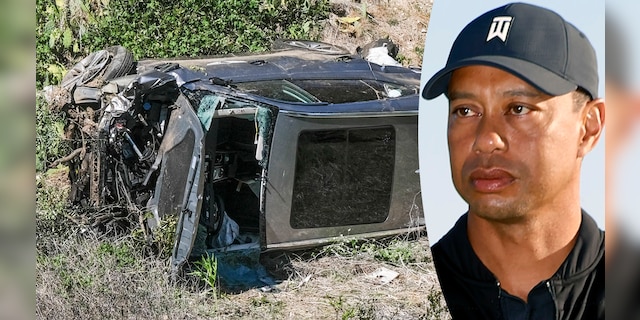
An empty, unlabeled pill bottle was found near Tiger Woods’ wrecked SUV — and the pro-golfer was “somewhat combative” when first responders tried to treat him at the scene of his high-speed crash, according to a newly-released police report.
The 22-page report obtained by TMZ said Los Angeles County Sheriff’s Deputies found an “empty plastic pharmaceutical container” in the front pocket of a backpack resting in the brush close to Woods’ car.
“The container had no label and there was no indication as to what, if anything, had been inside,” the report states.
Surveillance video from the five-star Terranea Resort taken the morning of the crash showed Woods wearing a backpack and pulling a suitcase near the front desk, the report said.
No alcohol, drugs or paraphernalia were found inside the loaned 2021 Genesis GV80 Woods was driving when he crashed Feb. 23 in Rolling Hills Estates outside of Los Angeles.
There was no smell of booze and Woods’ eyes were not bloodshot or watery, according to police.
When EMTs tried to free him from the wreckage Woods, 45, was “somewhat combative” — and so disoriented he thought he was in Florida, where he lives, rather than in Southern California, the report said.
Authorities described how Woods was sitting in the front seat wearing his seatbelt and had blood on his face and chin at the scene. He was “responsive” and able to communicate — though in shock, the report said.
A witness who first came upon the wreck said he saw a set of golf clubs sticking out of the back window, and tried to pull them out so he could look inside.
The vehicle’s bumper and grille were missing and the front window was completely shattered.
Los Angeles Fire Captain Matt Levesque described to investigators how Woods’ blood pressure was so low due to shock from the crash, that they couldn’t give him any pain medications until he was in the ambulance.
“Captain Levesque told me that [Woods] was somewhat combative when they were trying to treat him on scene,” the detective wrote in the report.
“Levesque stated everything that he observed related to [Woods’] vital signs and combativeness was consistent with the type of traumatic injury,” the athlete suffered, the report added.
Police didn’t perform any field sobriety tests or try to collect blood samples from Woods, because they didn’t believe there was any reason to think he was inebriated.
Authorities said Wednesday that Woods was going as fast as 87 mph, close to double the limit, in the crash, which nearly killed him.
The PGA legend was barreling down Hawthorne Boulevard in Rancho Palos Verdes when he smashed into a raised median. He hit a curb and then a tree, sending SUV airborne before landing.
He was knocked unconscious in the accident and suffered serious injuries to his right leg that required surgery.
The report found that had Woods “applied his brakes to reduce speed or steered to correct the direction of travel” he would not have smashed into the median or crashed.
Authorities said the accident didn’t warrant charges or citations for speeding or reckless driving because there weren’t any witnesses and no one else was hurt.
April 8, 2021 | BY AAGD STAFF
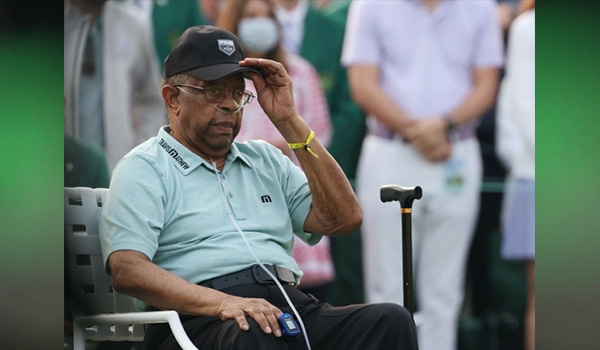
A standing ovation greeted Lee Elder at Augusta National this morning. Elder, who will not strike a single ball at the 85th Masters in Augusta, Ga., was honored by Augusta National Chairman Fred Ridley, a swath of patrons and top golfers, on the first tee as Jack Nicklaus and Gary Player hit their ceremonial tee shots. Elder broke the color barrier back in 1975, as the first Black man to play in the Masters.
Lee Elder is joined this morning by special guests including his family, representatives from Paine College and a group of Black PGA professionals. #themasters pic.twitter.com/C9AJSlypF4
— The Masters (@TheMasters) April 8, 2021
86-year-old Elder with a myriad of health problems did not engage with a swing, rather he did receive a standing ovation from all of those in attendance which included a number of Black PGA Professionals along with past champions Bubba Watson and Phil Mickelson, who both made appearances in their green jackets. The group was joined by the only Black player in this year’s Masters field, Cameron Champ.
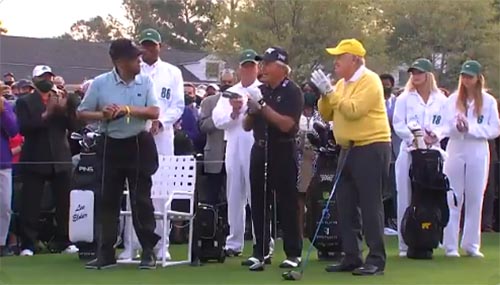
Back in November 2020, Ridley announced at that years Masters that Elder would be honored this year, and watching Elder in his elderly years receive it was tremendous. Yet, it is very sad that his physical condition restricted him from actually being able to swing a golf club.
Honorary Starters Gary Player and Jack Nicklaus join Lee Elder on the tee. The 2021 Masters is now officially under way. #themasters pic.twitter.com/wNlvGsclew
— The Masters (@TheMasters) April 8, 2021
During his active golf career, Elder competed in six Masters overall and never finished better than T17. On the PGA Tour, his record was better, where he won four times and did something far more important than collecting major championship trophies.
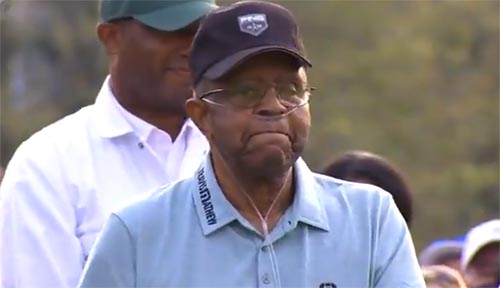
Elder’s determination to play the game he loved so much paved the way — even amid much public humiliation, death threats and hostility — for Black golfers of the future to succeed at playing at the highest level.
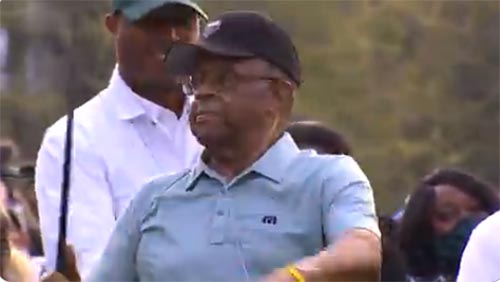
Elder’s diligence is a tremendous tribute to his diligence and perseverance in golf. Today, Tiger Woods, the best player of all time is also Black and also made history at Augusta National, in the history of golf there are many overlooked and unrecognized achievements of Blacks in the sport, but this Thursday morning on the first tee we can add Lee Elder’s name to the ‘overcoming’ file.
April 8, 2021 | BY AAGD STAFF
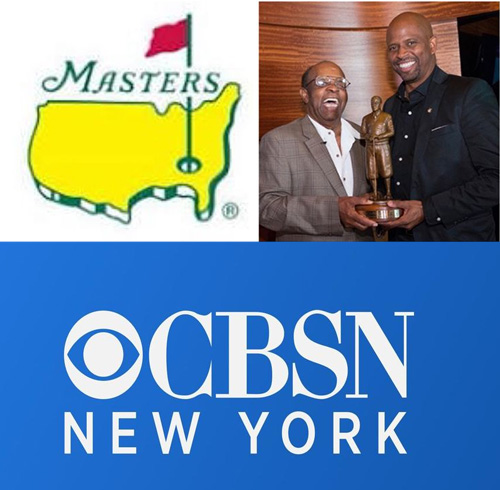
Wendell Haskins, Chief Marketing Officer with the Professional Collegiate League (PCL), a tenacious diversity and inclusion leader and innovator, will appear this morning on CBSN with Otis Livingston to discuss the Masters tournament and legendary pro golfer Lee Elder, an honorary starter alongside Jack Nicklaus and Gary Player. The show will run twice, 6 PM ET and 11 PM ET.
This year makes 85-years of Masters tournaments, it is one of the four major championships in professional golf, and is being contested Mon, Apr 5– Sun, Apr 11 in Augusta, Ga.
Haskins has a successful history in the music industry and in sports and formerly served as PGA of America Director of Diversity. Today his work is committed to helping student-athletes pursue education while being able to compete and be compensated as professionals.
Through his company, Original Tee, Haskins hosts a popular annual golf tournament, The Original Tee Golf Classic, in New Jersey attended by world-renowned athletes, entertainers, and golfing legends. The former Def Jam executive has provided countless opportunities for players of color to not only compete and win prizes and money but also network with influencers who can help them develop their skills and exposure within the world of golf.
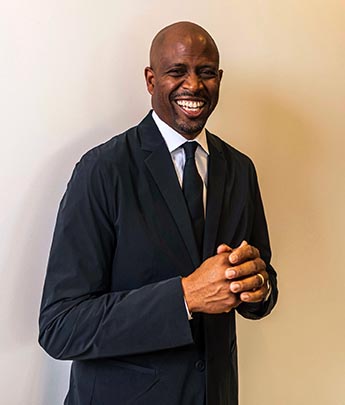
Haskins shared with this publication that he proposed the idea that Lee Elder be honorary starter for the Masters, and, proposed that the late, great, World Golf Hall of Famer Charlie Sifford receive the Presidential Medal of Freedom in 2014. The idea was reintroduced after the George Floyd incident and the concept was shared with Jerry Tarde, editor-in-chief of Golf Digest, and Jaime Diaz, senior writer for Golf Digest. The idea then got shared with Gary Player who then took the idea to Chairman Fred Ridley who agreed.
In March 2021, Haskins’ influence raised $64,000 among his constituents towards the Mack Champ Scholarship program that benefits the Prarie View A&M University scholarship effort. When added to the initial $40,000 donated by pro golfer Cameron Champ and corporate entity Chevron along with a $100,000 contribution by the PGA Tour, this brought the total amount to $204,000.
Haskins says, “My ultimate goal is to increase the popularity of the sport within the Black demographic and to develop the next generation of Black golfers.”

April 7, 2021 | BY AAGD STAFF
This year makes 85 years of Masters tournaments. And while throngs of fans watch the players of today, it’s imperative not to forget those who paved the way.
Golf legend Lee Elder was in Augusta on Tuesday, April 6 for a celebration in his honor.
Elder, now age 86, became the first African American to play in the Masters in 1975 and his legacy is sealed in personal sacrifice and determination. Augusta’s Paine College knows well how racism can hinder the progress of individuals and institutions who seek to pursue their ambitions in life. On Tuesday, the college presented Elder with its highest honor.
“I hereby confer upon you the doctorate degree of Humane Letters Honoris Pelzer, with all the rights, privileges, and responsibilities. There too appertaining.
To receive the honor, Elder, with assistance, slowly stood from a golf cart, surrounded by Paine alumni, city leaders, and family to receive the honor. Humbly accepting, the now Dr. Elder vowed to continue the push for diversity in the Masters.
 RELATED: Masters Week Schedule
“And the wonderful things I know that we will undertake as we go forward here at Paine College,” he said.
In addition to the very special honorary degree, Elder was also presented the mayor’s Legacy Award by Augusta Mayor Hardie Davis Jr., and he officially declared April 6 as Lee Elder Day in the city of Augusta.
As exciting as all of this was for Elder, there are still more good things to come, because, during the Masters week of celebrations he will also serve as an honorary starter at the Masters First Tee Ceremony on Thursday morning. He’ll be joining golfers Jack Nicklaus and Gary Player for that honor.
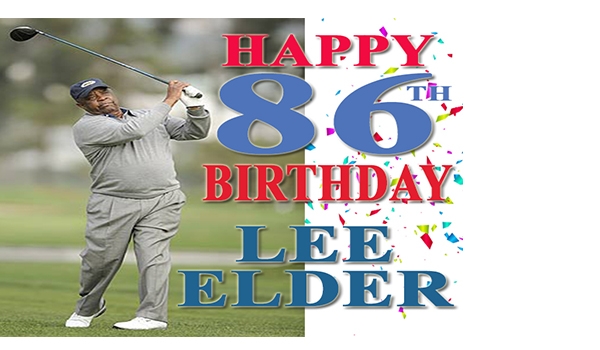 YOU MAY ALSO LIKE: Happy 86th Birthday, Lee Elder
“I just want to say thank you so very much for this great honor, I appreciate it,” said Elder, who won his first PGA tournament in 1975, becoming the first African American to break the color barrier at the Masters.
Elder began his involvement in golf as many other young Blacks during the 1050s, as a caddy.
“I mean, African Americans have always loved golf. Now golf has not always been good to African Americans, it has not always returned that kind of affection,” said Georgia Power CEO Chris Womack. “You never thought you would see an African American play at Augusta National in the Masters.”
“And what a proud moment it was to see Lee Elder tee off at Augusta National and walk through the fairways of Augusta National golf course,” Womack said.
Along with presenting Elder with an honorary doctorate degree for lifetime achievement, with the help of Augusta National, Paine College will be launching two scholarships in his name and starting a women’s golf team.
“It shows the fruits of and the returns of all the hard work that lee elder has put into this great sport,” Womack said.
By Daniel Laroche MD
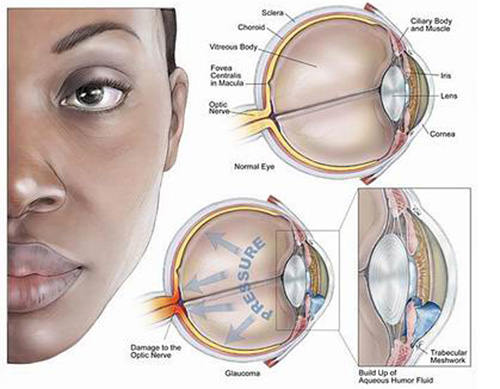
What is Glaucoma? Glaucoma is a disease of the eye characterized by three components:
Glaucoma is a leading cause of blindness in the world today. There are over 80,000 people that go blind from glaucoma every year in the US. It is the leading cause of preventable blindness in African Americans and people from the Caribbean. Cataracts are the most identifiable cause of glaucoma.
People at risk for glaucoma include the elderly, Blacks, people with elevated eye pressure, primary relatives with glaucoma, persons with high myopia, high hyperopia, history of eye trauma, and diabetes. Blindness from glaucoma is insidious.
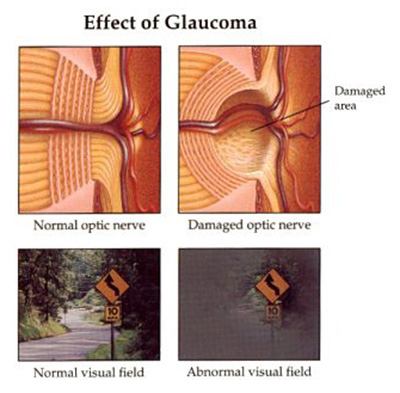
In most cases, there is no pain, and the loss of vision occurs slowly from peripheral to central. The central reading vision is not affected until the end thus most people do not realize it until they have lost a substantial amount of their peripheral vision. In low or normal pressure glaucoma the central vision may be affected first.
The elevated intraocular pressure damages the optic nerve both mechanically and creates decreased blood flow to the eye. The most identifiable cause of glaucoma is the enlarged lens or cataract in the eye. Early cataract surgery and trabecular bypass has become the best option to stop vision loss in patients with glaucoma in my practice.
The current use of eyedrops and laser help to lower intraocular pressure but do not address the causative mechanism of the glaucoma being the enlarged lens. Incisional cataract surgery and glaucoma surgery is often needed to truly stabilize glaucoma.
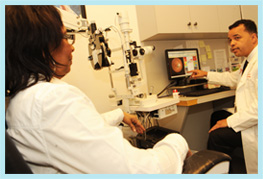
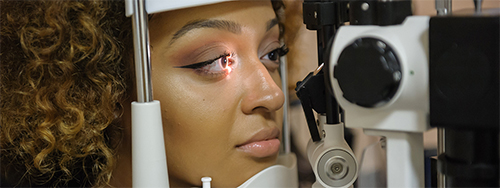
All people should be screened regularly for glaucoma as part of a medical eye exam. Screening should consist of an eye examination consisting of gonioscopy (examination of the drainage angle), intraocular pressure measurement with goldmann applanation tonometry, and a dilated optic nerve examination.
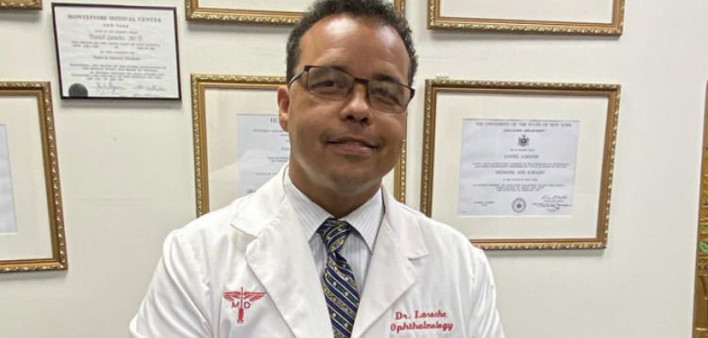
If there appears to be any damage to the optic nerve or abnormal pressure, then a visual field test should be performed and optic nerve photos taken. Persons with thin corneas should be more aggressively monitored and treated for glaucoma as the disease tends to be worse in these patients.
If you have eye pressure or glaucoma and feel that you may be losing vision, I recommend you seek the care of a glaucoma specialist for a second opinion. DON’T GO BLIND FROM GLAUCOMA!
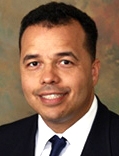
Dr. Laroche is a board certified ophthalmologist and Glaucoma specialist. Dr. Laroche is the President and Director of Glaucoma Services of Advanced Eyecare of New York with offices located at 215-43 Jamaica Ave, Queens Village, N.Y 11428, (718-217-0424) and at 49 West 127th Street, NY, N.Y (212-663-0473). He is a graduate of New York University, and Cornell University Medical College. He completed his residency in Ophthalmology at Howard University Hospital and specialty training in glaucoma at the New York Eye and Ear Infirmary. He is the inventor of the Intrascleral Ciliary Sulcus Suprachoroidal Microtube Technique to treat Glaucoma. (https://www.youtube.com/watch?v=iEKOj-KJ0oo)