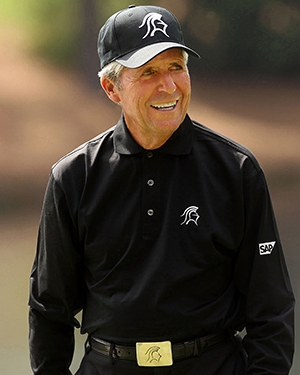
Gary Player – PGA Hall of Fame Class of 2017
GARY PLAYERro
Honorary PGA Member
Achieving the unprecedented is part of the golfing tapestry of Gary Player’s career. The most traveled golfer at more than 26 million kilometers (over 16 million miles), Player wanted to be the winningest global performer.
He went on win in 15 countries in 27 consecutive years, and won 168 professional events worldwide. In 1965, at age 29, he became the third to complete golf’s career Grand Slam. Today, he is one of only five to do so. With nine major championships on the PGA Tour and nine majors on the PGA Tour Champions, Player was the first player to complete the Grand Slam on both tours.
Born in Johannesburg, South Africa, Player’s older brother, Ian, went to serve in World War II, and fight alongside the Americans. Before he departed, Ian asked his younger brother what he wanted to do with his life. Young Gary, then about nine years old, said that he wanted to be a sportsman, but didn’t know exactly what sport. He promised Ian that he would exercise religiously and justifiably earned the nickname “Mr. Fitness” for a physical regimen that enabled him to handle the rigors of international competition. Player turned professional in 1953, and joined the PGA Tour in 1957.
As committed as Player has been to be one of golf’s premier athletes, he was equally committed
to work behind-the-scenes to improve racial discrimination in his native homeland, which for
most of his life existed under the shroud of apartheid. The Player family established The Player
Foundation to promote education among his country’s underprivileged. The foundation built the
Blair Atholl Schools in Johannesburg, which has educational facilities for more than 500 students. The Player Foundation has raised more than $63 million for underprivileged children globally, through the efforts of Black Knight International and the Gary Player Invitational series in South Africa, China, the United States; United Kingdom, the United Arab Emirates and Japan. Player has designed nearly 400 golf courses worldwide and has raised more than 2,000 winning racehorses on the Gary Player Stud Farm in the Great Karoo of South Africa. In recognition of his achievements in golf and dedication to charity, Player has received numerous awards that include the Laureus Lifetime Achievement Award from Nelson Mandela and the PGA Tour’s Lifetime Achievement Award. He was a member of the inaugural World Golf Hall of Fame class in 1974, and is the Hall’s Global Ambassador. In 2016, Player captained the South African Olympic Golf Team in Rio de Janeiro, in golf’s return to the Summer Games.
IN HIS OWN WORDS:
“I’m honored to be named to the PGA Hall of Fame and to join some of the most prestigious
names in golf history. I was honored to have won the PGA Championship at Aronimink (1962)
and Oakland Hills (1972), and the Senior PGA Championship (now KitchenAid Senior PGA
Championship) in 1986, 1988 and 1990. The PGA’s effort to elevate the standard of the
profession and to grow interest in the game is so important. Of course, I would really love to see the PGA Championship taken around the world. I’m very grateful for what occurs in my life on a daily basis. I’m very happy in life and I’ve made so many great friends all over the world. I’ve always wanted to have the best global record. I’ve won in 15 different countries and traveled to beat the best players. Traveling is better than any college degree. I’ve experienced so many cultures, languages, religions and peoples. To experience so many interesting parts of the world is something you cannot obtain at even Harvard or Oxford University.
My desire has always been to leave the world a better place. It is easier to be get a camel
through the eye of a needle than it is to get people to exercise or eat properly. My wife,
Vivienne, always says I’m a bit of a bore. She says, ‘People don’t want to hear about eating
properly and exercising. They don’t want it and just won’t do it.’ So, I have to try communicating my message diplomatically.”
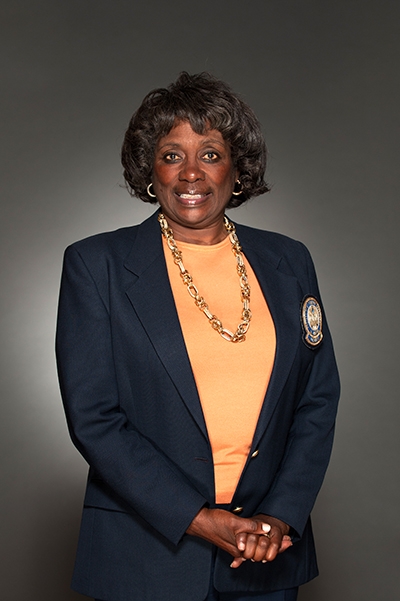
Renee Powell (PGA/LPGA) Photo by Montana Pritchard/The PGA of America) Northern Ohio
RENEE POWELL, PGA/LPGA
Renee Powell is the PGA Head Professional at Clearview Golf Club in East Canton, Ohio, and
one of this America’s foremost educators and ambassadors of the game of golf.
Powell was the second African-American woman to compete on the Ladies Professional Golf Association (LPGA) Tour. She is the first woman of color to be elected to membership in the PGA of America (1996), and in 2015, was named one of seven women as Honorary Members of the
260-year-old Royal & Ancient Golf Club in St. Andrews, Scotland.
Born in Canton, Ohio, Powell was introduced to golf and coached by her late father, William,
the only African American to design, build, own, and operate a golf course in the United
States, and a 2013 inductee into the PGA of America Hall of Fame. She graduated from
Central Catholic High School in Canton in 1964, and attended Ohio University and Ohio State
University, serving as captain of the women’s golf team at each institution. When Powell turned professional in 1967, her first competition was the U.S. Women’s Open. She went on to compete in 250 professional events and won the 1973 Kelly Springfield Open
in Brisbane, Australia.
As a global golf ambassador, Powell’s travels to promote the game spanned a USO Tour to
Vietnam during the peak of the war in the 1970s; clinics in Japan, Australia, Morocco, Spain
and England; and 25 trips to Africa to educate both heads of state and the general public
about the life values of golf. Closer to home, Powell serves on the board of directors of the
Pro Football Hall of Fame in Canton, Ohio; and is a member of the Northern Ohio PGA Hall of
Fame.
Powell’s trailblazing endeavors include being the first woman to be named Head Professional
at a golf course in the United Kingdom – in 1979 at Silvermere, an hour southwest of London.
She also was the first woman in the U.K. to compete with men in a professional event from
the same set of tees.
Following her professional playing career, Powell returned to Clearview Golf Club, where she
blended golf instruction and community service. Among her multiple outreach initiatives was
founding the Renee Powell Youth Golf Cadre program in 1995, to benefit middle school and
high school students in Cleveland. That became the pilot program for the PGA initiative to
reach inner-city youth, which eventually became the Urban Youth Golf Program in Louisville,
Kentucky.
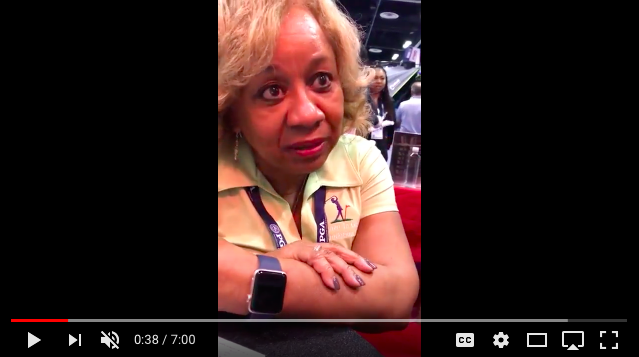
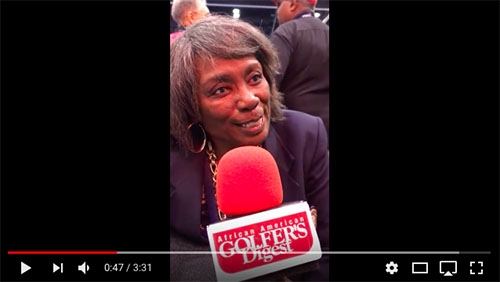 RELATED VIDEO: Renee Powell at the 2017 PGA Merchandise Show
In 2003, Powell was named the PGA First Lady of Golf for significant contributions to the
promotion of the game of golf. In 2008, she was bestowed with an Honorary Doctor of Laws
degree from St. Andrews University in Scotland, the first woman golfer so honored in the
600-year history of the renowned Scottish institution.
The daughter of a World War II Veteran, Powell continued her family’s support of American
military heroes by founding Clearview HOPE (Helping Our Patriots Everywhere) in 2011.
Today, serving 60 female Veterans from throughout Northern Ohio, Clearview HOPE is the
country’s only year-round women’s military rehabilitative golf program.
IN HER OWN WORDS:
“To be inducted into the PGA Hall of Fame alongside my father is extremely special as he was
my only instructor over these many years. He and my mother would be so proud! I think of all
the barriers I have been able to break not only as an African American, but also as a woman,
and the doors I have been able to open because of what my family has taught me about
perseverance and believing that anything is possible with a positive attitude and belief in oneself.
In thinking of all the professional golfers there have been over the many years and then to think that I am one of only 170 honored in the PGA Hall of Fame. It is such an incredible honor but also very humbling.”
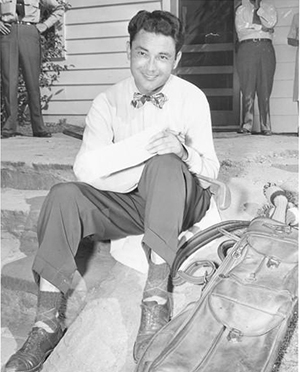
George Schneiter Sr. relaxes while competing in the Colonial tournament in 1946. He played against golf legends Ben Hogan, Sam Snead and Byron Nelson. Schneiter started working for the PGA shortly after that, which brought him to Montana and establishment of Lake Hills Golf Club. – PGA Hall of Fame Class of 2017
GEORGE HENRY SCHNEITER, PGA
One of the most significant individuals in Utah golf history, George Henry Schneiter ultimately
left an indelible mark upon golf in the United States through a career filled with a passion to
grow the game and provide innovations that are standard today.
Born in Preston, Idaho, in 1911, Schneiter’s family moved to Ogden, Utah, shortly after his birth. The family lived across the street from Ogden Golf and Country Club, where Schneiter learned the game; served as a caddie as young as age 5; became an assistant professional at 15, and was named PGA Head Professional at 18. In 1933, he helped organize the Rocky Mountain chapter of Colorado, Utah, New Mexico, Idaho, Montana and Nevada. Two years later, the Rocky Mountain PGA Section was born, and Schneiter served as Section President for a decade.
In 1937, Schneiter was named a PGA Vice President (today’s PGA of America Board Member) and remained at Ogden Golf and Country Club until 1942, when he took the head professional post at Salt Lake Country Club. The position was short-lived due to World War II, when Schneiter was required to seek work in the war effort or be drafted. Schneiter also was a standout player, winning three Utah Opens (1936, ’41 and ’42); two Rocky Mountain Open Championships; and the 1934 Colorado Open.
He joined the fledgling PGA Tour in 1944, and that season defeated Sam Snead, 6 and 5, in the quarterfinals of the PGA Championship before losing to eventual Champion Bob Hamilton, 1 up, in the semifinals. He also competed in the Masters, U.S. Open and PGA Championship in 1946.
In 1947, Schneiter was asked by then-PGA President Ed Dudley to serve as a PGA Tournament
Bureau Manager, then considered equivalent to today’s commissioner of the PGA Tour. Schneiter took his role to a new level, crafting the PGA tournament format; a pairings formula that is still used today; Rules and Regulations; and the first formula that computed scoring averages and determined eligibility for the Vardon Trophy. He also developed the early points system for determining the U.S. Ryder Cup Team, along with a Tour Players’ Guide and a sponsor’s guide.
While a PGA Board member, Schneiter founded the Lifetime PGA Membership standard; a HoleIn-One Club, a PGA Rehabilitation Fund, a “Sweet Swingers Club,” a Junior Golf Scholarship Fund and an Amputees Golf Tournament. He also developed a uniform teaching method for all U.S. golf professionals. He developed a policy for amateur players who wished to become professionals and PGA “Approved Tournament Players.” Schneiter’s teaching method included requiring aspiring Tour players to attend a “golf finishing school,” study the bylaws and Constitution of the PGA. He wrote golf tips for local newspapers, regional and national magazines, and also often gave guest golf lessons via the radio.
The Schneiter family became one of the great golf families of the West. His son, George Malan
Schneiter (now deceased), and two of his grandsons, Gary, and Stephen, operate the family’s
Pebblebrook Golf Club in Sandy, Utah. Terry Malan, George’s late brother-in-law, teamed to help operate the PGA Tour and was a PGA Life Member. George’s brother, Ernie Schneiter Sr.
(deceased), along with nephew Ernie Jr. – Utah Golf Hall of Fame inductees – also represent
that legacy.
In the 1950s, Schneiter built Lake Hills Golf Club in Billings, Montana, and developed the land
around the course for residential use. Sadly, while traveling to Billings on April 25, 1964,
Schneiter and his wife, Bernice, were killed in an automobile accident.
IN HIS FAMILY’S WORDS:
“My grandfather pointed the way for us all to find our niche in golf. He was a visionary in all
respects,” said PGA Professional Steve Schneiter of Sandy, Utah. “His innovations are still being felt by the club professional and the tour professional. Had he lived today, he would be very proud to witness what PGA Professionals have done to grow the game and that his initiatives are still valued.”
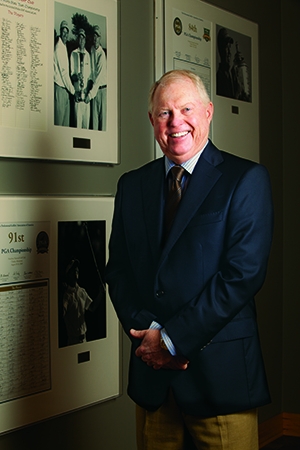
Mike Schultz – PGA Hall of Fame Class of 2017
MIKE SCHULTZ, PGA
Mike Schultz, just the second PGA Head Professional in the history of storied Hazeltine National Golf Club in Chaska, Minnesota, has shaped the careers of more than 40 aspiring PGA
Professionals. In 2012, Schultz became the fourth Minnesota PGA Section Member to be named recipient of the PGA Golf Professional of the Year Award.
A native of Pittsburgh, who was raised in Houston, Schultz was introduced to the game by his father, a geologist in the oil industry. Schultz caddied for his father at Memorial Park Golf Course in Houston, where he developed his game, as well as across the city at Sharpstown Country Club. Schultz later attended the University of Texas. He saw his hopes for competing in baseball ended by being injured in an automobile accident.
He turned his concentration to golf and attended South Texas Junior College for two years. He
returned to the University of Texas and attempted to walk on to the Longhorns’ golf team before turning professional in 1970. Schultz competed in tours overseas before arriving in the
Minneapolis area in 1971, at the encouragement of PGA Professional Bob Olds at Minnetonka
Country Club. Schultz was elected to PGA membership in 1975, and would gain invaluable
experience from Minnesota Golf Hall of Fame PGA Professionals Bill Kidd at Interlachen CountryClub in Edina, and Joel Goldstrand at Minneapolis Golf Club.
In January 1976, Schultz succeeded Don Waryan as PGA Head Professional at Hazeltine NationalGolf Club. He was a member of the executive committee for three men’s major championships –the 1991 U.S. Open, and the 2002 and 2009 PGA Championships, along with the 1983 U.S. Senior Open, 1977 U.S. Women’s Open and the 2006 U.S. Amateur. Schultz combined his club duties while serving on the PGA Rules Committee from 1990 to 2002, a term that included officiating at multiple major championships and the Ryder Cup.
Schultz was the 1988 Section PGA Professional of the Year; and served nearly four decades on
the Section Board of Directors, including Section president from 1986-87. Among his other
honors included the 1991 Section Merchandiser of the Year; the 2002 Section Facility Promoter
of the Year; and the 2006 Steve Weidner Award for Community Service. In 2009, Schultz was
inducted into the Minnesota Golf Hall of Fame. Among the initiatives at Hazeltine National Golf Club under Schultz’s direction was developing a junior program in 1980 that twice earned Golf Digest’s No. 1 award, and involved more than 450 juniors.
When Schultz retired from Hazeltine National after the 2012 season, he and his wife, Diane,
teamed with three business partners and friends to launch Four Under Golf Partners. The
company develops and manages charitable golf events; and creates programs to ease access for
youths, Veterans, seniors and the physically challenged. The company also is exploring the
development of a summer camp for inner-city youth that features fun, golf, fishing and hiking.
Schultz didn’t stop there, working with different partners to develop a national junior tour.
IN HIS OWN WORDS:
“As PGA Professionals we continue to instill in young people how golf can impact their lives. For my wife, Diane, and I, our involvement with the game and with the PGA has created
an extended family for us. Many of our friends from our 37 years at Hazeltine, our young
professionals and outside operations staff, and PGA Professionals friends and headquarters staff have become our extended family. The quality of people and values learned through the game of golf are becoming rare, but are found here: It is a tribute to those that enjoy this wonderful profession.”
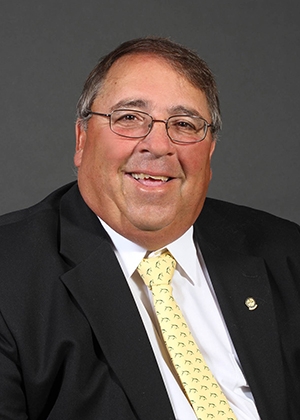
Joe Tesori – PGA Hall of Fame Class of 2017
JOE TESORI, PGA
The PGA Head Professional at The Pompey Club in Pompey, New York, Joe Tesori has made a
lasting impression upon his peers, including serving as President of the Central New York PGA Section from 1999-2004. Spanning a 40-year career, Tesori has been a leader and mentor to 15 men and women who have gone on to PGA Member status, including PGA Vice President Suzy Whaley.
His mentorship skills earned him the 2016 Bill Strausbaugh Award.
Elected to PGA Membership in 1977, Tesori was a game-changer when it comes to promoting
women and minorities within the industry. His first minority hire in the 1980s opened the path
for many city school and inner-city golf programs to be initiated within the Central New York PGA Section. Tesori’s Community outreach also extended to media relations, where he was the first CNY PGA Member to have a cable TV show on the PBS Network; to host a call-in radio program and the first to have a weekly column in the Syracuse Post-Standard, which ran for 35 years (1977-2012).
In 1992, Tesori began a public Golf Expo, which operated through 2000, and attracted
thousands of area golf enthusiasts. Over the past 25 years, Tesori has coached high school
football, a premier prep girls’ golf program, collegiate golf, and spent over 40 seasons as a high
school and collegiate basketball official. In 1996, Tesori began a girls’ golf team at JamesvilleDewitt High School and only accepted the men’s golf position at his alma mater, Lemoyne College, if the school would initiate a women’s program.
Born in Syracuse, Tesori grew up in Endicott, New York, and was introduced to golf at age 7 by
his father, Charlie, an amateur champion golfer. He was later mentored by a college coaches Bill O’Leary and Mike Bello, and Tesori’s first boss, Earl Maurer, all PGA Members. Tesori graduated from Lemoyne College in 1971. He would go on to compete on the PGA Tour from 1980-81, and also the PGA Tour Champions and European Senior Tour. He is a two-time CNY PGA Section Champion, a three-time Section Senior Player of the Year, and a regular competitor in the PGA Professional and Senior PGA Professional Championships.
A 2002 Central New York (CNY) PGA Section Hall of Fame inductee, Tesori has received a myriad of awards from the Section including: 1995 and 2004 CNY PGA Golf Professional of the Year; 1986 CNY Teacher of the Year (inaugural award); 1985, 1989, 1990, 1992 and 1994 CNY PGA Horton Smith Award; 1997 and 2003 CNY PGA Bill Strausbaugh Award; 1993 CNY PGA Junior Golf Leader; and the 1991 and 1998 CNY PGA Merchandiser of the Year.
IN HIS OWN WORDS:
“When I look at the list of decorated and distinguished current members, it is like a look back on my career and the many who taught, mentored, influenced, and guided me along on this 45-
year professional journey. I remember that coaching great Jim Valvano once said, “…nothing
great will ever be accomplished without enthusiasm.” In my humble opinion, not many bring the passion to their profession, avocation, or volunteer positions that I continue to do each day.”
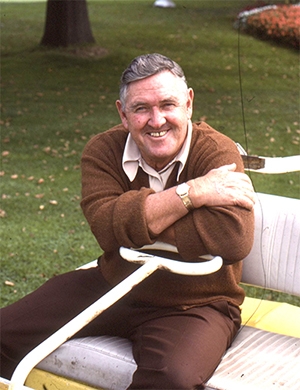 LEW WORSHAM, PGA
Lewis Elmer “Lew” Worsham Jr., was born in Level Run, Virginia, in 1917, and would become a
major golf champion and one of the most respected PGA Club Professionals of his time. His
family moved to Washington, D.C., area when he was quite young, and was introduced to golf
as a caddie. At age 18, Worsham became a PGA Assistant Professional at The Chevy Chase Club
in Chevy Chase, Maryland; and in 1939, became PGA Head Professional at The Burning Tree
Club in Bethesda, Maryland.
In 1947, Worsham was named the PGA Head Professional at Oakmont Country Club. Worsham asked if he could play in the U.S. Open at St Louis Country Club and report to work after the tournament. Worsham won that U.S. Open, the first to be televised locally, beating Sam Snead in an 18-hole playoff. Worsham and Snead remained lifelong friends, spending many days hunting and fishing together. Overall, Worsham recorded seven top-10 finishes in major championships, including a share of third place in the 1951 Masters and a tie for fifth in the 1947 and ’55 PGA Championship. The 1947 season also included Worsham competing in the first Ryder Cup since World War II.
He won two matches at Portland (Oregon) Golf Club, as the U.S. rolled to victory. Worsham mentored hundreds of assistants over the years, including 32 years as PGA Head Professional at Oakmont Country Club. Among those who sought his counsel or worked directly for him were PGA Hall of Famer Bob Ford, 1960 PGA Champion Jay Hebert and 1990 PGA Professional Champion Brett Upper. When Worsham was PGA Head Professional at Burning Tree Club prior to World War II, he hired a young assistant, Max Elbin, who would later go on to serve as President of the PGA of America (1966-68).
In 1953, Worsham led the PGA Tour money list with winnings of $34,002. That same year, he
won the first golf tournament to be broadcast nationally in the United States and golf’s first
$100,000 tournament, the Tam O’Shanter World Championship of Golf, in spectacular fashion. He holed out a wedge from 104 yards for an eagle-2 to win over Chandler Harper by one shot. Worsham was honored as the “Sportsperson of the Year” for 1953, by Pittsburgh’s Dapper Dan Charities.
Despite winning the U.S. Open six years earlier, it was Worsham’s dramatics on the closing hole of the 1953 World Championship of Golf that etched his name in golf history. Worsham’s closing eagle earned him $25,000, when the average total prize money at a weekly tour event was only $17,500, with about $3,500 to a winner. He was also rewarded with 37 exhibitions at $1,000 each, for a total bonanza of $62,000. “Television was good to me,” Worsham later said. “When I won the 1947 U.S. Open in St. Louis, it was the first golf tournament ever televised, but just locally.” Overall, Worsham registered six top-10 finishes in major championships.
With Florida becoming a prime location for golf in the early 1950s, Robert Trent Jones gave
Worsham a call in 1953, and offered him the PGA Head Professional position at Coral Ridge
Country Club in Fort Lauderdale. Worsham would then split his time between Coral Ridge and
Oakmont Country Club.
Worsham died in 1990, in Poquoson, Virginia, at age 73. He had two brothers, Herman and
Buck; and a son, Rick, all PGA Members. Worsham was survived by his wife, Ginny; daughter,
Lynda; sons, Tom and Rick; grandson, Todd; and great grandsons, Hunter and Nate.
IN HIS FAMILY’S WORDS:
“Dad would be very honored to receive this award from the PGA of America family. The PGA was very important to Dad. Its fellow members were always there to help with any problems. His brothers, Buck, and Herman were PGA Life Members as was his son, Rick. The entire family is very proud to receive this honor. What kind of man was Lew Worsham? While battling for the lead in the Texas Open, his ball moved on the green. He assessed himself a penalty stroke, and later, was given the nickname ‘Honest Lew.’ He was able to balance both a club and tour professional career so well. He mentored many assistants into becoming some outstanding PGA Members.”
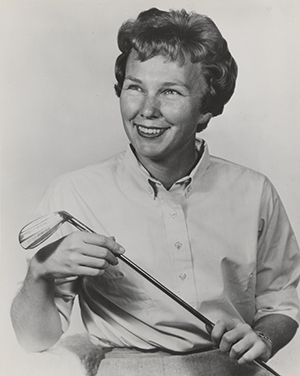
Mickey Wright – PGA Hall of Fame Class of 2017
MICKEY WRIGHT, LPGA
Mary Kathryn “Mickey” Wright’s golf swing was like a concerto that would stop players in their
tracks in admiration. Ben Hogan described her swing as the best he ever saw, and so did Byron
Nelson. In her book, “Play Golf the Wright Way,” Mickey tried to explain the fascination that golf had for her. ”Something happened to me when I swung a golf club. I felt free and graceful like somebody. I still do. Golf to me is not only a way of life, it’s a creative outlet, a constant, neverending challenge; frustrating but never dull; infuriating, but satisfying.”
That strong, graceful swing would guide Wright to 13 major championships and 82 victories total (second most all-time), with many coming while carrying the Ladies Professional Golf Association (LPGA) Tour on her shoulders. Wright was representing Wilson Sporting Goods, and during a two-year period (1957-58), she not only competed in more than 25 tournaments each season, she also gave a total of 252 Wilson golf clinics across the country. “I carried some weight on my shoulders, but compared to Patty Berg and Louise Suggs, none,” says Wright of fulfilling sponsor obligations. “That was very, very tough. I am a shy person, and it was tough to get in front of so many people.”
Born Feb. 14, 1935, in San Diego, Wright began to hit balls with her father at age 4. At the age
of 11, she received her first lesson at La Jolla Country Club, and within a year, she had broken
100. Wright was introduced to golf by her father, Arthur, a 15 handicapper and attorney in San
Diego. “Golf meant so much to him; I think it rubbed off on me. That’s part of why I had such
drive to play well,” she said. “My mother, Kathryn, did not play, but she encouraged me,
absolutely.”
Along the way, PGA Professionals provided valued support. Johnny Bellante, of San Diego,
taught her balance and rhythm. Mission Valley Country Club instructor Fred Sherman provided additional support. Then, there was Harry Pressler of San Gabriel Country Club. He met Wright in 1949 after she competed in the Southern California Girls’ Junior Championship at his club.
Pressler’s practice tee would ultimately shape a women’s golf masterpiece. Every Saturday for
two years, Kathryn Wright would drive her daughter from San Diego to San Gabriel Country
Club, 250 miles round trip. “He was absolutely the best teacher in the country, as far as I was
concerned,” said Wright. “He gets all the credit for it, and all I did was practice.”
Three years later, Wright posted a round of 70 in a local tournament, and in 1952, Wright won
the USGA Girls’ Junior championship for her first national title. For a year, Wright studied
psychology at Stanford, but she left school after her freshman year to play a full-time schedule.
In the summer of 1954, she lost in the final of the U.S. Women’s Amateur, finished fourth in the
Women’s Open to Babe Zaharias and won the World Amateur staged by golf promoter George S.
May. Those three tournaments convinced Wright to leave school and turn professional.
Wright played 33 tournaments in 1962, another 30 in 1963, and 27 in 1964. She won 10, 13 and
11 tournaments in those years, and as the LPGA’s president, it was Wright’s duty to promote the tour by being the face of the LPGA. She was a 1964 inductee into the LPGA Hall of Fame; and in 1976, was enshrined in the World Golf Hall of Fame.
She won the U.S. Women’s Open and the LPGA Championship four times each. She won the
Vare Trophy five times, was the leading money winner four times, and twice had winning streaks of four straight tournaments.
In 1968, Wright joined Shady Oaks Country Club in Fort Worth, Texas, which was Hogan’s home club. She would hit practice balls in the area not far from where Hogan was practicing. He would drive his cart over and watch Wright practice. Hogan had heard that Wright was planning to retire. “You owe it to the game to keep playing,”
he said. Wright never forgot that exchange and also her opportunity later to record 8 mm
movies of Hogan practicing. She retired from full-time competition in 1969, at the age of 34. Citing an adverse reaction to sunlight, an aversion to flying and foot problems, Wright settled for a quiet life in Port St. Lucie, Florida. She did return to the Tour to win the 1973 Colgate-Dinah Shore Winner’s Circle, a decade before that event was deemed an LPGA major.
Mickey Wright continues to be an ardent observer of today’s LPGA Professionals. “I am so happy for them that they have it,” said Wright. “I hope that they understand that it has not always been sunshine and roses. I do hope that they appreciate the history behind the game.
IN HER OWN WORDS:
“It is a tremendous honor to be recognized by the PGA of America as a member of PGA Hall of
Fame. I look back upon those PGA Professionals who helped shape my career and love of the
game. They meant so much to me. I am very pleased to be among those previous recipients and
those I join this year. I was a pioneer, I guess, but like those who I played with at the time, we didn’t know we were.
We were so conscious of making a living and fulfilling many obligations to compete and help one another. When I was growing up, there was no such thing as junior golf. I went to Stanford for one year, but with no golf program I was eager to turn professional and join the tour where I could help the growth of women’s golf. I followed such greats as Patty Berg and Babe Zaharias.We all became ambassadors for the sport.”
[fbcomments]


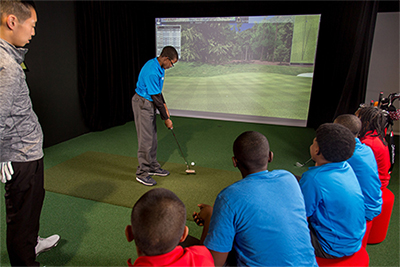
 AUGUST 25, 2017–Two years ago, Juan Cortorreal had never held a golf club. And now here he was, a freshman from the Eagle Academy for Young Men of Harlem, competing against the top player from the Bronx High School of Science, one of the city’s best teams.