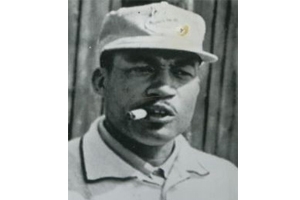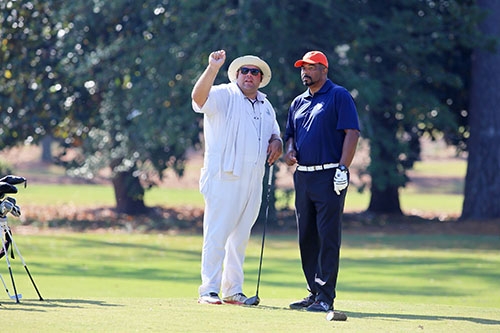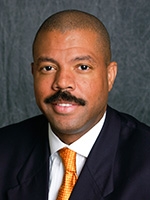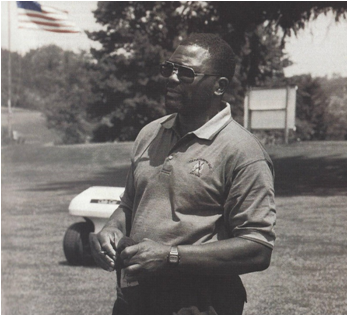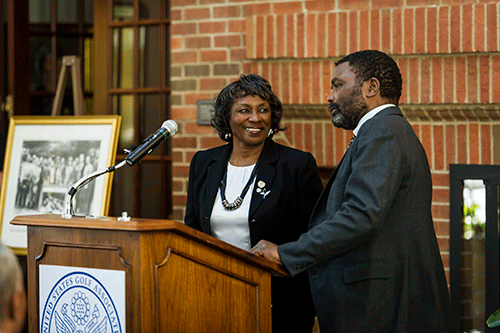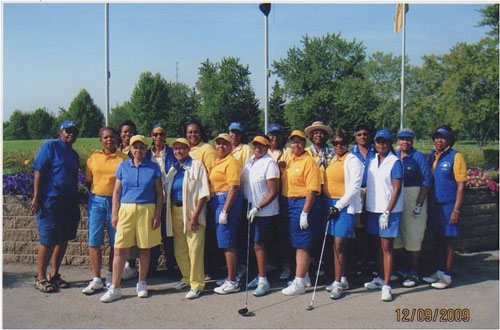

Professional Golfer Kevin Hall has always had a humble spirit and guts with lots of gusto–so nothing seems to rattle him, too much. His overwhelming success in the game has way out trumped his hearing disability and he continues to reach even more levels of greatness. Last week, Hall was greeted with the good news of earning the Charlie Sifford exemption to play in the Genesis Open. During the Genesis Open press conference that followed, Hall seemed to barely be able to contain his happiness. Here he talks about the exemption while speaking to the media about playing in his first event since 2006, the state of his game, and having fun out on the course with the fans.

BY AAGD STAFF
(February 16, 2017)
Tuesday, Tiger Woods announced that he will not be holding his Wednesday, February 16 press conference due to his back injury. Woods is having lots of trouble with his back, and now, this scheduled press conference for the Genesis Open will not be held, disappointing millions of fans who are eagerly waiting for his comeback.
On Tuesday, however, the tournament issued the following statement: “After receiving daily treatment the last several days on his on-going back spasms, Tiger Woods has again been advised by doctors to limit all activities and will not hold a press conference Wednesday.”
In a statement on his website, Woods posted the following: “My doctors have advised me not to play the next two weeks, to continue my treatment and to let my back calm down. This is not what I was hoping for or expecting. I am extremely disappointed to miss the Genesis Open, a tournament that benefits my foundation, and The Honda Classic, my hometown event. I would like to thank Genesis for their support, and I know we will have an outstanding week.”
Woods is the most prolific talent of his generation. After capturing six straight USGA titles as an amateur, the phono turned pro in 1996 and immediately started winning on the professional level. He then captured his first major at the 1997 Masters by 12 shots, won the 2000 U.S. Open by 15 shots and won four straight majors from 2000-01 during the peak of his dominance. His 14 major titles and 79 PGA Tour wins are second only to Jack Nicklaus (18) and Sam Snead (82), respectively.
Charlie Sifford Memorial Exemption An Inspiration of the Los Angeles Open
ABOUT THE LOS ANGELES OPEN
This professional golf tournament is a part of the PGA Tour in Southern California. It was first played in 1926 and is now named at the Genesis Open, previous names include Northern Trust Open and the Nissan Open. The tournament is and annual event and is played each February at the Riviera Country Club in Pacific Palisades. Most often, the tournament is the final event of the PGA Tour’s “West Coast Swing,” taking place early in the calendar year, before the tour moves east to Florida.
In 2009, the tournament created a player exemption, called the Charlie Sifford Memorial Exemption, for a player who represents the advancement of diversity in golf. The exemption is in honor of pioneering black golfer and 1969 tournament winner Charlie Sifford. While most of the exemption recipients have been of African American descent, the 2015 exemption went to PGA Tour rookie Carlos Sainz, Jr., of Filipino and Bolivian descent; and the 2016 recipient, J. J. Spaun, is also of Filipino descent. Thus, these players met the exemption criteria for “advancing diversity in golf.
| Year | Player | Result |
|---|---|---|
| 2009 | Vincent Johnson | Cut |
| 2010 | Joshua Wooding | Cut |
| 2011 | Joseph Bramlett | Cut |
| 2012 | Andy Walker | Cut |
| 2013 | Jeremiah Wooding | T42 |
| 2014 | Harold Varner III | T70 |
| 2015 | Carlos Sainz, Jr. | Cut |
| 2016 | J. J. Spaun | Cut |
| 2017 | Kevin Hall | Cut |
Read more at ReadTiger.com
ABOUT CHARLIE SIFFORD
Charles Luther Sifford (June 2, 1922 – February 3, 2015) was a professional golfer who was the first African American to play on the PGA Tour. He won the Greater Hartford Open in 1967 and the Los Angeles Open in 1969. He also won the United Golf Association’s National Negro Open six times, and the PGA Seniors’ Championship in 1975.
For his contributions to golf, Sifford was inducted into the World Golf Hall of Fame in 2004. He was awarded the Old Tom Morris Award in 2007, the Presidential Medal of Freedom in 2014, and an honorary doctorate from the University of St Andrews. Lee Trevino referred to Sifford as the “Jackie Robinson” of golf, and Tiger Woods acknowledged that Sifford paved the way for his career.
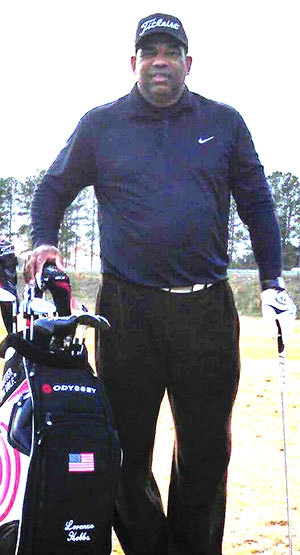
Lorenzo Hobbs, Reigning Club Champion for Potomac Shores Golf Club

Lorenzo Hobbs fires a big drive down the fairway at Pinehurst #2 at the Acura Alumni Collegiate National Team Championship. Team members Wayne Hall, Judson Graves look on.
BY AAGD STAFF
(February 15, 2017) — Lorenzo C. Hobbs is a self-taught golfer who started playing the game in 1991. Since turning professional in January 1, 2017, the zero-handicapper has gained quite a roster of successes on his many scorecards. Last year Hobbs became Club Champion for the Potomac Shores Golf Club (Oct. 15-16, 2016). He also qualified for, and played in, the 2016 Virginia State Open. He was also a runner-up in the 2016 Quantico Senior Championship. Other qualifications and tournament play included the 2016 Acura Alumni Collegiate National Team Championship in Pinehurst, North Carolina, where he represented the University of Virginia, placing 8th of 64 Teams.

Lorenzo proudly holds his trophy after finishing the runner-up at the Quantico Senior Club Championship in Quantico, Virginia
As a Service Disabled Veteran who served 20-years in the U.S. Air Force, Hobbs knows how important it is to stay focused in the midst of challenges. “I had a challenging year in 2016, as a result of some serious health issues, but despite this I had a great year in golf,” says the 57-year old Fredericksburg, Virginia, resident.
“I was still able to qualifiy for the Virginia State Open in September but had to withdraw during the tournament at BallyHack Golf Course in Roanoke, VA as a result of the same health issues.”
“Golf has a way of giving you the experience of pleasure and pain during any given round.”—Lorenzo Hobbs
Hobbs also had the opportunity to qualify for and play in the 2016 Acura Alumni Collegiate National Team Championship in Pinehurst, NC, during the week of October 24-30. Acura generously hosted this tournament of 64 Collegiate Alumni Teams that competed on two of Pinehurst’s great golf venues, Pinehurst #2 and #4. “It was an impressive competition with some great collegiate teams, in which we battled hard and finished in the final eight teams, before being defeated by the University of Missouri.”
Hobbs presses the fact that golf has been a strong teacher for him, “What I have learned over years is that golf doesn’t define who I am, but golf does share a special part in my journey through this life. I have met more great friends and great people through the game of golf than any other area or part in my life.”

Lorenzo Hobbs and his caddie Russell Bauer prepare strategies for playing one of the toughest holes on the famous Pinehurst #2 golf course at the 2016 Acura Championship Pinehurst, NC.
“What makes it different from my experiences—when traveling the country giving business presentations or playing basketball at a high level in the Air Force—is that the game of golf, and the people that play golf, are different. More so, I believe, than enthusiasts of other sports. I think it was destined for me to play golf and to become a great golfer, from the time I picked up a club at Kadena AFB golf course in Okinawa, Japan for the first time in 1991.”
“Just to let you know, the game of golf didn’t come easy for me even with my high level of passion for it. My first score in a round of golf on an 18 holes golf course was… I’ll just say… much more than 100. After practicing and playing for about two years, when I could make the time, I finally broke 100. When I told my friends that I would learn how to get better at the game and that someday I would become a pro golfer, they literally laughed me out of the clubhouse. At the time, I had not had any formal training as a golfer and, had never been around golfers in my life.”
A couple of years later Hobbs started keeping a journal. In it he wrote down all of the details of his golf rounds: about how he played, who he played with, and what was going on in his life. “I plan to turn my three volumes of journals into a book in the near future, hopefully, to help others in their golf journey. Some of my greatest golf accomplishments have been helping other golfers, especially youth, enjoy this great game like I do.” Hobbs has also shared many of his stories and personal encounters with this publication, the African American Golfer’s Digest, glorifying great golfers whom he has met while triumphing professionally in the game. “God is the real reason that I’ve had any success,” he declares.
“I have walked golf courses with high school golfers who did some special things in golf. Such as one young man who went on to win a team college championship at Virginia State. My hope is to see more young African Americans on the PGA and LPGA Tours representing what all the great African American golfers of the past never had a chance to do, to compete on that grand stage. It will take a village to fulfill this accomplishment, but I know it can be done.”
Hobbs has a lot on his plate but he continues to break down his challenges into manageable pieces while continuing to conquer any fears. In the near future, he plans to move to Southern California to continue his journey of golf and life.
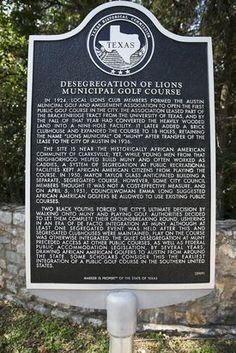
Crenshaw Announces Plan to Redesign First Desegregated Lions Municipal Golf Course

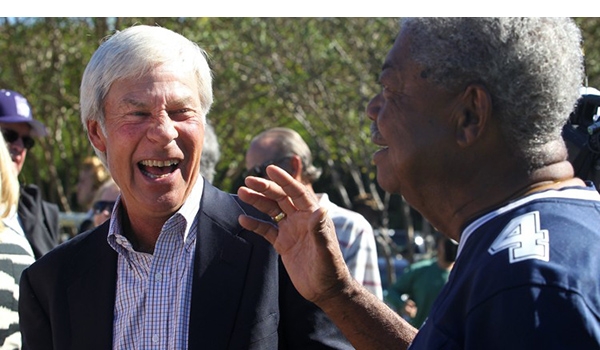
Two-time Masters champion Ben Crenshaw speaks with General Marshall, a former caddy at Lions Municipal Golf Course, during a 2016 ceremony recognizing the course’s addition to the National Register of Historic Places. On Wednesday, Crenshaw proposed a renovation of the course that would alter the layout and restore some of the original routing used from 1951-74. CREDIT: Stephen Spillman/For American-Statesman
(February 15, 2017) He unveils plans for renovations to historic golf course that would restore routing used from 1951-74.
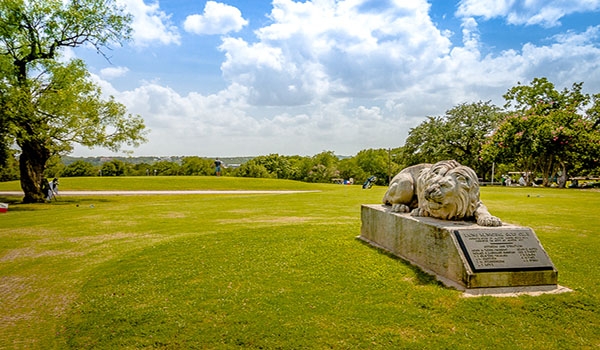
To keep Lions Municipal Golf Course open into the future, Ben Crenshaw looked into the past.
It was with that in mind that the former NCAA golf champion who grew up playing there has proposed renovations to the West Austin golf course, changes that would harken back to its 1950 days, as he and others work to preserve what has been recognized as a civil rights landmark.
Crenshaw and Austin land planner Corey Hoffpauir want to alter the layout of the historic golf course and restore some of the original routing that was used from 1951-74.
RELATED STORY: Bill Passes Out of the Senate in Hopes of Saving the First Desegregated Golf Course in the South
“The landmarks that have made Austin special for so long are being continually threatened, and we simply can’t stand back and let this precious asset slip away,” Crenshaw said in a statement. “Just as it is hard to imagine New York without Central Park, New Orleans without City Park, Houston without Memorial Park and San Antonio without Brackenridge Park, it is impossible to consider Austin without Lions Muny.”
MAKING THE PLAN WORK
To make their plan work, Crenshaw and Hoffpauir propose shifting the entrance to the course from Enfield Road to Lake Austin Boulevard and adding an expanded driving range, teaching area and a new short-game area. A new clubhouse would be constructed and include more parking. The existing structure, meanwhile, would be converted into a space for educational and historical exhibits.
Estimates for the cost of the restoration range from $10 million to $12 million, and Crenshaw and Hoffpauir laid out their plans Wednesday morning during a news conference at the course.
Crenshaw and others involved with the Save Muny project say they are confident the money needed for the renovation can be raised privately. Crenshaw, who won three NCAA individual golf championships as a Longhorn from 1971-73, will donate his course-design services.
“Lions Municipal is among the handful of iconic recreational greenspaces in Austin, along with Zilker Park, the hike and bike trail and Pease Park,” said Scotty Sayers, Crenshaw’s long-time friend and business manager. “I only hope that we have the opportunity to realize Ben’s vision for the restoration and renovation of Muny for future generations of Austinites.”
Read more Kirk Bohis at MyStatesman.com
By Adam Schupak @morningread.com
The U.S. Golf Association is disbanding its membership program and creating a development initiative aimed at raising $100 million, Morning Read has learned from multiple sources.
In its 40-plus years, the USGA Members Program had become the association’s third-largest profit center, behind only the lucrative broadcast-rights contract with Fox Sports and the Open championships. According to the 2016 USGA annual report available at USGA.org, revenue from memberships and member clubs totaled $17,576,000 of the USGA’s $202.2 million in total operating revenue.
Members paid a $10 annual subscription and received a personalized bag tag, a copy of the Rules of Golf, a U.S. Open-logoed hat and an e-newsletter, among other benefits. (The USGA Journal was shuttered 12 years ago.) For many, the bag tag was a proudly worn badge that identified them as golfers.
When reached for comment, USGA spokeswoman Janeen Driscoll said, “The USGA has no intention of eliminating the members program,” and noted that renewals are out and hats are being mailed to members.
This wouldn’t be the first time that the USGA tried to rebut a media report about one of its championships or programs before announcing the news on its own terms. When Golfweek reported in 2015 that the USGA would establish a U.S. Senior Women’s Open, officials declined to acknowledge the event before making an announcement one month later.
A USGA switchboard operator confirmed Tuesday that Fiona Dolan, the USGA’s senior director of member programs since 2003, no longer was employed. Sources said another part-time membership position had been eliminated. When contacted by Morning Read, Dolan would not respond to questions.
From the Members Program’s inception in the mid-1970s until his death in September, Arnold Palmer served as the national volunteer chairman. On Dec. 18, 1975, Palmer delivered a USGA bag tag to the program’s first “associate” member: President Gerald Ford. The program’s sliding membership during the past 10 years has mirrored the game’s falling participation rates. Last year, 650,000 members were enrolled, down from more than 900,000 reported in a Golfweek story in 2008. That’s fewer than 3 percent of the 26 million U.S. golfers counted by the National Golf Foundation.
The USGA program never could hit its goal of 1 million members. More than one outside consultant was contracted to help jumpstart the initiative. Seemingly with every new president, the association changed its strategy on whether it wanted to grow or maintain its current figures, and whether it should increase or lower dues.
Recognizing that its direct-mail model had become dated, the USGA attempted to use its website to communicate with a younger audience, but it failed to make a smooth transition into the digital space. Efforts to marry the program with handicapping failed to achieve the desired results.
“Try as they might, the USGA hasn’t been able to grow it in any meaningful way for at least 20 years,” said a former USGA executive, who spoke on condition of anonymity.
It is unclear whether the USGA will serve up a new incarnation of a consumer-engagement program for the average golfer.
“Given what you’ve told me, I have to think they have some other form of reaching the individual member in mind,” said David Fay, the USGA’s former executive director.
In an end-of-year video that still was playing on the USGA website, executive director Mike Davis called the members “our most passionate supporters.” It’s all the more reason why this is another head-scratching move by the USGA that seems likely to create a greater disconnect between the recreational golfer and its national governing body and in contrast with the USGA’s stated goal to “grow the game.”
(by James F. Peltz, LA Times)
The U.S. golf equipment market last year totaled $2.55 billion, a 3% drop from $2.62 billion three years earlier, according to the research firm Golf Datatech. Those figures mainly reflect sales at golf course pro shops and golf specialty stores, and they exclude sales at sporting goods stores and mass merchants such as Wal-Mart.
There are roughly 15,000 golf courses in the United States, and about 11,400 are open to the public. But getting more people to play on those courses, where a traditional round of 18 holes often can take four or five hours, is proving difficult.
Steve Mona is chief executive of the World Golf Foundation, which works to promote the sport’s growth. The Los Angeles Times asked Mona to explain the challenges facing the game and its equipment makers. Here’s an edited excerpt:
How many Americans play golf on a regular basis?
If you’re talking about a traditional green-grass golf course, it’s 24.1 million participants. That means they played at least one round on a regulation golf course.
How does that compare with a decade ago?
It’s relatively flat. It’s been right about 25 million for the last five years or so.
What’s a committed golfer?
These are people who say they plan to be part of golf in the next three to five years, and 90% of the spending in golf and 90% of the rounds played in golf are done by committed golfers.
But that figure isn’t growing, either, so how will the sport expand?
People are engaging in golf differently than on the traditional green-grass golf course. For instance, there is Topgolf, which is a form of entertainment but you’re striking a golf ball. There were 5 million people last year that participated at a TopGolf [facility]. Another way is on a driving range. There are about 15 million people who used a driving range last year and 4 million of them were non-golfers.
Most people get interested in the game first, trial is second and participation on an ongoing basis is third. We as an industry have to be smart and reactive to what’s going on in the world to ensure people progress from one stage to the other.
Are people more or less interested in taking up the game?
The interest in golf is at an all-time high. We had 37.4 million people last year say they’re either very or somewhat interested in playing golf right now. We view that as a positive. But the trick is getting people from interest to trial to participation.
We had 2.2 million people try golf for the first time last year, and that’s second-highest of all time. The all-time high was in 2000 — 2.4 million — and you’ll remember that as the height of the Tiger Woods era.
But that hasn’t obviously translated into the core participation numbers. Therein lies the challenge for us as an industry. Are we flexible enough to accommodate the changing lifestyles that are prevalent in our society? And is our product relevant to today’s consumers?
A set of golf clubs can cost several hundred dollars or more. Are golf prices — for equipment, greens fees and the like — holding back growth?
Golf is more affordable today. Golf has been moving at a pretty steady clip to become more of a public game than it ever has. Today, 76% of golf facilities are open to the public, and the median green fee is $37. If you want to find affordable golf in most markets, you can find it.
The $500 drivers and the $1,000 set of irons are really appealing to the very serious, very committed golfer who has the resources. That is not at all what the beginner is electing.
You don’t have to buy new equipment. The PGA of America has a trade-in program [for used clubs]. Most of the big manufacturers have a pre-owned program. If you’re the least bit savvy, you can get yourself outfitted pretty reasonably.
Until you know you’re committed to the game, I don’t advise you invest in high-end, brand-new equipment.
How is golf trying to promote growth?
For a lot of people who are traditional golfers, they’ve got it in their head that golf isn’t golf unless you pay 18 holes. Not everybody can do that. Some people just don’t have that luxury of time anymore.
We’re trying to respond to the short periods of time that people have to consume anything really, especially in their leisure time.
Here are some things that have been tried: Creating a one- or two-hour golf experience. Maybe it’s a little three-hole loop. It’s packaging up these bite-size pieces, if you will.
The U.S. Golf Assn. also has the Play9 initiative, and that’s encouraging golfers to take the nine holes as a legitimate golf experience.
Why is interest so high even without Tiger Woods being as prominent these days?
Despite the fact that he’s not at the top of his game and highly visible, there are a lot of compelling young players now who are creating tremendous interest, whether it be Jordan Spieth or Rickie Fowler or Jason Day or Rory McIlory, or on the women’s side, Lydia Ko or Lexi Thompson or Michelle Wie.
The PGA [or Professional Golfers Assn. of America] is on television now more than ever, and the same for the LPGA [or Ladies Professional Golf Assn.] tour. That has created more interest in the game too.
Honoring Black Golf Pioneers and Trailblazers Throughout Black History Month: Larry Powell
The National Black Golf Hall of Fame (NBGHOF) honors Black Golf Pioneers and Trailblazers throughout Black History Month
Larry Powell, part of the legendary Powell family, who designed, own and operate the historic Clearview Golf Course in East Canton, Ohio, chooses his words carefully and deliberately. His caution comes from a humility his parents instilled in him at an early age. Larry is keenly aware of the historical impact his family has and still has on golf and American history so Larry wants to get it right.
For those not familiar with the Clearview story, it remains the only Black-built and Black owned golf course in the United States. He understands the significance of the struggles his parents and, in fact, he had to endure to create the course that is now on the historic register of the United States. According to Larry, the family had many discussions around the dinner table about the challenges facing them because of the color of their skin. At the same time, he was taught to persevere.
RELATED STORY: Black History Golf Experience “More Than A Game” Held At USGA
Larry started playing golf by the time he was 5-6 years old. He started pushing a mower around the course by the time he was 8. A champion golfer at an early age, he opted for a different path. According to his more famous sister, Renee, “Larry was a better player than I but followed in Dad’s footsteps becoming the course superintendent and responsible for insuring the course will be available and in pristine condition for years to come.”Larry has done this without the resources that are typically available to major golf operators. “My father taught me how to flow with nature instead of fighting it.” Today, Larry and his late father remain the only Black father and son to be members of the Golf Course Superintendent Association of America, the pre-eminent organization responsible for industry practices and education for its members.
From his father, Larry inherited the commitment to treat everyone fairly. “My father always told us to put ourselves in the other person’s shoes before we acted.” Larry is working hard to carry on this commitment to equality every day.
RELATED STORY: Honoring Black Golf Pioneers and Trailblazers Throughout Black History Month: Chicago Women’s Golf Club
Fans have been waiting for Tiger to finally make his return to the PGA tour and it seemed as though it was finally happening this year. After several false starts in 2016, the living legend reentered the professional arena at the Farmers Insurance Open at Torrey Pines in San Diego, Calif.
Things were looking good following his December performance at the Hero World Challenge in the Bahamas, but it quickly became apparent that he wasn’t back at 100 percent just yet. Tiger withdrew early from the Dubai Desert Classic due to back spasms after putting up his highest European Tour score in a non-major with 77. Unfortunately, the back pain forced Woods to pull out of the next two tournaments. It had been a decade since Woods had last competed in the Genesis Open (the only PGA Tour event in Los Angeles) and will miss it once again. The injury has also forced him to withdraw from the Honda Classic in Palm Beach, Fla., and has raised serious questions concerning his participation in this year’s Masters Tournament.
The break is probably for the best given Tiger’s recent performances. He wasn’t hitting well off the tee and had more than a few putts that would make most amateur golfers cringe. Despite his troubles, he managed to hit a respectable 72 at Torrey Pines, but it wasn’t enough to make the cut. While few people expected Tiger to immediately return to his usually dominant form, seeing him struggle on courses he traditionally does well on has been tough to watch.
It has been eight years since Tiger last won a major, but at this point it looks as though the 14-time major champion would be content with simply making the cut at most tournaments. The Masters, U.S. Open, Open Championship, and PGA Championships are arguably the most sought-after prizes in the sport and Tiger has the second-most wins all-time. Woods only trails Jack Nicklaus, who holds the record for most majors with 18. While at one point it wasn’t a matter of if, but when Woods would surpass Nicklaus, the question has now become if we’ll ever see him win a major again.
At 41 years old, Tiger should still have plenty of competitive play left in him; it’s really a matter of him being able to recover from his back injuries. If he can get healthy and get his mind right, he could prove that he’s still one of the best golfers in the world. While everyone wants to see Tiger compete again, what they really want is for him to be competitive.
There’s currently no projection on when Tiger will be back, but many have their fingers crossed he’ll return in time for the Masters Tournament. Woods has missed two of the last three Masters, and many expected this to be his comeback year. Ultimately, if he rushes back in order to play at Augusta, he won’t be doing himself or anyone else any favors. Tiger needs to take his time to be 100 percent. Anything else is unfair to both him and the fans.
James “Jim” Lacey Dent, an American professional golfer, was born in the golf mecca of Augusta, Georgia, May 9, 1939 . He was educated in his hometown Paine College (an HBCU), but as a black man he wouldn’t have been allowed onto the Augusta National course at the time, except as a caddie.
As a youth, Jim caddied both at Augusta National and at Augusta Country Club. Dent turned pro in 1966. During his regular (under 50) career he was Florida PGA Champion three times. However he is mainly notable for his success on the Senior PGA Tour (now Champions Tour), where he won 12 tournaments between 1989 and 1998.
Listen as he discusses his magnificent career during this interview with The Means Report (July 24, 2011) while he shares just how he overcame many of life’s challenges to reign supreme in his chosen sport.
<iframe width=”560″ height=”315″ src=”https://www.youtube.com/embed/p4y7NQYvu1c?rel=0″ frameborder=”0″ allowfullscreen></iframe>
Punxsutawny Phil and Tiger Woods Both Seem to See Their Shadows
Once a year, Punxsutawny Phil brings focus on a hamlet northeast of Pittsburgh, where, the legend goes, if the groundhog sees his shadow, winter will last six more weeks.
That’s exactly what happened to Phil…. on Groundhog day, Thursday, February 2, 2017.
Some 7,000 miles away, in Dubai, United Arab Emirates, Tiger Woods seemed to see his shadow, too. Instead of six more weeks of winter, Woods might not ever see the spring of his game. He stumbled to a 5-over 77 in the first round of the Omega Dubai Desert Classic.
It was his first birdie-free round since his final round at Doral in 2014, ironically, that was Woods last round before leaving the tour for back surgery.
Only two weeks into his return to professional golf after a 17-month hiatus, the 41-year-old looks every bit of a much older player, no doubt because of several surgeries on his back and left knee.
Although looks can be deceiving, in this case they weren’t.
In three rounds since his return – two last week at the Farmers Insurance Open and Round 1 at Dubai – Woods is 9 over, with five birdies, 12 bogeys and a double bogey.
Was all of this expected?
Woods had talked a good game before his return, taking his time with the comeback and skipping the Safeway Open in October when he decided that his game was not where it needed to be.
When he played in the Hero World Challenge, an exhibition in December, Woods showed glimpses of his former play but finished 15th in the 18-man field.
Now Woods is back in full-field events and spending his time looking up from the bottom, just trying to find the cut line.
Intimidation, fitness, power and speed proved to be the hallmarks of a player who won 79 PGA Tour titles, including 14 major championships. Now none of those attributes is visible as Woods seems unsure, with little fuel in the tank.
Woods reportedly walked gingerly at times in Dubai, which Woods disputed. However, back pain has been prevalent for Woods in recent years, and he talked about it Wednesday in Dubai.
“Whether my swing looks classical, rhythmical or it may look unorthodox, I don’t care, Woods said. “As long as I don’t feel that nerve pain. Anyone in here who has ever had nerve pain in their back or anywhere in their spine, it’s like hitting your funny bone a thousand times a day; it’s just not fun. And I would much rather not have to go through that again.”
The Woods of today is a shell of the Woods of yesteryear. The idea that he will come back as good as new seems as unlikely as the fax machine supplanting email.
The best days are behind Woods, and he is smart enough to understand that. Yet, Woods still thinks he can win again, and it seems too early in his return to logically judge whether a victory might be in his future.
To win, Woods first must play his way into contention. After the past two weeks, that seems difficult to foresee.
Still, Woods merits the benefit of the doubt based on his past accomplishments. But if he doesn’t turn his game around soon, the golfing public will have to concede that Woods is done and move on, leaving Woods stuck in the winter of his career.
For more by By Alex Miceli visit MorningRead.com
Austin’s Lions Municipal Golf Course, first Muni to Desegregate in the South Now on America’s List of Most Endangered Historic Places
Washington – The National Trust for Historic Preservation unveiled its list of America’s 11 Most Endangered Historic Places, an annual list that spotlights important examples of the nation’s architectural and cultural heritage that are at risk of destruction or irreparable damage.
More than 270 sites have been on the list over its 29-year history, and in that time, fewer than five percent of listed sites have been lost. On the list is Austin’s Lions Municipal Golf Course, the first Municipal golf course to desegregate in the South. Located in Austin, Texas, the course was listed on the National Register of Historic Places in 2016.
The National Trust’s 29th annual list includes historic places in America’s urban areas at a time when cities across the nation are experiencing a resurgence. Millions of Americans—especially younger people—are choosing to relocate to urban areas, with many opting to live in distinctive, character-rich older and historic neighborhoods. Preservation is playing a key role in this trend, and our research suggests that older buildings are one of the most powerful tools we have for the continued revitalization of our nation’s urban centers.
“For nearly 30 years, our list of America’s 11 Most Endangered Historic Places has called attention to threatened one-of-a-kind treasures throughout the nation and galvanized local communities to help save them,” said Stephanie Meeks, president of the National Trust for Historic Preservation. The list was released last October.
“This list elevates important threatened historic places in our nation’s cities at a time when more than 80 percent of Americans live in urban areas. We know that preservation is an essential part of the current urban renaissance and that old buildings contribute to the sustainability and walkability of our communities. Historic buildings are also powerful economic engines that spur revitalization, meet a broad range of human needs, and enhance the quality of life for us all. With thoughtful and creative policy approaches and tools, we can tap the full potential of these important places and secure a foundation for a stronger and more vibrant future.”
While bringing attention to urban sites, the 2016 list also includes places that reflect the broader diversity of America’s historic places, from Bears Ears in Southeastern Utah to the James River at Jamestown, Virginia.
Members of the public are invited to learn more about what they can do to support these 11 historic places and hundreds of other endangered sites at www.SavingPlaces.org/11Most
The 2016 list of America’s 11 Most Endangered Historic Places (in alphabetical order):
Austin’s Lions Municipal Golf Course – Austin, Texas. Widely regarded as the first municipal golf course in the South to desegregate, “Muny” is an unheralded civil rights landmark facing development pressure.
Azikiwe-Nkrumah Hall at Lincoln University – Lincoln, Pa. The oldest building on the campus of the first degree-granting institution in the nation for African Americans, this hallowed building currently stands empty and faces an uncertain future.
Bears Ears – Southeastern Utah. The 1.9 million-acre Bears Ears cultural landscape features a world-class collection of archaeological sites, cliff dwellings, petroglyphs, and ancient roads that illuminate 12,000 years of human history yet is now threatened by looting, mismanaged recreational use, and energy development.
Charleston Naval Hospital District – North Charleston, S.C. The historic district played a prominent role during WWII as a primary re-entry point for American servicemen injured in Europe and Africa. Now threatened by a proposed rail line, this important historic resource is at risk of being largely destroyed.
Delta Queen – Houma, La. This steamboat was built in 1926 and today is among the last of her kind. Federal legislation that would enable this prestigious ship to return to overnight passenger cruising remains a key piece to securing the Delta Queen’s sustainability and future.
El Paso’s Chihuahuita and El Segundo Barrio Neighborhoods – El Paso, Texas. These historic neighborhoods form the core of El Paso’s cultural identity, but their homes and small businesses are threatened by demolition.
Historic Downtown Flemington – Flemington, N.J. Historic buildings at the core of the town that hosted the ‘Trial of the Century,’ the Charles Lindbergh baby kidnapping trial, are threatened by a development proposal that would demolish the iconic Union Hotel along with three other adjacent historic buildings.
James River – James City County, Va. Jamestown, America’s first permanent English settlement, was founded along the banks of the James River in 1607. The river and landscape, also named to this list by the Trust in 2013, remain threatened by a proposed transmission line project that would compromise the scenic integrity of this historic area.
Milwaukee’s Mitchell Park Domes – Milwaukee, Wis. A beloved Milwaukee institution for generations, a unique engineering marvel and a highly significant example of midcentury modern architecture, the Milwaukee Domes are facing calls for their demolition.
San Francisco Embarcadero – San Francisco, Calif. The City by the Bays’ iconic waterfront is beloved by residents and visitors alike, but needs long-term planning to address the dual natural threats of sea level rise and seismic vulnerability.
Sunshine Mile – Tucson, Ariz. This two-mile corridor on Tucson’s Broadway Boulevard features one of the most significant concentrations of historic mid-century modern architecture in the Southwest. This unique collection of properties face threats from a transportation project that would require demolition.
America’s 11 Most Endangered Historic Places has identified more than 270 threatened one-of-a-kind historic treasures since 1988. Whether these sites are urban districts or rural landscapes, Native American landmarks or 20th-century sports arenas, entire communities or single buildings, the list spotlights historic places across America that are threatened by neglect, insufficient funds, inappropriate development or insensitive public policy. The designation has been a powerful tool for raising awareness and rallying resources to save endangered sites from every region of the country. At times, that attention has garnered public support to quickly rescue a treasured landmark; while in other instances, it has been the impetus of a long battle to save an important piece of our history.
The National Trust for Historic Preservation, a privately funded nonprofit organization, works to save America’s historic places. www.SavingPlaces.org