

 FAR HILLS, N.J. (March 9, 2016) – The United States Golf Association (USGA) today announced sectional qualifying sites for the 2016 U.S. Open Championship, which will be held at Oakmont (Pa.) Country Club, on June 16-19. Oakmont is hosting its 16th USGA championship, including a record ninth U.S. Open.
Sectional qualifying, conducted over 36 holes, will be held on Monday, June 6, at 10 sites in the U.S. For the 12th consecutive year, Japan and England will host international sectional qualifying, scheduled for May 23 and May 30, respectively.
“The ability to conduct U.S. Open sectional qualifying in many regions of the United States and at international sites promotes the game of golf,” said Stuart Francis, USGA Championship Committee chairman. “The U.S. Open has wide appeal, as evidenced by the number of entries we receive each year. We are grateful for the support and commitment provided by the state and regional associations and international partners during a qualifying process that dates to the 1920s.”
The Columbus, Ohio; Summit, N.J.; Memphis, Tenn.; and San Francisco, Calif., sectional sites will use two courses. In Columbus, Wedgewood Golf and Country Club and Kinsale Golf and Fitness Club will combine to host sectional qualifying for the first time. Eight players from the Columbus sectional made the 36-hole cut in last year’s U.S. Open at Chambers Bay, in University Place, Wash. Cameron Smith, who tied for fourth behind champion Jordan Spieth and runners-up Louis Oosthuizen and Dustin Johnson, led the group of qualifiers.
Canoe Brook Country Club’s North and South Courses will serve as a sectional site for the 14th time since 1980. Germantown Country Club and Ridgeway Country Club are the courses for the Memphis sectional for the second consecutive year and fourth time since 2009. Andres Romero advanced through this site last year and went on to tie for 14th at Chambers Bay. Lake Merced Golf Club and The Olympic Club’s Ocean Course are paired together in Northern California for the second time.
Woodmont Country Club, in Rockville, Md., will host U.S. Open sectional qualifying for the 29th time in the last 30 years. The club features two 18-hole layouts, but only the North Course will be used for the third consecutive year.
Springfield Country Club in Ohio will host sectional qualifying for the seventh consecutive year and eighth time in nine years. Tony Finau, who tied for 14th at last year’s U.S. Open, qualified through this site. Ansley Golf Club (Settindown Creek Course), in Roswell, Ga., will be a sectional site for the eighth time since 2000.
Timuquana Country Club, in Jacksonville, Fla., will host U.S. Open sectional qualifying for the first time. The club hosted the 2002 U.S. Senior Amateur Championship, as well as several U.S. Amateur sectional qualifiers. Lakeside Country Club, in Houston, Texas, is a site for the third time in the last 11 years. Royal Oaks Country Club, in Vancouver, Wash., will host a sectional qualifier for the first time since 1996.
Walton Heath Golf Club in England and Higashi Hirono Golf Club in Japan are the international sectional qualifying sites. Four players made the 36-hole cut in the 2015 U.S. Open after advancing from Walton Heath, which is hosting for the 12th consecutive year.
Ken Venturi (1964) and Orville Moody (1969) are the only players to win the U.S. Open after qualifying through both local and sectional play. Jerry Pate (1976), Steve Jones (1996), Michael Campbell (2005) and Lucas Glover (2009) have won as sectional qualifiers.
To be eligible for qualifying, a player must have a Handicap Index® not exceeding 1.4, or be a professional. Local qualifying, which will be played over 18 holes at 111 sites in the U.S., takes place between May 2-19.
In 2015, the USGA accepted 9,882 entries for the championship at Chambers Bay. The record of 10,127 was established for the 2014 championship at Pinehurst Resort & Country Club’s Course No. 2, in the Village of Pinehurst, N.C.
Online player registration for the 2016 U.S. Open began on March 9 (https://champs.usga.org/index.html) and continues through Wednesday, April 27 at 5 p.m. EDT.
2016 U.S. Open Sectional Qualifying Sites (12)
International (2)
May 23
Asia – Higashi Hirono Golf Club, Hyogo Prefecture, Japan
May 30
Europe – Walton Heath Golf Club, Surrey, England
June 6 – United States (10)
Lake Merced Golf Club & The Olympic Club (Ocean Course), San Francisco, Calif.
Timuquana Country Club, Jacksonville, Fla.
Ansley Golf Club (Settindown Creek Course), Roswell, Ga.
Woodmont Country Club (North Course), Rockville, Md.
Canoe Brook Country Club (North and South Courses), Summit, N.J.
Kinsale Golf and Fitness Club & Wedgewood Golf and Country Club, Columbus, Ohio
Springfield Country Club, Springfield, Ohio
Germantown Country Club & Ridgeway Country Club, Memphis, Tenn.
Lakeside Country Club, Houston, Texas
Royal Oaks Country Club, Vancouver, Wash.
About the USGA
The USGA conducts the U.S. Open, U.S. Women’s Open and U.S. Senior Open, as well as 10 national amateur championships, two state team championships and international matches, attracting players and fans from more than 160 countries. Together with The R&A, the USGA governs the game worldwide, jointly administering the Rules of Golf, Rules of Amateur Status, equipment standards and World Amateur Golf Rankings. The USGA’s reach is global with a working jurisdiction in the United States, its territories and Mexico, serving more than 25 million golfers and actively engaging 150 golf associations.
The USGA is one of the world’s foremost authorities on research, development and support of sustainable golf course management practices. It serves as a primary steward for the game’s history and invests in the development of the game through the delivery of its services and its ongoing “For the Good of the Game” grants program. Additionally, the USGA’s Course Rating and Handicap systems are used on six continents in more than 50 countries.
For more information about the USGA, visit usga.org.
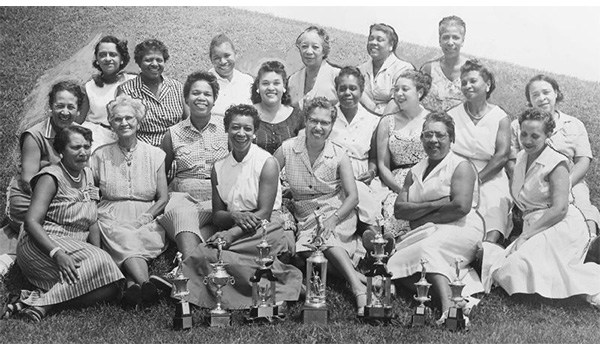
Women members of at the Wake-Robin Golf Club, an African American golf club in Washington D.C., on Aug. 29, 1989. (Afro American Newspaper / Gado / Getty Images)
The genesis of the Wake-Robin Golf Club can be told through members like Elizabeth McNeal. McNeal, 98, grew up amid seven siblings in Grindstone, Pennsylvania, where her father worked as a coal miner for 25 years before he moved the family to Washington to lessen the expense of housing the two older children attending Howard University.
Her father became a preacher, and as for her mother …
“There was nothing for women to do in those days but keep house,” McNeal said one recent morning, her days quieter now after suffering a heart attack last year.
When she was around 17 years old, McNeal sang in the Jerusalem Baptist Church junior choir with her dear friend, Fredrica Lewis. Lewis’ sister, Sarah Smith, one day invited the girls to a meeting at her home to learn, of all things, the sport of golf — a game segregated then for men, particularly white men.
“I had never heard of golf before,” McNeal said.
The golf meetings began in the northwestern D.C. home of Helen Webb-Harris, a school teacher and a golf widow, the term for wives who lose their working husbands’ spare time to the golf course.
During the meetings, the young women reviewed literature about the rules of the sport. They also watched the women play on a nine-hole golf course, converted from an abandoned trash dump by the city.
“I think the main thing that made us go was that they were serving hot dogs and hamburgers and soda,” McNeal said with a laugh. “And we would jitterbug and then go home.”
Today, the Wake-Robin Golf Club is believed to be the oldest African-American woman’s golf club in the country. It was named after the purplish wildflower with gold stamens that sprouts in early spring. The resplendent flower symbolizes the club’s budding against the limiting thoughts, including of their husbands, of what women should and could do in the largely male, largely white male, world of golf.
During the Jim Crow era, some women of Wake-Robin putted onto municipally owned white-only golf courses, such as East Potomac, their presence a protest while crowds hurled racial slurs, rocks, eggs or golf balls at them.
“That didn’t stop us,” said Winnie Stanford, 94, a board member who is listed as a female legend in a United Golfers Association commemorative book. “If you make up your mind that you’re going to do something, you’re going to do it. Black women have always been strong anyway.”
The club, joined by its brother organization the Royal Golf Club, petitioned the federal government in 1938 to desegregate public golf courses in Washington, and was part of a movement of black golfers who pushed the PGA of America in 1961 to remove its white-only rule.
Despite the ebbs and flows of the sport, which some of the women of Wake-Robin see as suffering a decline, the club renews its mission year after year by drawing young African-American women into its fold.
“The challenges are society itself. There’s not an app for that, you know,” said Kimberly Robinson, the club’s president and a member for five years. “You got to put in your time out on the course.”
One overcast Saturday in January, board member Phyllis Stevenson Jenkins passed a design of the save-the-date notice around her living room for the Wake-Robin Golf Club diamond and pearl jubilee. The notice, adorned with the club’s logo, marked its 80th anniversary scheduled to be held in June at a Maryland country club.
Off the living room, tall golf trophies stood on display. By the fireplace, a set of golf-club-handled pokers. Before the meeting, Jenkins’ husband flitted about to refill margarita glasses as about half of the club’s 53 members, representing four generations, lunched on baked tilapia and pulled pork sandwiches.
The women discussed the agenda items in planning for the June gala, which will be followed the next day by a golf tournament. The honorary chair will be D.C. congresswoman Eleanor Holmes Norton. Other honorees will include Debert Cook, the founder of African American Golfer’s Digest.
In those days, to see a black girl playing golf, you were somebody, you hear me. Black women didn’t play golf. We were always in somebody’s kitchen.Elizabeth McNeal, one of the oldest members of Wake-Robin Golf Club
The club’s perseverance can be partly attributed to the game itself. Golf is a game of physics, said one member, with distinct clubs and angles. And because one actually competes against the course, not other players, another member said, golf presents a leveled playing field.
Golf also teaches you about yourself, about life, several club members said.
“And it requires you to think, it requires you to calculate. And it draws you out of all your little comfort zones,” said Robinson, 51.
Another key to the club’s endurance, Robinson said, is the willingness of longtime members to not just recruit new members, but to engage them in continuing Webb-Harris’ mission. Webb-Harris was the club’s founder and first president, and for whom the club holds an annual golf tournament in her name, started the club in 1937.
The mission of the club was to “perpetuate golf among Negro women, to make potential players into champions and to make a permanent place for Negro Women in the world of golf,” according to The Wake-Robin Papers, quoted in the book “African American Golfers in the Jim Crow Era”.
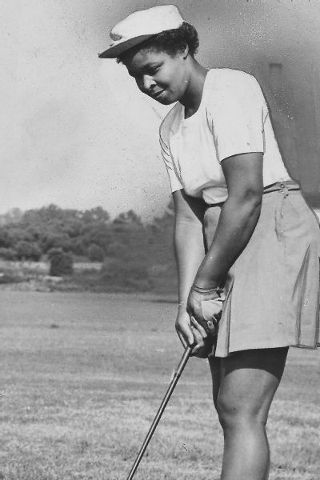
Afro American Newspapers/Gado/Getty Images Marilyn Reynolds takes a putt on a golf green at the Wake-Robin Golf Club in 1944.
McNeal remembered watching Webb-Harris, and the “prissy and prim” ladies of Wake-Robin drive along the old tires, empty tin cans and dusty sand greens of the government-made, blacks-only Langston Golf Course, situated north of Washington’s Robert F. Kennedy Stadium, the golfers wearing their long skirts and flat shoes.
She added: “I loved those ladies. They were a model to me, and I wanted to be like them.” As some of McNeal’s friends dispersed from the club, many for marriage, McNeal said, “I got hooked on golf. It was something different.”
McNeal recalled how one club member gave her a pair of golf shoes and golf bag, because she couldn’t afford the apparel in those days, she said.
On a street car headed to the golf course, McNeal felt like “everyone looked at me like I’m something foreign, like ‘Who’s this little black girl, and where’s she going with a golf bag?'” she said.
“In those days, to see a black girl playing golf, you were somebody, you hear me. Black women didn’t play golf. We were always in somebody’s kitchen,” McNeal said.
Some caddies stole a golf club here and there from players they caddied for, and gifted them to her, McNeal said. “That’s how I got started.”
The women of Wake-Robin became revered in the D.C area and throughout the country for their efforts on and off the golf course, namely for their push to integrate public golf courses in Washington. Scholars have written that the club’s promotion of African-American women’s participation in golf lead to golf clubs in cities such as Atlantic City, Baltimore, New York and Philadelphia, clubs that continuously raised funds to help send their members to golf tournaments in other, less racially-stifling cities.
“We keep on getting younger girls playing golf,” McNeal said.
One of the club’s youngest members, Dionne West, 26, has been reviewing old photographs of the women of Wake-Robin, to promote and also attract a wider audience to the 80th anniversary event.
A particular sepia-toned image held West’s attention: a group of women posing with clubs on a golf course. They wore long skirts with knee socks. Some donned blouses with high necks and oxfords. “Wow, they were really there,” West remembered thinking.
At the 80th anniversary gala planning meeting, West suggested to the members sending a montage of images she has been collecting as part of the electronic invitation. West also thought a meet-and-greet networking event would attract young professionals. “That’s a great idea,” Jenkins said. West wants attendees, especially those who may have scarcely heard of the women of Wake-Robin, to glean something she has come to appreciate from her time as a member, “they just endure.”
As the anniversary tournament approaches, 98-year-old McNeal, who has played golf regularly since her early days at Langston until her illness last year, said: “I’m dying to hit the ball one more time.”
Written by Kia Gregory| Feb 24, 2017
Special to espnW.com

 The author of this book is not providing medical advice but the solutions that are provided for maintaining youthful looking skin is marvelous! From seasonal changes, stress, nutrition and sleep, author Elizabeth Thieriot cover all the bases. As CEO and founder of the Lions Gate Corporation and Publisher of FSHN magazine, she knows a tremendous amount about fashion and beauty. Well-traveled throughout the United States and Europe, Thieriot gracefully shares her knowledge, helping all individuals, men and women alike, to look their best through any age.
You’ll find this book to full of fantastic ideas and overflowing with truth about protecting your health and your skin. It includes lots of ‘common sense’ methods for looking you best and dozens of ‘words of wisdom’ from a woman who knows beauty inside and out.
Some of the 16 chapters of the book include: Seasonal Living, The Law of Cycles, Beauty Starts With Our Health, Importance of Touch, Neuromuscular Reset, Your Body and Your Sleep. For puberty to the senior years, you will discover a wealth of information for maintaining and keeping beautiful skin across you full body. From face, hands, legs and feet, there is no area left untouched by this expert.
“Elisabeth Thieriot, always a vision of style, has become a voice of reason and inspiration in her philosophy for creating ageless skin and glamour through seasonal living.”-Titano Sorokko, model & Author
ISBN: 978-0983940821
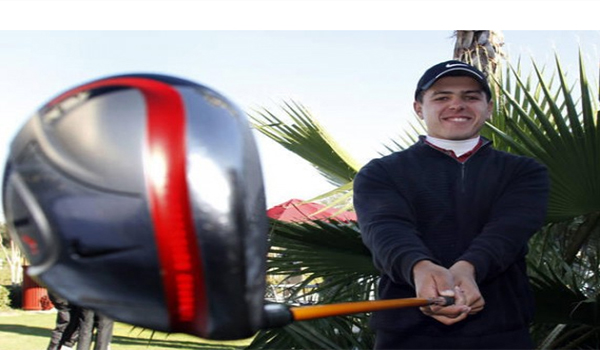
After making bogey on his 18th hole of the opening round at the Web.com Tour season-opening Panama Claro Championship, Joseph Bramlett was all smiles — practically beaming — as he walked toward the scoring tent.
That’s because the score didn’t matter. Bramlett had completed his first competitive round since June 2013, making some good swings en route to a 2-under 68. And after suffering through a debilitating back injury for two years, his body was feeling good. Those were the important things.
“Today was my Christmas morning,” Bramlett said. “That 4:30 a.m. wake-up call couldn’t come fast enough. I was checking my phone in the middle of the night for when it was time to get up.
“I didn’t finish well, but honestly in the big scheme of things, I’m just so happy to be out here. I finally feel like I’ve got my life back, so I’m just trucking on through.”
After two and a half years, Bramlett, 27, felt like a professional golfer again. It was a day that he wasn’t sure would ever come. But with the help of a determined therapist, and unwavering self-belief, it did.
It happened on July 8, 2013. After finishing T14 at the prior week’s United Leasing Championship Presented by PTI, Bramlett was on the range at Willow Creek Country Club in Sandy, Utah, prepping for that week’s Web.com Tour event.
At the time, his focus was on having a strong week of competition. His focus would soon change.
“I got over a ball on the range, and I felt it,” Bramlett said. “My back went out. I tried to go back the next day and play, and it fired back up.”
The pain was so bad that it relegated Bramlett to lying on his back for days at a time. Suddenly, playing golf was not an option – it took all of his energy simply to get around.
Worst of all, he couldn’t figure out what the problem was. He estimates that he went to 15 different surgeons, and every one said that he wasn’t a candidate for surgery. He tried getting injections, tried resting, but nothing seemed to work.
“If I would rest, I would start to get better,” Bramlett said. “If I started trying to swing, it would just instantly get worse, and not go away.”
Read more by By Kevin Prise at PGATour.com

Panama City, Panama is a vibrant, beautiful, growing city, the “Crossroads of the Western Hemisphere” and the start of my Panamanian Golf Adventure. (Photo by Robert S. Fagan)
Imagine landing in Panama after a comfortable direct flight from North America on a beautiful new Copa Airlines jet. My heart quickened as I caught a glimpse of numerous sprawling skylines of Panama City. Why? Not only is this an area of growth and modernization, but I was going to explore exciting golf on the Pacific southern coast in and around Panama City – where Panamanian golf is concentrated and indeed “America’s Crossroads!”

There is no doubt that the Panama Canal, one of the “Seven Wonders of the World,” is the driver of the nation’s prospering economy. The country has placed big wagers on its future by building a much bigger, wider adjacent channel to more than double its capacity. It is also expanding as a tourist destination in which golf will be playing an integral part. First, however, there are some interesting tidbits about the country that may surprise many. Panama is positioned in an east-to-west direction, not the north-south orientation that generally characterizes Central America. In fact, you can often view a sunset over the Atlantic Ocean, and view the sunrise by looking out over the Pacific. If that doesn’t scramble your intuitive perspective, also realize that Panama City is located directly south of Miami and is not that dissimilar to its northern neighbor in energy or appearance -swank, hip, and vibrant with modern lines and Old World charm. And interestingly, it is not as hot and humid as its latitude would suggest or I might have imagined. This is true even during its summer, which is December through March, and frequently you will experience healthy cooling breezes. And lastly, you will be relieved to know that Panama is situated outside the Caribbean storm zone.

Panama City is also a financial center dominated by several attractive sections of high-rises. Situated on the Pacific southern coast, the metropolitan area is a mix of the new and old, and rich and poor with most of the population spread out around the edges. Size-wise, Panama City with more than 700,000 people compares in population with Portland, Oregon, but the skyline bordering the water is most impressive. With Columbia and South America immediately to the East and Costa Rica and Central America to the West, along with ships/commerce from everywhere, Panama is, indeed, one of the World’s focal points.

The modern meshes with the culturally classic in Panama City. (Photo by Robert S. Fagan)
With prosperity comes golf, especially when you feature the interesting coastal plain with the backdrop of the inland wild mountain topography. The golfing landscape is fashioned around Panama City on the Pacific Ocean on the southern coast and is serviced by the Pan-American Highway making it easy to get to the golf in either east or west directions. Resort and second-home real estate developments are the prevalent feature to the west of the City.

Garden adorned walking and bike paths join modern high-rise residences in bordering the Pacific in Panama City. (Photo by Robert S. Fagan)
To the east of the city, you will find two private golf courses that embrace the new and the old. The Club de Golf de Panama is the venerable old club. Originally started by Americans working on the Panama Canal, it started as a 9-hole layout. The current facility is the Club’s second location and is a most engaging wooded, rolling layout. In many respects, it reminds me of the hills of North Carolina. Water hazards, push-up greens, uneven lies, and tumbling tree-lined corridors make for a challenging test. The course has hosted the Panama Open and a Web.com Tour event since 2004, and in 2017, it will hold the third Latin America Amateur Championship whose winner will earn a trip to The Masters. (Tourists interested in playing here may be able to schedule a round by contacting the Club in advance.)

While the hole number may be yet to be determined, this view from behind the green makes this a stout finishing hole at the Club de Golf de Panama. (Photo by Robert S. Fagan)
Only a few miles away in contrast is the still developing upscale private residential real estate development called Santa Maria. This gated community services the area’s affluent and is easily accessible to downtown due to the busy Trans American Highway that bisects it. Occupying flatland closer to the water and the City with its own as well as neighboring high-rise condos as a backdrop, its skyline reminds me a little of Dubai. Santa Maria features a beautifully conditioned layout with open with conspicuously benign shaping given its flat terrain. A product of the Jack Nicklaus Design group, the general lack of challenge off the tees is curiously finished with busily contoured putting surfaces that will test everyone. On several holes, you will encounter attractive bunkering that bleeds into the water hazards. A full-practice facility and many other community amenities will be available only to resident members and guests of an on-site hotel being built.

The distinctively provocative high-rises form the backdrop for top golf at Santa Maria. (Photo by Robert S. Fagan)
Travel fifteen minutes to two hours west from Panama City along the Trans American Highway and you will find a nice variety of golf largely open to either public or resort play. The first course you will encounter located by the so-called Panama Canal Riviera. It is the semi-private Tucan Country Club & Resort. Though somewhat lacking in shaping and conditioning in spots, it is a true “diamond-in-the rough” that I quite enjoyed. The engaging layout occupies hilly, mostly open terrain with spectacular views of the distant city skyline and the nearby gigantic Panama Canal shipping cranes. It makes the most of its elevation changes affording for some excellent views as well as an “interesting walk in the park.” Tucan was originally an American military golf course and is now being developed as a residential/hotel complex bordered by the police campus on the former military base and a protected rain forest. Interestingly golf course architect Perry Dye has recently visited the property and may be in line for doing some enhancements. With the right sort of greensite improvements and enlargements, and just a bit more tender, loving care, Tucan could rival the region’s best, and yet is already a fun place to play.

The view from behind the 507-yard par-five 16th at the Tucan Country Club & Resort is only one of many to delight the eye. (Photo by Robert S. Fagan)
A little further west, the Summit Golf Club plays from its high perch on the Radisson Hotel site. It is the oldest golf club, but in its present resort skin, there is nothing old about it as it has been modified for a modern look and feel, even extending to the hotel that sits high above the course. Much of Panama is a rain forest and this is the one course in the region that typifies that look and terrain. Its bizarre routing makes it not suitable for golfers to walk; yet its views and interesting natural terrain make it an ideal hike for birdwatchers and nature lovers. The layout definitely has a tropical feel to it as it is surrounded by jungle with some magnificent views and much of the core interior is thankfully open. You can expect firm, fast, smooth putting surfaces here and bring a few extra balls.

The view of the Summit Golf Club’s demanding par-fours at 17 and 18 from high above at the Radisson Hotel reveal a very demanding jungle finish. (Photo by Robert S. Fagan)
Continuing west, next we encountered the ex-pat community of the Coronado Beach & Golf Resort. Having spent many years in the rolling country of Central Florida, I immediately felt transported there. Like many courses that I have enjoyed outside of Orlando, Florida, Coronado Beach winds though relatively narrow corridors of trees not unlike the Club de Golf de Panama. It is likewise characterized by smallish push-up greens often guarded by sand left and right making for a real shot-maker’s challenge. Thankfully, the layout plays firm and fast and is very playable for shorter hitting golfers while also making it a bit more difficult for the powerful player who expects to score much lower. Thankfully, housing only is present on the course borders. As I encountered and was informed, Coronado Beach can also be a very windy layout despite its tree cover and distance from the actual beach.

Gentle elevation changes along with narrow treelined corridors provide the theme at the Coronado Beach & Golf Resort. You can quickly appreciate why the par-five 10th is among the most photographed. (Photo by Robert S. Fagan)
Continuing westward is the new Vista Mar Golf &Beach Resort development. American golf course architect Michael Poellot fashioned a spectacular open layout adorned with palms and abundantly bold bunkering. It’s a visually exciting golf experience as approximately sixteen of the eighteen holes afford views of the Pacific though none play adjacent to it. As impressive as the golf course was the outstanding food to be enjoyed in its clubhouse – the chef really knows how to cook. And this real estate development is perhaps even more focused on its spectacular marina and beautiful beach as it spared no expense there. One should be aware, Vista Mar experiences a very dry microclimate. Typical winter drought conditions and the failure to maintain its water pumping resources left the course only marginally playable during my visit. If ownership does not focus as much attention on this as it does its marina, this will put the golf operation and development at risk. Otherwise, Vista Mar has the potential of a very exciting offering.

Big, bold bunkers and a yardage that can be stretched to 248 yards from the tips make for quite a challenge on the 12th at Vista Mar. (Photo by Robert S. Fagan)
Next in the course line is the Mantarraya Golf Club within the busy, all-inclusive Royal Decameron Hotel. Driving into the resort, I had no idea of what a beautiful, interesting golf course was adjacent. Unlike the flat driveway entrance, the golf course spills down a hills and winds its way up and down in spaciously drawn corridors. Buildings are set back, colorful flora adorns some attractively bold bunkering, and the conditioning is quite good with smooth putting surfaces. Some spectacularly ancient trees occupying the midst of fairways further extract interesting strategy as well. Put it all together and you may have the best value/experience of the public-access courses I visited in Panama!

A view from behind the green on the par-three 11th at Mantarraya illustrates one of the many signature trees that adorn the appearance and occasionally the strategy. (Photo by Robert S. Fagan)
Finishing my westward tour is the Jack Nicklaus-designed Buenaventura Golf Club resting at the top of the Panamanian “Golf Course Food Chain” that I explored. Part of the upscale J.W. Marriott Resort here, discounts are provided to guests/residents, but otherwise you can expect to pay $250 or thereabouts if you aren’t. In contrast to the Nicklaus organization’s work east at Santa Maria, Buenaventura features a much more engaging tee-to-green presence with striking bunkering and more dramatic shaping, albeit with less movement in the well-protected greens. The conditioning and surrounds spell excellence and if you select the correct tees for your ability, it is a most playable layout. Here you are sitting in the lap of luxury with not only this fine golf course, but the spa, conference rooms, horses, excellent cuisine, and pools just a few of the amenities that await.

Attractive landscaping, distinctive bunkering, and excellent conditioning make for a potently pleasing combination at Buenaventura as shown by a view of the par-three 14th green. (Photo by Robert S. Fagan)
As you pursue golf in Panama, you will find that golf course conditions are generally are as good or better than most of the Caribbean for example, and usually at a better green fee value. Clean, modern golf carts are available at each of the above golf courses and several will also have on-course beverage service. Each also typically has a clean, safe, delicious food onsite.
Be forewarned that Spanish is Panama’s language. At the major hotels and golf courses, you will usually have no trouble finding someone who speaks English, but more often than not your waiter, service personnel or golf shop counter personnel may only be able to speak Spanish and little English at best. Now for the better news, Panama has adopted the US Dollar as its currency so nowhere will you need to exchange your dollars – and it’s ok to bargain. In Panama, it is not necessary to tip, though if you do and I was informed that some restaurants may build in the tip and it is important to check your final bill to know. You do not tip taxi drivers and if you do want to tip your waiter for outstanding service, stay at 10%. If you are happy with the service and the food, please share that good news! Just a small praise to a hard working Panamanian goes a long way.
Panama offers so much to explore, and yes it is a “crossroads,” and I have learned first-hand that golf can and should be a very fun part of your adventure – and no matter the road you choose, I’m betting you will be pleased. The pricing will accommodate any budget and the challenge complement any golfing ability, while the looks and landscapes come in a variety of attractive and differing packages. Go ahead and play away in Panama!
 ABOUT: Bob Fagan

Bob Fagan features one of the most interesting backgrounds in golf. Not only it is likely that Bob has played more golf courses than any living person, he has been an accomplished player and instructor, innovative golf and life coach, PGA Section Executive Director, golf company executive, “Expert Golf Witness,” and, of course, a highly acclaimed golf writer.
 The National Black Golf Hall of Fame (NBGHF) will induct its 30th Anniversary Class at the Wyndham Peachtree Hotel and Conference Center in Peachtree City, Georgia on Saturday, May 21, 2016.
In addition to the induction ceremony, the Advocates Pro Tour hosts their second event of the 2016 campaign. There will a tribute to the NBGHF Founder, the late Harold Dunovant, PGA, a 36-hole amateur tournament at the Flat Creek Golf & Country Club, which is adjacent to the host hotel, and a forum focusing on participation by African Americans in the golf industry. All events are open to the public but tickets/entry fees are required.
 Jeff Dunovant, PGA member, Board Chairman and son of the NBGHF founder said,
“my father would be so proud of what has been accomplished from that little idea he had in the early eighties … let’s continue our goal to recognize individuals who have done the most to promote golf in the Black communities!”
Jeff, who serves as the Assistant Director of The First Tee at East Lake and the Head Golf Professional at the Charlie Yates Course in Atlanta also noted,
“I continue to appreciate the support we have received from the industry and especially Steve Mona, CEO of the World Golf Foundation, who led the way for a permanent exhibit honoring African American players and contributions at the World Golf Hall of Fame in St. Augustine, Florida.”
The NBGHF will celebrate the contributions of four new members:
- Jerry Bruner – a Los Angeles native, Jerry has played on the European Senior Tour since 1999 winning over $2 million and Best Player award three years in a row.
- Chicago Women’s Golf Club – the country’s second oldest African American women’s golf club has been a stalwart in the Chicago Black community since its founding in 1937.
- Tom & Ann Cousins – real estate developers, the Cousins were responsible for the development of the East Lake Golf Club in Atlanta but more importantly, the redevelopment of the East Lake Community surrounding the golf course providing opportunities for thousands of African American youth through its many golf programs.
- Larry Powell – part of the legendary Powell family who developed, own and operate the historical Clearview Golf Club in East Canton, Ohio, Larry has served as its superintendent for over 25 years and is currently a member of the Golf Course Superintendents’ of America and Ohio State University Agricultural Technical Institute.
With attendees coming from throughout the country, the weekend will also include the Advocates Pro Tour event, with approximately $20,000 in prize monies.
The mission of the Advocates Pro Tour is to bring greater diversity to the game of golf, and its industry. In addition, the NBGHF exhibit will feature historian Valada Parker-Flewellyn, plus an update on the traveling exhibit “Remember Them: African American Champion in Golf” by noted artist Mario Chiodo. When complete, the exhibit will be interactive and modular in its design, and travel throughout the country telling stories in compelling ways to enliven history and inspire both the young and old with truthful life lessons in courage, perseverance and honor.
The mission of the National Black Golf Hall of Fame is “to recognize and honor the contributions of Black golfers for their skills and, to honor persons, regardless of race or ethnicity, who have done the most to promote golf in the Black communities.” The organization was founded in 1986 by the late Harold Dunovant, the first African American to complete the PGA business school. For more information contact John Simpson at 407.497.2233 ([email protected]) or Dr. Michael Cooper at 813.495.3962 ([email protected]).
Send Michael a Comment!
 ABOUT MICHAEL COOPER, PH.D. Dr. Michael W. Cooper is the former Director of Diversity for the World Golf Foundation/The First Tee and past Assistant Dean/Campus Director for Springfield College-Tampa Bay campus. Contact him at [email protected].

March 1, 2016 | BY AAGD STAFF
| 1 | Alabama A&M University | Website | |
| 2 | Alabama State University | Website (men) | |
| Website (women) | |||
| 3 | Alcorn State | Website (men) | |
| Website (women) | |||
| 4 | Benedict College | Website | |
| 5 | Bethune-Cookman | Website (men) | |
| Website (women) | |||
| 6 | Chicago State University | Website | |
| Chicago State University | Website | ||
| 7 | Chowan | Website (men) | |
| Website (women) | |||
| 8 | Delaware State | Website | |
| 9 | Edwards Waters College | Website | |
| 10 | Elizabeth City State University | Website | |
| 11 | Fayetteville State University | Website | |
| 12 | Florida A&M University | Website | |
| 13 | Georgia Regents University Augusta | Website (men) | |
| Website (women) | |||
| 14 | Hampton University | Website (men) | |
| Website (women) | |||
| 15 | Jackson State University | Website (men) | |
| Website (women) | |||
| 16 | Johnson C. Smith University | Website | |
| 17 | LeMoyne Owen | Website | |
| 18 | Lincoln University | Website (men) | |
| Website (women) | |||
| 19 | Livingstone College | Website | |
| 20 | Miles College | Website | |
| 21 | Morehouse College | Website | |
| 22 | North Carolina A & T | Website | |
| 23 | North Carolina Central University | Website | |
| 24 | Paine College | Website | |
| 25 | Prairie View | Website (men) | |
| Website (women) | |||
| 26 | Saint Augustine’s College | Website | |
| 27 | Savannah State University | Website (men) | |
| Website (women) | |||
| 28 | Talladega College | Website | |
| 29 | Tennessee State University | Website (men) | |
| Website (women) | |||
| 30 | Texas Southern University | Website (men) | |
| Website (women) | |||
| 31 | University of Maryland Eastern Shore | Website | |
| 32 | University of The Incarnate Word | Website (men) | |
| Website (women) | |||
| 33 | Virginia State | Website | |
| SOME SCHOOLS HAVE A WEBSITE FOR MENS AND WOMENS GOLF | |||
| CONFERENCES | GOLF WEBSITE | ||
| 1 |  | Website | |
| 2 |  | Website | |
| 3 |  | Website | |
| 4 |  | Website |

 All Junior Golfers and Parents!
Please join Coach Carlos Brown for a presentation on the USA Junior National Golf Team Program on March 3rd,6:30PM at Waterview Golf Club in Rowlett Texas .
There will be a presentation on what the USA Junior National Golf Team Program can do for your junior golf athlete . There are many opportunities in our program for all levels of junior golf athletes, for the beginner, intermediate, advanced and elite players. Brown is a former Outstanding Leader in Golf Awards honoree as recognized by the African American Golfer’s Digest in 2011.
 Coach Carlos Brown is the DFW area team coach, but you don’t have to be a student at the Carlos Brown Golf Academy to join and be part of the program . This is open to all junior golf athletes at all levels across the DFW area. Joining the USA National Junior Golf Team program will compliment your current instruction/training as it is not designed to replace it.
Listed below are some of the benefits to playing for the USA Junior National Golf Team. For more information go to www.usajrgolf.com.
Please RSVP by sending an email to Coach Carlos Brown at carlos@ntjga .com. We hope to see you there !
Long Term Player Development & High Performance Coaching:
Developing athletes into nationally and internationally ranked players.
Providing athletes w ith some of the best coaching and training facilities in the nation. Utilizing proven research based instruct iona l methods and techniques.
Mentoring and guiding athletes to make a difference in their lives.
Long Term Player Development in a team environment. Players enjoy this setting and love the camaraderie and challenges presented in this team format.
Year round coaching (based on your location, the average program runs ten months a year).
State of the Art Technology:
Custom built mobile app used to stream line lesson plans, progress reviews, video analysis and golf fitness between coaches, players and parents.
Skill and benchmark testing utilizing Trackman, BodiTrak, Vl and other great teaching tools.
Implementing the most up to date golf swing and golf fitness training aids in the industry .
World Class Tournament Experience
Elite competitive tournament s for driven athletes to push and challenge themselves.
International competitions against other countries such as China, Scotland, Mexico and Canada. National tournament s at some of the United States’ top rated golf courses .
Compete in state; regional and national team events against other USA Junior Golf Teams in head to head competition.
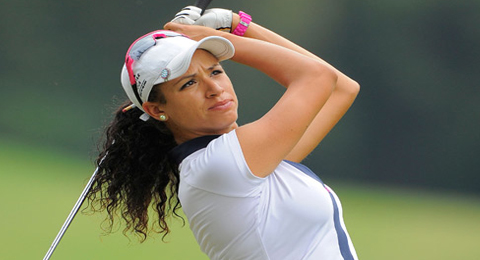
Speak Live Nation host Cedric Nettles talked with LPGA golfer Shasta Averyhardt about her accomplishments in the sport. As the 4th African American woman ever to enter the LPGA Tour, Averyhardt discusses how she has stayed focused to attain her goals and how she has come up through the game, still learning about life all along the way.
Nettles goes deep in this interview with the passionate player, asking her about her career and her success in the sport, along with her desire to help others during this venture in her life.
See the interview below and learn of Averyhardt’s amazing journey!
(posted February 13, 2016)

Amira Alexander, a young golf starlet from Kent State University, was born in Bayamon, Puerto Rico and raised in the U.S. Virgin Islands. Today she calls Alpharetta, Ga her home. Her parents, John and Tracy Alexander welcomed her into the world on January 20, 1994. The 23-year old has two siblings, Damari and John Jr. Growing up, Amira spent a great portion of her formative years in Georgia, where she attended summer golf camps, as well as junior golf tournaments, sponsored by the Women In Golf Foundation (WIF), an Atlanta-based organization founded by LaJean Gould who also serves as its President.
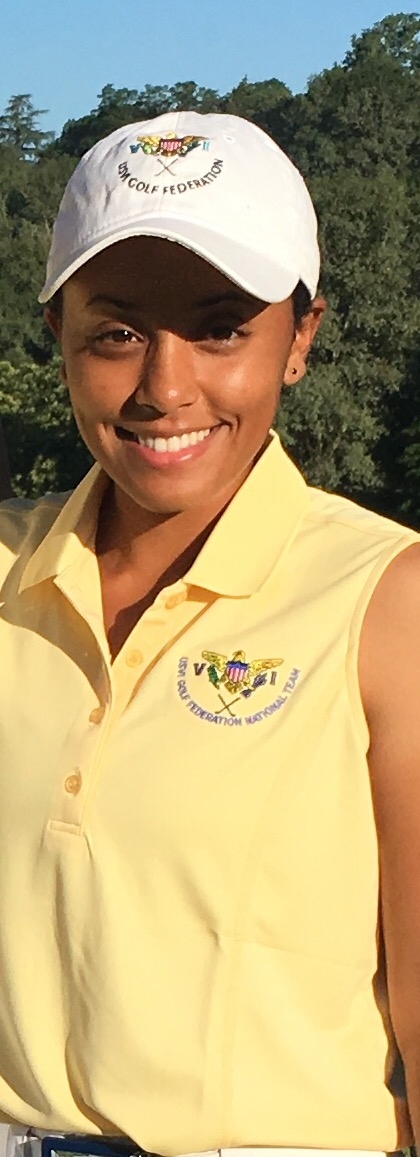 Amira received a full golf scholarship from the University of Georgia in Athens. There she majored in Education with a minor in Psychology. While there, she was also the lone minority on the women’s golf team for three years. And being on the team has afforded Amira the opportunity to compete in World University Golf Championships with collegiate golfers from all over the world.
VIEWING THE WORLD AS HER GOLF COURSE
She’s played in Switzerland, France, United Kingdom, and other destinations. Courses she has teed up on include the Port Stewart Golf Club in Northern Ireland and the famous Augusta National Golf Club (during her Sophomore year in 2014). One of her most cherished highlights to date is when she saw Tiger Woods’ locker in the Champion’s Locker Room of Augusta National.
After three years at the college, Amira transferred from the University of Georgia, Georgia Bulldogs, to Kent State University in Northeast Ohio, again earning a golf scholarship to complete during her senior year.
Adding celebrity notches to her golf belt, Amira met former Secretary of State Condoleezza Rice while attending the Stanford University Alums golf event at Stanford University. “It was the annual Intercollegiate Golf Outing that Ms. Rice hosts each year,” says Amira, who is an admirer of several legendary women golfing pioneers, including Renee Powell, whom she hopes to meet someday soon.
Being on course is a staple for Amira and she has a long list of competitions. She’s competed in several Bill Dickey Junior Golf Outings— in her own backyard of Alpharetta, Ga., where they were first held, as well as the Disney course in Orlando, Fl. She’s played a lot of golf in the American Junior Golf Association events with Mariah Stackhouse and Ginger Howard. Have also played and hung out with Sadena Parks Cheyenne Woods and Shasta Averyhardt, some other very notable women of color in the game of golf.
Amira says her goals and aspirations are to play on the LPGA Tour starting in 2018. She hopes to start the Symetra Tour in March or April of 2017.
AWAKENING THE DREAM
“Now the time has come for me to begin a new journey.” Says her GoFundMe page. “Since I was a child my dream has always been to become a professional golfer on the LPGA tour. This journey is going to be a major challenge in my life. The cost and sacrifices of this endeavor are going to be a major challenge for me. The average cost for women on the LPGA tour can run about $30,000-$50,000 per year. That will include my traveling expenses, tournament entry fees, and coaching/caddy fees. I am in no position financially to undertake that amount by myself. Therefore, I ask you, my family and friends to support me in any way possible.”
Amira says golf teaches etiquette, honesty, respect, and builds character. It’s a Ladies & Gentlemen’s game played by Kings, Queens, Politicians, Scientist, Doctors, Lawyers, as well as Bus Drivers, Sanitation Workers, Security Guards, Custodians, and Auto Mechanics. Also, the goal in golf is the same for everyone, so don’t ever give up, regardless of who you are.
Amira would like to see golf made more affordable. She would like to see more people of color on the golf course. Would also like to see more balance between the privileged and underprivileged
Her dream foursome would include Tiger Woods, Barack Obama, Lorena Ochoa and herself.
In talking with Amira I get the assurance that she has what it takes, she just has to take what she has and go for it. I’m confident she’ll do just fine. I’m looking forward to talking to her again down the road a piece, perhaps when she steps from the winner’s circle.
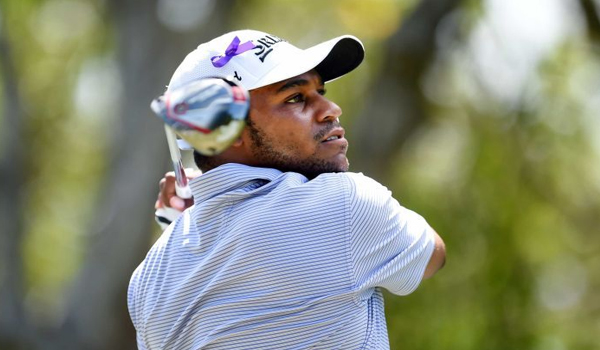
Making the Tour has been the ride of a lifetime for Harold Varner III. And his story is becoming one that continues to fascinate all who come into contact with him as a person, and as a professional. Recently, ESPN aired a feature story on the PGA Tour rookie that shed light on how the support of a local golf group in Charlotte, North Carolina helped Varner to better develop his game, thereby enabling him to reach the tour. View the Sportscenter video below and see for yourself how far Varner has come.