
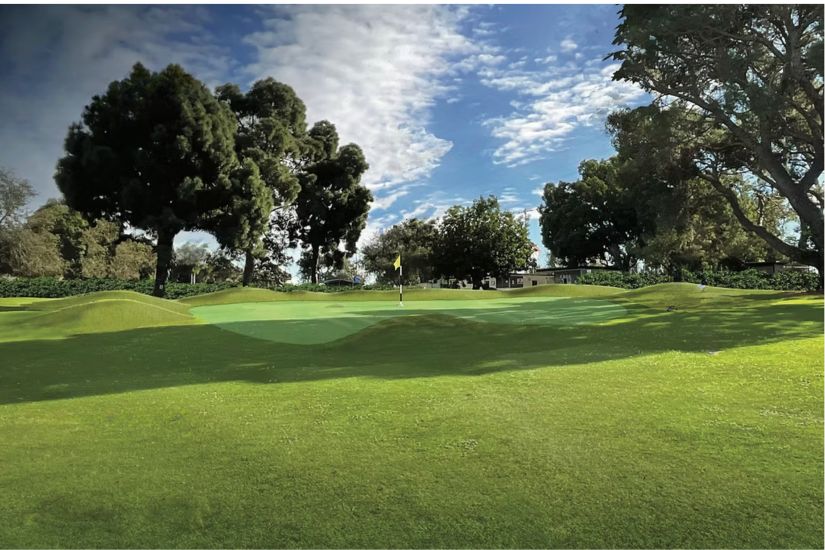
The Maggie Hathaway Golf Course in South Los Angeles has officially reopened to the public on March 28, 2026, marking a major milestone for the community and the continued expansion of access to the game of golf for youth and families in the area. Following a nearly $20 million renovation, the historic nine-hole, par-3 course now stands as a modernized facility designed to inspire a new generation of golfers while honoring its deep cultural and civil rights legacy.
Originally opened in 1962, the course, located at 1921 W. 98th Street, has long served as one of the few accessible golf venues in South Los Angeles, making it a vital recreational and developmental space for local residents. Over time, however, the facility fell into disrepair, having seen little improvement for decades. The need for revitalization became increasingly clear, and momentum for change accelerated when Los Angeles hosted the U.S. Open in 2023. Tournament organizers, along with local partners, committed to reinvesting in the community, ultimately helping fund the course’s transformation.
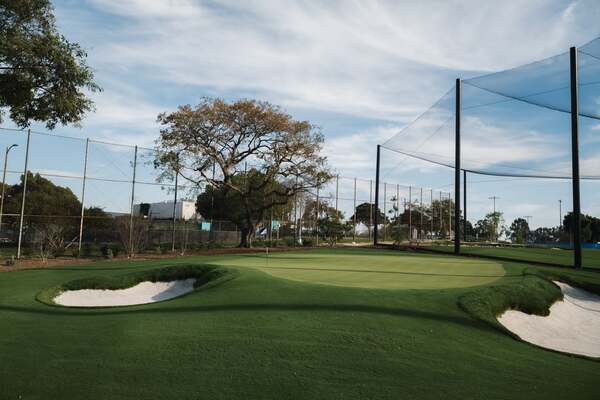
The renovation project, which began in 2024 and led to the course’s temporary closure in early 2025, has reimagined the facility from the ground up. Today, players are greeted with redesigned tee boxes, upgraded greens, new tee boxes, sand traps, improved turf conditions, and enhanced landscaping. A significantly expanded 12,000-square-foot practice green, expanded driving range, providing more opportunities for beginners and experienced golfers alike to develop their skills.
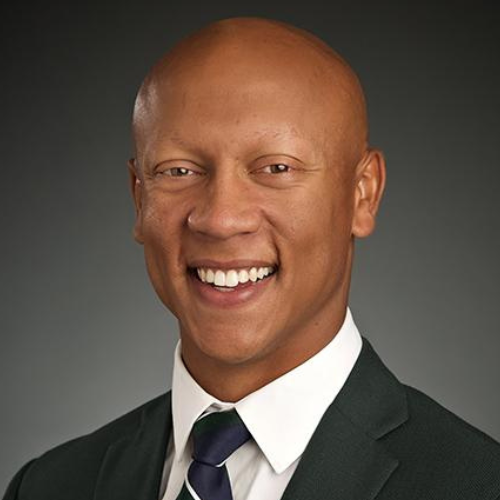
Course shaping and grow-in were overseen by architect Gil Hanse and that turf, bunker, and drainage work wrapped up over the winter. Beyond the physical upgrades, the project reflects a broader investment in community enrichment. Plans included a new clubhouse featuring a pro shop, café, and a dedicated community room with a youth enrichment lab—spaces designed to support both athletic development and educational programming. These additions reinforce the course’s role as more than just a place to play golf; it is a hub for mentorship, learning, and connection. In February 2025, Vincent Johnson, an African American, was appointed as the department’s new Golf Director.
The course is named after Maggie Hathaway, a pioneering civil rights activist and journalist who played a crucial role in desegregating public golf courses in Los Angeles. In the 1950s and 1960s, Hathaway challenged discriminatory practices that excluded Black golfers, using advocacy, protest, and her platform as a columnist to push for change. Her efforts helped open doors for minority participation in the sport, making her a foundational figure in the history of golf equity.
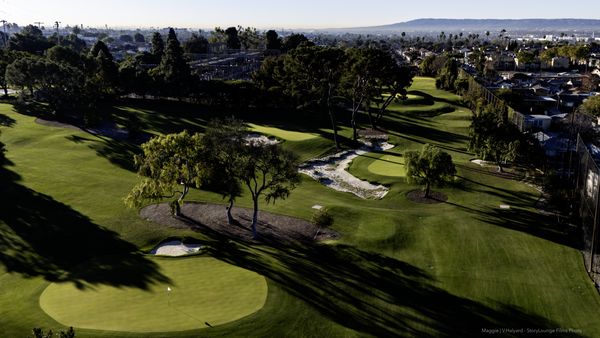
Hathaway’s legacy is deeply embedded in the identity of the course. Interpretive displays and educational elements incorporated into the renovation ensure that visitors not only enjoy the game but also understand the historical significance of the space. Her story continues to resonate, particularly for young players who now have greater access to facilities that were once out of reach for many in their community.
The project overhaul was built around the FORE Youth: 2023 U.S. Open Community Legacy campaign, which has led fundraising and program planning for the site, according to FORE Youth. County board records show the donation agreement called for an initial FORE Youth gift of about $7 million with an option to increase that amount to roughly $15 million, and the county agreed to accept those funds and deposit them into its golf capital fund. Project materials and partner lists name the USGA, the Southern California Golf Association, and the Los Angeles Country Club among the organizations backing the renewal, with American Golf listed as an operator partner in project announcements.
Published reports estimate the project’s total cost in the tens of millions. LAist placed the renovation at approximately $20 million, while other local outlets have cited figures closer to $15 million. Combined funding from private donations and county investment ultimately brings the overall total into the mid-to-high tens of millions
Today, the reopening of Maggie Hathaway Golf Course represents more than a restoration—it is a reinvestment in opportunity. By expanding access to quality facilities and creating pathways for youth engagement, the course is positioned to play a key role in shaping the future of golf in South Los Angeles. As the fairways welcome players once again, the course stands as both a tribute to its namesake and a symbol of progress, ensuring that the game of golf remains inclusive, accessible, and deeply rooted in the community it serves.