
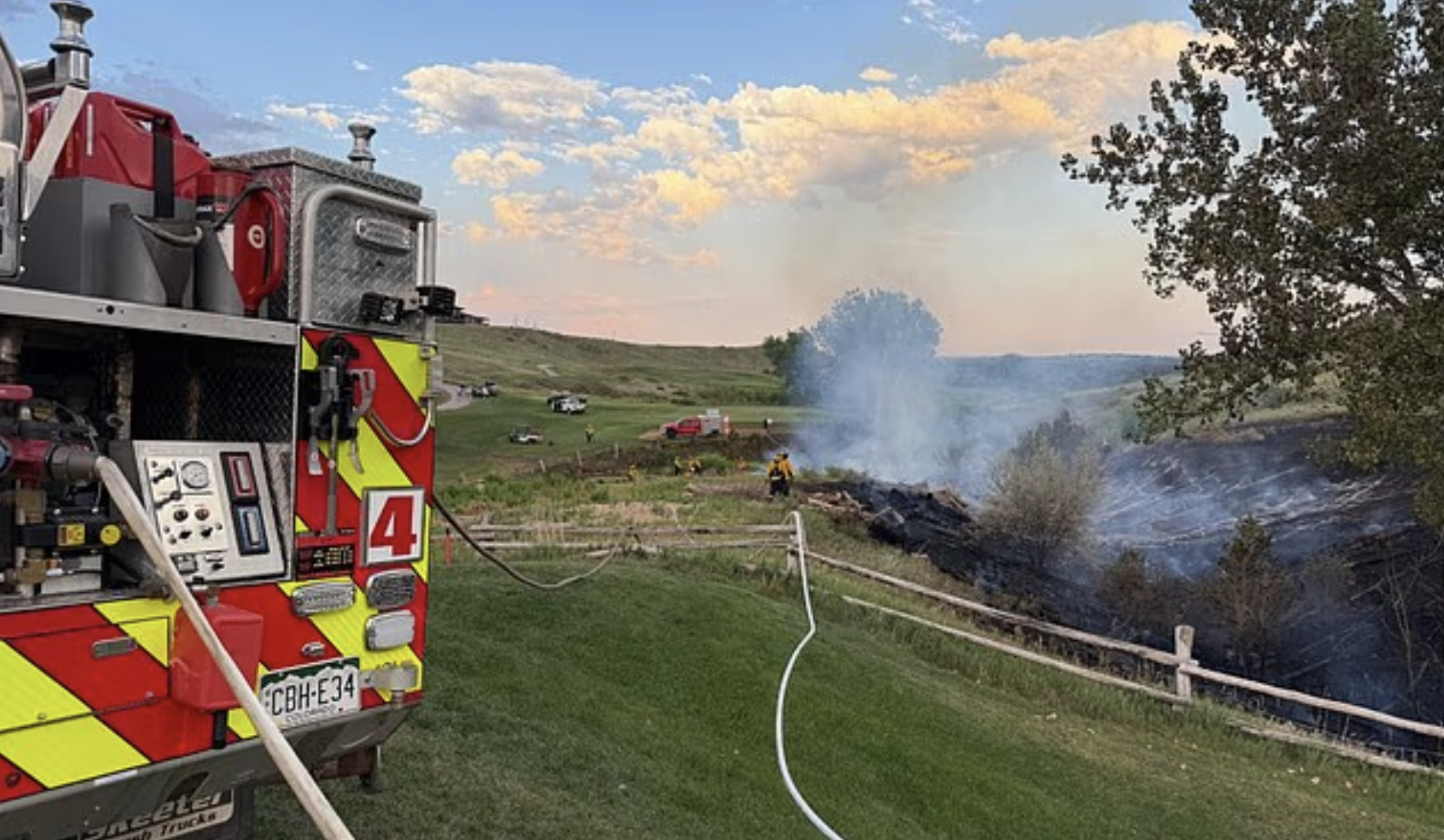
A routine round of golf turned into a frightening emergency when a lightning strike injured a golfer and ignited a brush fire at a Colorado golf course as thunderstorms swept through the area on Tuesday, June 30.
The incident occurred Tuesday evening at Fox Hollow Golf Course in Lakewood, where rapidly changing weather caught many players by surprise. Emergency crews responded shortly before 6 p.m. after reports that a golfer had been struck by lightning near the sixth hole. The victim was transported to a local hospital for treatment and was later released, according to local authorities.
The same lightning strike also ignited dry vegetation in the course’s rough, creating a brush fire that quickly spread through an area of dead grass and fallen trees. Firefighters from West Metro Fire Rescue, assisted by neighboring agencies, contained the blaze before it could threaten nearby buildings. The fire ultimately burned about two acres before being extinguished. Crews later used drones equipped with infrared cameras to search for hidden hot spots and reduce the risk of flare-ups.
Several golfers playing nearby described the experience as terrifying, according to CBS News. Witnesses said they first noticed distant thunder but did not realize how quickly the storm was approaching. Moments before the strike, golfers reported seeing an intense flash of white light followed almost instantly by an explosive clap of thunder that shook the area. Some said they felt the force of the blast before rushing toward safety.
As players evacuated the course, many looked back to see smoke rising from the location where lightning had struck. Learning that another golfer had been injured reinforced the dangers posed by severe weather on open courses. Several witnesses later said they would never again remain on a golf course after hearing thunder, regardless of how well they were playing.
Golf courses are particularly vulnerable during thunderstorms because they offer little protection from lightning. Safety experts recommend immediately suspending play and seeking substantial shelter at the first sound of thunder or sight of lightning. The common safety guideline is that if thunder can be heard, lightning is close enough to pose a serious threat.
Although lightning-related injuries are relatively uncommon, they can cause cardiac arrest, neurological damage, severe burns, and long-term health complications. Quick medical attention significantly improves a victim’s chances of survival.
The Colorado incident serves as another reminder of the importance of respecting rapidly developing weather conditions, especially during the summer thunderstorm season. Emergency officials continue to urge golfers and other outdoor enthusiasts to leave exposed areas immediately when storms approach rather than waiting for conditions to worsen.enver Gazette )
)