

By now it is a well-known and much documented fact that the game of golf is experiencing perhaps it’s greatest period of prosperity and growth. One of the most dramatic shifts has been amongst minorities who are participating in the game. Tiger Woods was the driving force behind the rise of interest the game at the beginning of the millennium. However, prompted by and starting with the COVID pandemic period in 2020, the sport gained a foothold as a safe mode of recreation has now become a resilient pastime that has a permanent place in terms of consumer time and budget amongst people of color.
Leading the way in documenting the increase in minority interest and participation in golf is the National Golf Foundation (NGF), the industry agency that tracks statistical data about the game and business of golf. A recent NGF report titled, “The Golf’s Most Diversive Era Yet: Golfer Growth Among People of Color Outpaces Trend in U.S.” revealed eye-opening data on just how much golf has taken hold in minority communities. The study, which is comprised of information gathered from a large group recreation-based organizations and surveys from individuals. Per their findings, the 7.7 million Asian, Black and Hispanic golfers who played on a course in 2025 is a high-water mark for the industry.
Further studies showed that while the non-White population within the U.S. since 2010 has climbed by just over 30%, the Asian, Black and Hispanic on-course golfer base over that same period has risen even more appreciably – by nearly 40%.
The study also found that among those who exclusively play off-course forms of golf – from golf entertainment venues to indoor simulators – the proportion of those who are People of Color is even higher, at 45%. “These additional pathways have, in turn, helped foster greater on-course engagement and fuel recent gains. Almost half (49%) of non-golfers who indicate they are “very interested” in trying to play golf on a green-grass course are non-White,” per study findings.

Greg Nathan, the Chief Executive Officer of NGF, talked about the method that were used to compile the data and the significance of what it revealed.
“We’ve always studied the demographics of golf in every way. We pay close attention to the way that America’s demographics are changing relative to golf’s demographics, and you got a sense of that from the story,” notes Nathan.
“The catalyst for deeper measurement of minority golf would have been Tiger Woods, starting with him turning pro in 1996 and being able to measure how Tiger’s multicultural presence would impact golf participation,” remarked Nathan.
“Now, we’ve learned a lot since then. We certainly learned that somebody might try golf because Tiger is such a generational talent and generational figure and a barrier breaker. But people don’t continue to play golf unless they like the activity itself.”
Nathan continued, “People play golf because they love playing golf. Watching Tiger on TV or Scottie Scheffler on TV are not what it takes to get hooked on golf. It takes, in our view, four things that are most closely associated with those who become consistent golfers. There’s two on the competence side: I play well enough to enjoy the game, and I get a shot of euphoria at least once or twice every time I go out. The most important part, though, especially if you’re a female, a child, or minority, or a novice of any shape or color, is the comfort side. It’s being comfortable in the golf course environment and being comfortable around other golfers.”
Nathan went on to say, “And today, when we study minority golf, it’s much less about a compelling figure than it is about golf’s broader desirability as a leisure activity and how in-sync golf is with what people want these days. They want a social activity, they want outdoors, they want exercise, and in some cases, they want analog, which is to say a non-digital, non-digital outdoor social activity.”
Industry watchers all agree that social media and off-course participation have been among the more recent impactful drivers of golf’s relatability/approachability and have contributed to the fact that there have never been more People of Color playing the traditional on-course game than there are today.
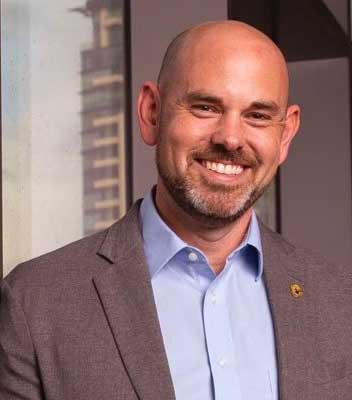
Jay Karen, CEO of the National Golf Course Owners Association is seeing the same rise in the increase in golf’s popularity amongst minorities.
“I’d say by and large, the average owner-operator is not activating anything specifically for diversity. I don’t want to say that there are not owners and operators doing things out there. However, the efforts that I’m seeing that are driving change are from the governing bodies and the large multi-course owners more than the average owner-operator or club,” observed Karen.
Karen continued, “I think it’s just that golf in general happens to be more appealing to a larger group of people. If you look at it from diversity and female standpoints, if you look at where the vibe is and who’s creating content around it, more and different people are showing that golf is cool and that they are into it. It’s influencers, it’s athletes, it’s basically golfers themselves who are deciding what the culture’s going to be. It’s not the golf course operators that are defining what the culture should be in golf, whether it’s open or closed or whatever. It’s the golfers themselves saying, “We’re claiming the game.”
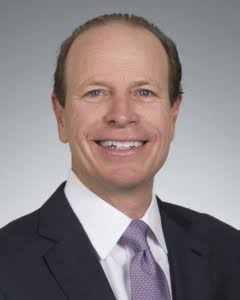
Golf knows that it is in boom times and as an industry it is trying its best to maintain the gains that it has made in recent years. One of the people most instrumental in that effort is Greg McLaughlin, who holds multiple key offices in the golf space including head of both the World Golf Foundation and the First Tee Foundation.
“It’s encouraging to see golf becoming more diverse; greater participation from a wider range of ethnicities, as well as more women taking up the sport is a very positive development for the industry,” said Mclaughlin. “It’s great to see progress and many across the industry are making efforts to make the sport accessible and inclusive.”
Mclaughlin also points to the contribution of such industry efforts such as Make Golf Your Thing, which according to its web site is, “a collaborative, industry-wide initiative designed to make the sport and its workforce more diverse, accessible, and welcoming to everyone, particularly historically underrepresented communities”
“It’s gratifying to see the important work Make Golf Your Thing is doing — through grassroots grants, career development and supplier access — to ensure people from all backgrounds have the opportunity to play, build a career in, or do business with the game of golf. We are grateful for the support the industry continues to provide,” remarked McLaughlin.
The one downside amid all the positive news about player participation is the dismal level of participation amongst minorities and women when it comes to owning and operating golf facilities. A range of leaders in the golf industry were interviewed for this story and other than highly visible course owners such as Renee Powell and Sheila Johnson, none could point to a minority owner in the golf space.
Jay Karen, who held a groundbreaking conference called “Lead Golf Together“ that was intended to raise industry awareness of competent individuals among people of color in order to promote them to executive positions and course ownership, acknowledged that the pace of change has been slow but believes that the recent increase in the popularity of the game will ultimately lead to diversity in the categories of leadership and ownership.
“Yes, I think [minority leadership and ownership] will eventually, naturally and organically increase to a certain extent,” observed Karen. “But the conundrum about the leadership table is that compared to diversification in the game where it’s like just grow the pot, grow the diversity…In that vein, no one’s being unseated by anyone, right?”
Karen continued, “Most organizations aren’t expanding their boards, and they’re not creating more C-suite positions. People settle into these roles, and so it’s a longer runway to change oftentimes because CEOs stay several years, your C-suite people stay several years, and it just takes time. Unless you have people that are going to leapfrog time and say, “Well, no, this is important to me, to be intentional about having a woman or a minority in this seat or that seat.”
“And so, it’s harder. We knew that when we organized Lead Golf Together, trying to address, as some say, the shoes under the table. That’s not the same as saying, “Gosh, let’s get a million more women playing the game of golf,” because nobody’s being displaced by that,“ Karen concluded.
Karen finished with a salient point, one that must be addressed in order for positive change to occur in these turbulent political times.
“In this day and age, calls of reverse discrimination are alive and well. So that complicates things in this current political environment, the claim that diversity efforts are not fair. But the truth is out there, with good people sharing good data for a great cause.”
