
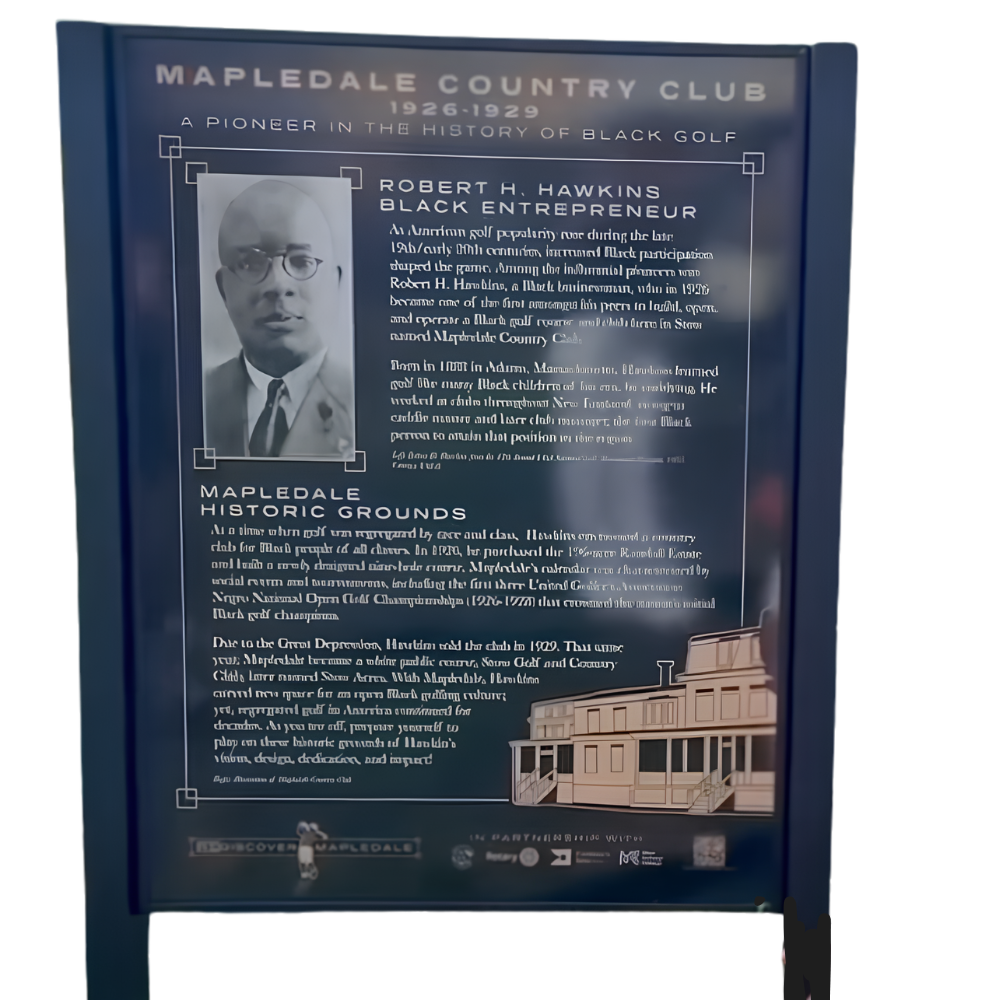
The history of American golf cannot be fully understood without recognizing the contributions of African Americans who created opportunities for themselves during an era of segregation and exclusion. Among the most important of these pioneers was Robert H. Hawkins, a Massachusetts businessman, golfer, and visionary whose creation of Mapledale Country Club in 1926 became a landmark achievement in Black sports history. Although his name remained largely forgotten for decades, historians and preservationists are now restoring his place among the most significant figures in the development of Black golf in America.
The Early Life of Robert H. Hawkins
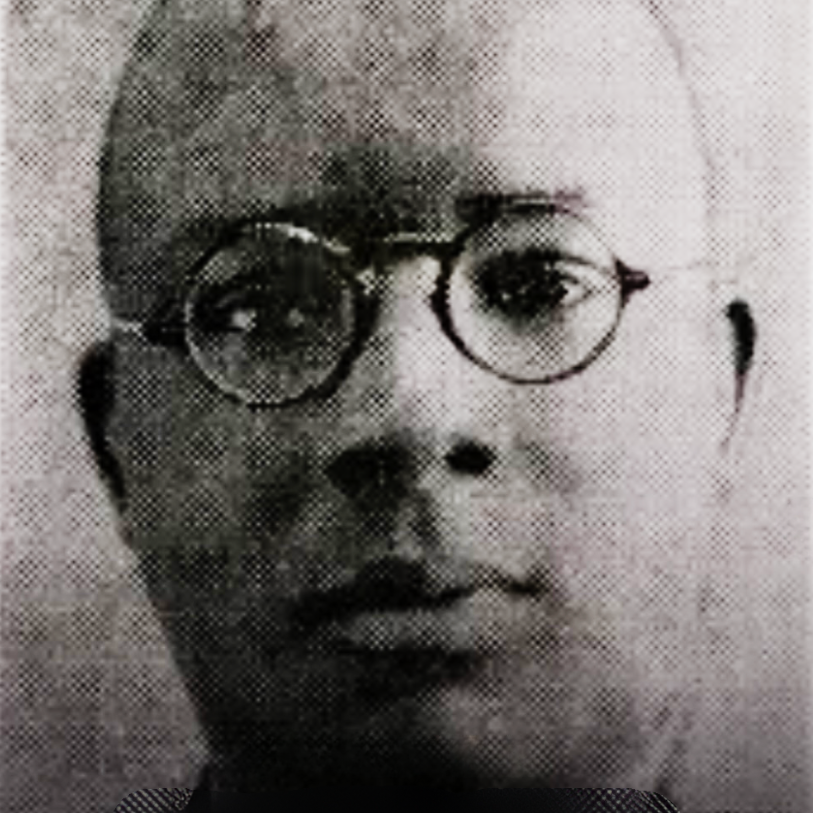
Robert H. Hawkins was born in Adams, Massachusetts, in 1888 or 1889. Like many African Americans who entered the game during the early twentieth century, he learned golf while working as a caddie. During an era when Black golfers were routinely denied access to golf clubs and tournaments, caddying often provided the only pathway into the sport.
Hawkins developed both his golf knowledge and his business skills while working at golf facilities throughout New England. He eventually became the manager of Sandy Burr Country Club in Wayland, Massachusetts, making him the first African American known to hold such a position at a New England golf club, according to Rediscover Mapledale.com. His success demonstrated both his leadership ability and his understanding of golf operations. Yet he envisioned something much larger—a country club owned, operated, and designed specifically to welcome Black golfers and their families.
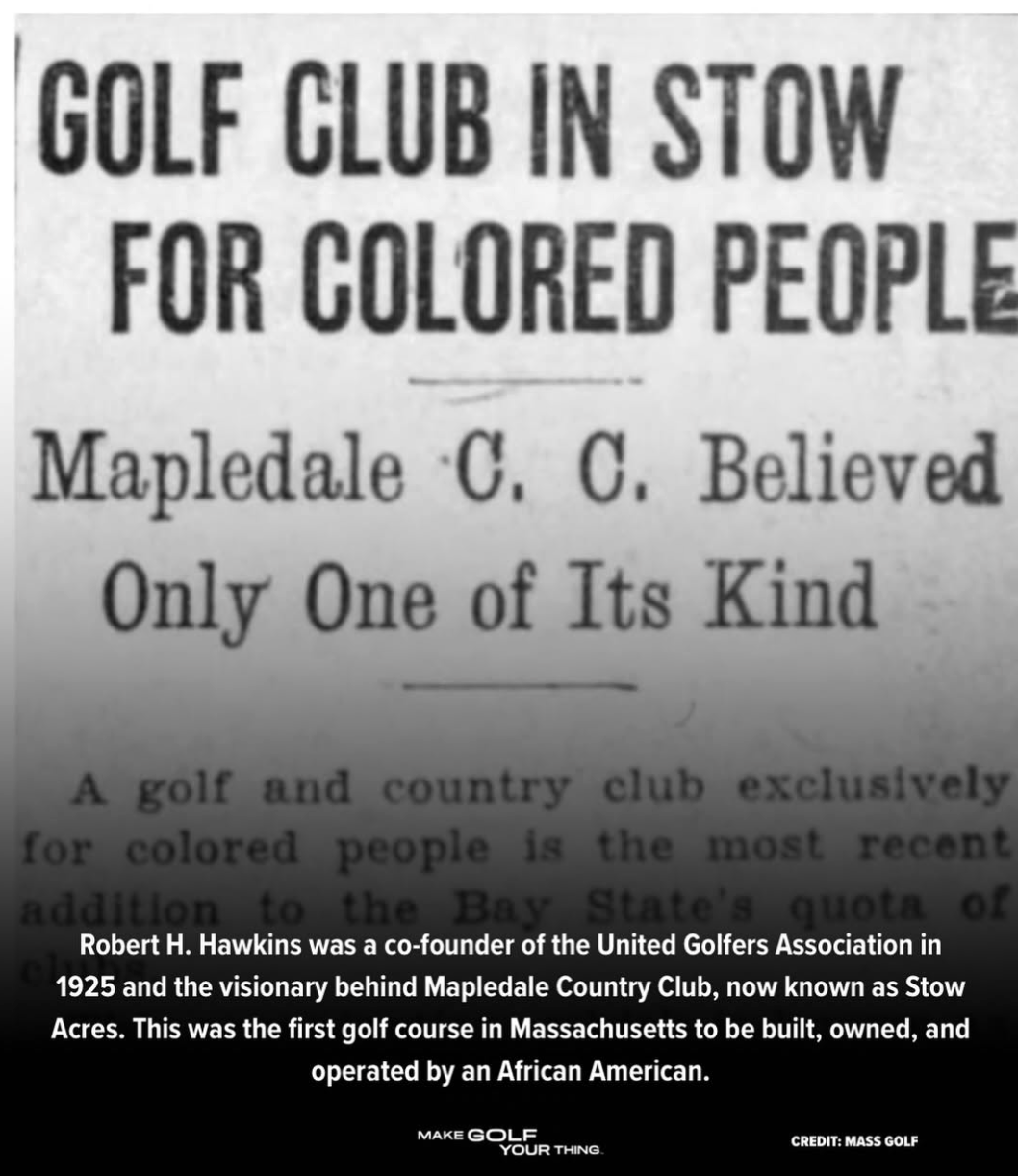
In February 1926, according to mass.com, Hawkins purchased the 196-acre Randall Estate in Stow, Massachusetts, approximately twenty-five miles west of Boston. The property included a large twenty-room mansion and extensive grounds that offered an ideal setting for a country club. Hawkins transformed the estate into Mapledale Country Club, one of the earliest Black-owned and Black-operated golf facilities in the United States and the first of its kind in Massachusetts. Mapledale Country Club was located in Stow, Massachusetts, on the property now occupied by Stow Acres Country Club. The original course occupied part of what remains an active golf facility today.
Historical records indicate that Robert H. Hawkins himself designed the original nine-hole golf course. This accomplishment makes him one of the earliest known African Americans to design, build, own, and operate a golf course and country club in the United States. The course served as the centerpiece of a broader recreational complex that included tennis courts, horseback riding facilities, croquet, and social gathering spaces.
Black Golf During the Segregation Era
To understand the importance of Mapledale, it is necessary to understand the barriers facing Black golfers during the 1920s. At the time, African Americans were excluded from many golf courses, private clubs, and major tournaments. Although the PGA of America did not formally adopt its notorious “Caucasian-only” clause until 1934, racial exclusion was already widespread throughout the golf industry. Black golfers often had no access to quality courses and were unable to compete against the nation’s leading professionals.
During the 1920s, Black golfers represented only a tiny fraction of America’s golfing population. Most Black golf clubs operated on municipal courses or small facilities with limited resources. Yet participation was growing rapidly among Black professionals, educators, physicians, entrepreneurs, and community leaders. This emerging golf culture created demand for dedicated facilities and organized competition.
The Birth of the United Golfers Association
One of Hawkins’ most significant contributions was helping establish what became the United Golfers Association (UGA), the premier organization for Black golfers during the segregation era.
In 1925 and 1926, Black golf leaders from around the country organized national championships to provide opportunities denied by mainstream golf organizations. Hawkins played a central role in these efforts and offered Mapledale as the host site for the first national championships.
Mapledale hosted the first three Negro National Open Championships: 1926, 1927, and 1928. These events effectively crowned the nation’s Black golf champions and established a competitive structure for African American golfers across the country.
Notable Black Golfers Who Competed at Mapledale
Several pioneering golfers participated in tournaments at Mapledale.
Harry Jackson: Harry Jackson won the inaugural Negro National Championship at Mapledale in 1926. His victory made him one of the earliest nationally recognized Black golf champions.
Pat Ball: Pat Ball captured the championship in 1927. He later became the first African American to compete in the prestigious Western Amateur Championship.
John Shippen: Perhaps the most famous golfer associated with Mapledale was John Shippen. Shippen became the first Black golfer to compete in the U.S. Open when he played at Shinnecock Hills in 1896. He won the 1928 championship at Mapledale and remains one of the most influential figures in American golf history.
Mapledale became a gathering place for Black golf organizations from across the eastern United States and the United Golfers Association emerged as the most important organization connected to the club. Through the UGA, golfers from cities such as Washington, D.C., Philadelphia, Chicago, Cleveland, Detroit, Pittsburgh, and New York found opportunities for competition and fellowship. The tournaments attracted Black physicians, lawyers, educators, business owners, and skilled golfers who were building a national Black golfing culture despite segregation.
Among those involved in promoting early national competition were Dr. George Adams and Dr. Albert Harris of Washington, D.C., who helped organize the first national championship events.
The Decline of Mapledale
Despite its success and growing reputation, Mapledale faced economic challenges. The Great Depression devastated recreational businesses throughout the United States. By 1929, Hawkins was forced to sell Mapledale Country Club. The property subsequently became Stow Golf and Country Club and later evolved into what is now known as Stow Acres Country Club. The closure ended one of the most ambitious Black-owned golf ventures of the era.
Yet the influence of Mapledale survived. The UGA championships continued around the country for decades, helping sustain competitive Black golf until integration gradually opened more opportunities.
Robert Hawkins’ Later Years and Death
After losing Mapledale during the Depression, Hawkins lived a relatively quiet life. For many years his accomplishments faded from public memory, despite his groundbreaking contributions to golf history.
Robert H. Hawkins died in 1973. Historical accounts note that even his obituary failed to mention his creation of Mapledale Country Club, his role in organizing national Black golf championships, or his contributions to the United Golfers Association. This omission reflected how thoroughly his achievements had been overlooked by the broader golf community.
The Current Status of Mapledale Country Club
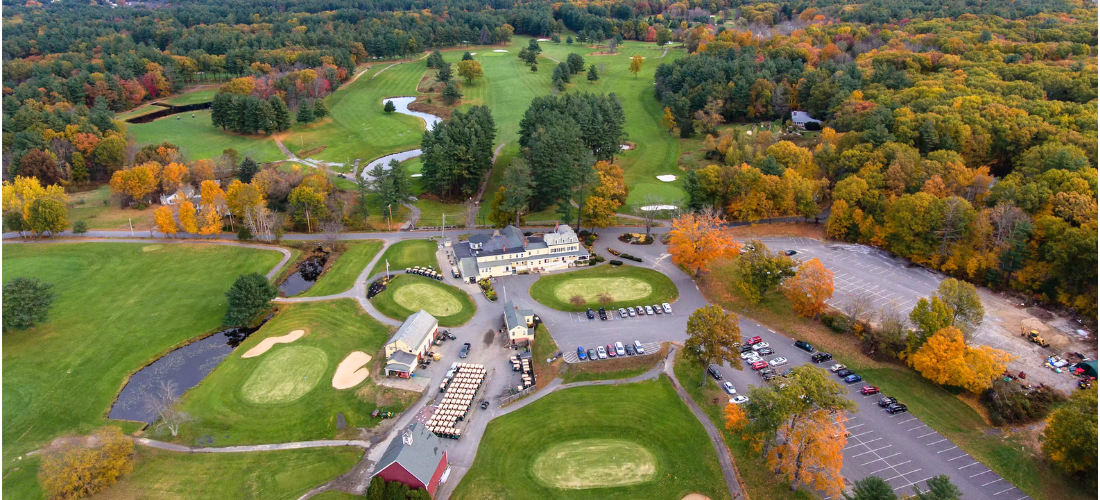
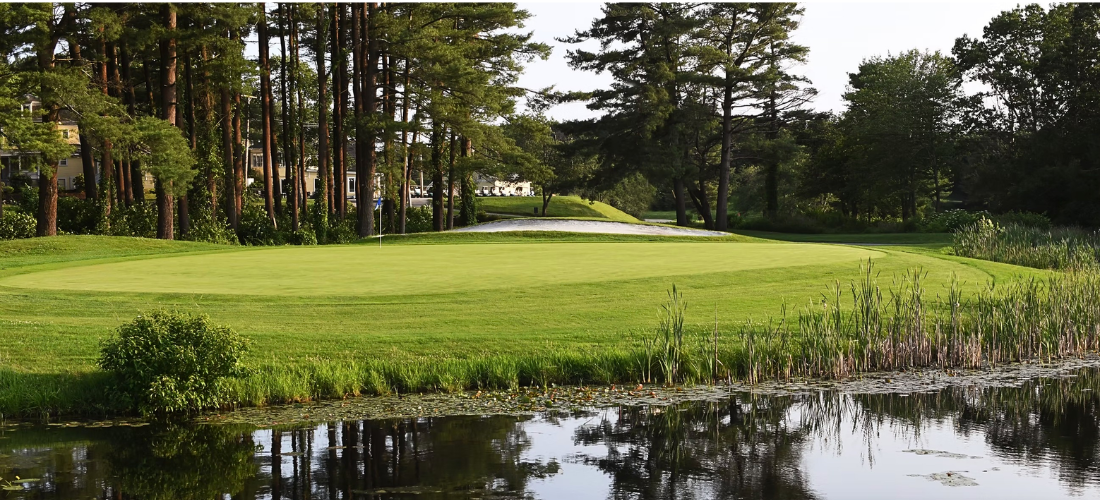
Although Mapledale Country Club no longer exists under its original name, the land remains a functioning golf facility. Today the property operates as Stow Acres Country Club in Stow, Massachusetts. Portions of Hawkins’ original nine-hole layout remain incorporated into the modern facility. Preservation groups, historians, and golf organizations have worked diligently to ensure that the story of Mapledale is no longer forgotten.
The nonprofit organization Rediscover Mapledale has led efforts to commemorate Hawkins’ legacy through historical markers, educational programs, exhibitions, and annual memorial golf tournaments. In 2026, centennial celebrations marked one hundred years since the founding of Mapledale Country Club.
Robert H. Hawkins stands as one of the most important yet historically overlooked pioneers in American golf. At a time when racial discrimination limited access to courses, tournaments, and country clubs, he created a place where Black golfers could compete, socialize, and thrive. Through Mapledale Country Club and the early United Golfers Association championships, Hawkins helped establish a national foundation for Black golf.
Long before figures such as Charlie Sifford, Lee Elder, and Tiger Woods transformed professional golf, Robert H. Hawkins was building opportunities where none existed. His vision provided a pathway for generations of Black golfers and secured his place among the most significant pioneers in the history of the game.
About Rediscover Mapledale
Rediscover Mapledale is a nonprofit organization dedicated to preserving and promoting the history of Robert H. Hawkins and Mapledale Country Club, one of the nation’s earliest Black-owned and Black-operated golf clubs. Based in Stow, Massachusetts, the organization was formed to ensure that Hawkins’ pioneering contributions to golf and African American history receive the recognition they deserve. Through historical research, educational programs, community events, exhibitions, and preservation initiatives, Rediscover Mapledale works to tell the story of how Mapledale Country Club became a center for Black golf during the era of segregation and hosted some of the earliest national championships for African American golfers. The organization continues to celebrate Hawkins’ legacy while educating new generations about the important role Mapledale played in expanding opportunities for Black golfers in the United States. Learn more at