
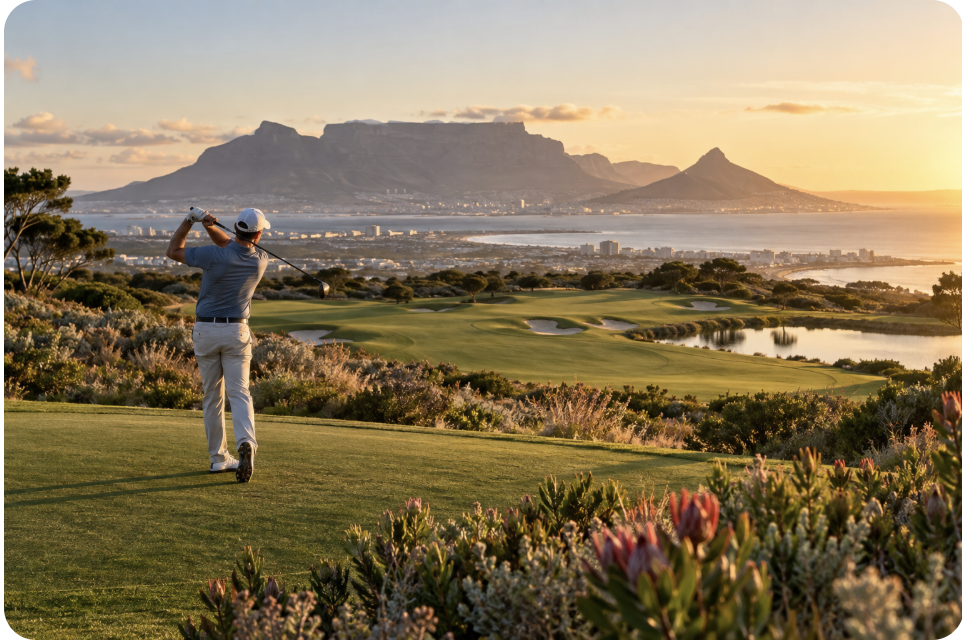
Golf in South Africa carries a long list of famous names, and until fairly recently, every name on every trophy came from a narrow demographic that excluded the majority of South Africans. Gary Player, Ernie Els, Retief Goosen, Louis Oosthuizen.
The country produces world-class players at a rate few nations match, and for most of its history the pathway ran through clubs closed to the majority of South Africans. That has been changing, and the change has been structural: real programs, real funding, real pathways into professional golf for players who were systematically locked out.
Two organizations do most of the groundwork, a professional development class now exists specifically to carry players out of the townships and rural districts, and a meaningful share of the funding behind all of it comes from the country’s gambling and casino industry. For context on how competitive that industry is, pages tracking the best no deposit bonus codes in South Africa list a dozen or more trusted operators competing for customers week by week, and the marketing budgets behind that competition pay for a significant amount of visible sport across the country.
South Africa’s Casino and Betting Industry Puts Real Money Into Golf Development
Gambling brands are prominent in South African sport at every level. Betway has helped fund the Sunshine Tour’s transformation program alongside Investec and SuperSport. Sun International puts its SunBet name directly on tournament titles across the men’s and women’s tours, including the SunBet Challenge and the SunBet Cape Town Ladies Open. Hollywoodbets backs teams and events across multiple sports, and operators including LottoStar and Easybet appear at levels well below the professional game.
That spending reflects a highly competitive market where operators fight hard for customers. South African operators fight almost entirely on promotional offers, and the offers have grown steadily more generous. No deposit bonuses, percentage match promotions running into multiple figures in rand, and free spin packages are all standard across the market.
Each promotion carries its own arithmetic: wagering requirements typically run between twenty and fifty times the bonus amount, bet caps apply while a bonus is live, and no deposit offers usually restrict what can be withdrawn. The operators generating that promotional spend are funding a good deal of what you see on South African fairways.
A Class Named for a Man Who Won Trophies He Was Not Allowed to Collect Inside
Papwa Sewgolum was a South African golfer of Indian descent who won the Natal Open across three victories between 1959 and 1965 and, on one famous occasion, was forced to receive his trophy standing in the rain outside a clubhouse he was not permitted to enter. He would later be banned by the apartheid government from playing or even entering a golf course as a spectator. He died a pauper at 48. The Sunshine Tour named its transformation class after him.
Members of the Papwa Sewgolum Class receive monthly support toward tournament costs, coaching, gym access, sports psychology and career counseling, plus extra entries into Sunshine Tour and Big Easy Tour events. Around fifty to sixty historically disadvantaged professional golfers participate each season.
Betway sits alongside Investec, SuperSport, Cobra Puma and TaylorMade on the sponsor list, a fair snapshot of who backs South African golf now. Several events those players enter carry a betting or casino brand in the title, so a golfer can spend a season competing almost entirely inside gambling-funded tournament weeks. The financial pressure on families supporting players at this level is real and familiar. Luyanda Gumede, a ten-year-old from Durban navigating exactly that pressure, and the shape of it will resonate with anyone raised on public courses in this country.
Before the Professionals, Someone Has to Hand a Child a Club
The South African Golf Development Board operates in fourteen areas nationwide with backing from the Department of Sport and Recreation, the R&A, GolfRSA, the Sunshine Tour and the PGA of South Africa. Its stated purpose is opening practice and playing opportunities to learners from communities that were shut out under apartheid and remain underserved. Its approach is unglamorous and works by volume: clinics at schools, access agreements with clubs willing to open practice facilities, and coaching that keeps promising players in the system long enough for selectors to notice them.
South African commentators have raised questions about gambling money sitting alongside youth programs, and the industry addresses those questions directly. Operators answer to provincial boards and the National Gambling Board, must carry responsible gambling messaging, and fund a national responsible gambling foundation. The answer from inside golf has been consistent: the funding is real, it is doing what it is supposed to do, and the players and programs benefiting from it are evidence of that.
The promotional market generating that money keeps growing regardless, and the no deposit bonus codes and match offers driving the competition are as active now as they have ever been. The comparison with the APGA Tour’s reliance on corporate backing is close: same structural problem of access, different country, same open question about whose money a sport should take to fix it.